Post by Simra Ahsan, a junior at Portland State University pursuing Biology and General Science majors, and Interdisciplinary Neuroscience and Chemistry minors on the Pre-Medicine track. Simra wants to pursue research that supports underserved populations specifically relating to neuroscience, trauma, and the greater impact on a community.
I am passionate about clinical research and I’ve had a leadership position at the OHSU Doernbecher Emergency Department as part of the CRISP (Clinical Research and Investigative Studies Program). I’m currently co-writing a synthesis research paper titled “The Neuroscience of War: Comparing Veteran to Civilian PTSD Research and Analyzing War-Related Neurological Impacts Towards an Iraqi Civilian-Focused Framework.” I plan to become a doctor and want to pursue emergency medicine. Ultimately I’d like to continue serving my community through programs like Doctors Without Borders.

LEARN MORE: Doctors Without Borders
LEARN MORE: Clinical Research and Investigative Studies Program
LEARN MORE: War and Neurologic Trauma
“Do you control your brain or does your brain control you?”
During an outreach event at Jack and Jill, one of the students asked us this amazing question that got me thinking about how many times I say one thing but end up doing another. It reminds me of when I vow to do something like homework, but always end up texting my friends instead. If I know what I want to do, why do I still act otherwise?

LEARN MORE: Noggin @ Jack & Jill
It’s extremely frustrating when I feel like I want to do something but no matter how hard I try, I never follow through despite knowing it’s good for me. I personally struggle with that issue – to the extent that it feels like I have messed up so many times, I begin wondering if I am even capable of changing myself.
That is why the student’s question matters to me a lot.

I am looking into this question because I want to take control of my own life, but I also hope to find information that could help anyone struggling with this feeling too.

I want to understand what is happening when our intentions and actions do not line up because I don’t always feel in control of my own brain. But before asking who is in control, we have to ask something deeper:
Are “you” separate from your brain?
Who are you? Where are you? What are you? To answer these questions, we need to bridge philosophy and neuroscience. To do so, let’s meet someone very well known in the neuroscience community, a man named Phineas Gage.
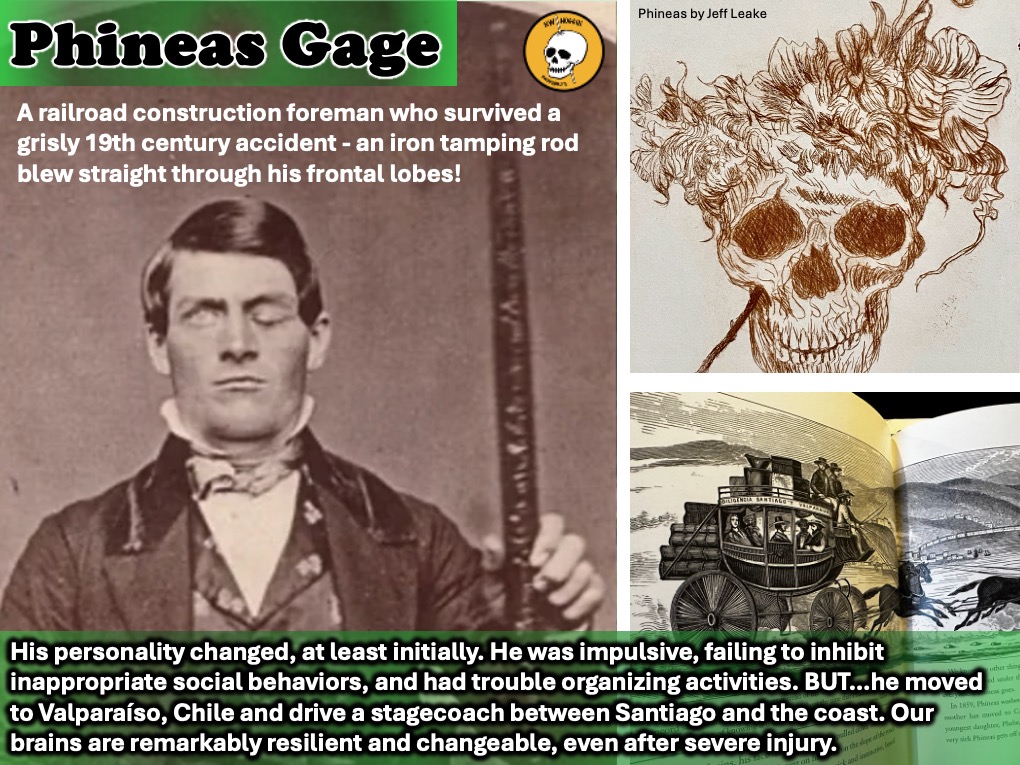
Phineas Gage was a 25 year old railroad worker in Vermont who became famous after a horrific accident. While packing gunpowder into rock, a common railroad construction practice in 1848, an iron tamping rod was accidentally blasted through his cheek and out of the top of his skull. Normally, such severe brain damage would be fatal due to bleeding and infection, but the fast-moving rod was so hot that it cauterized (heated and sealed) the tissue.
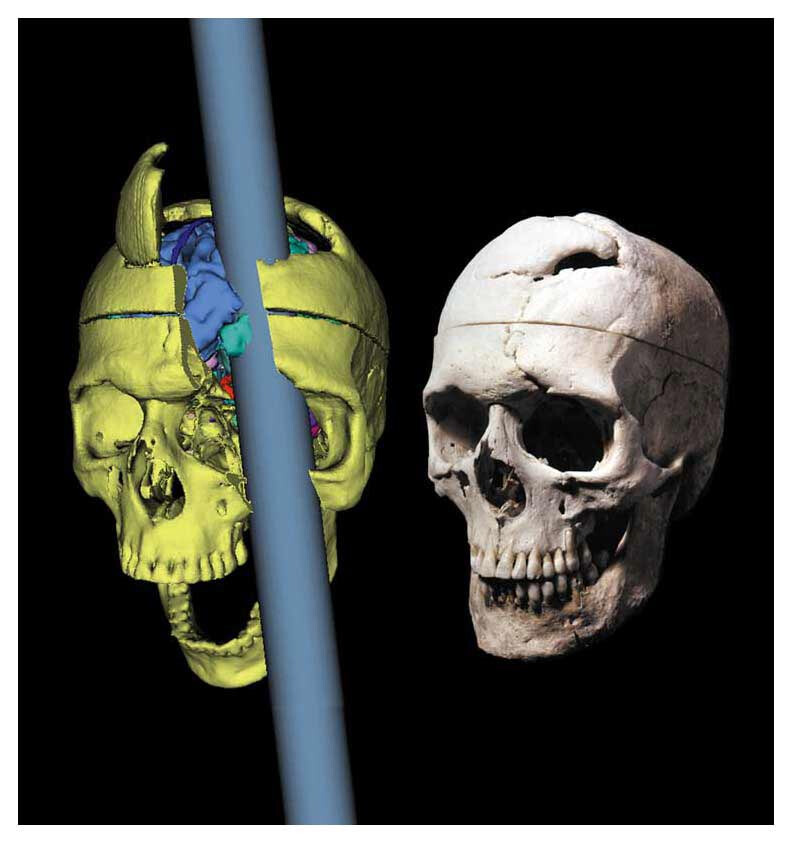
IMAGE SOURCE: The Tale of Phineas Gage, Digitally Remastered
Gage survived and walked away from that accident as a new man, quite literally.
Phineas was no longer the “Phineas” his community knew. Due to the damage in his frontal lobe, his personality, which is the unique pattern of thoughts, beliefs, and behaviors that made him who he was, dramatically changed. Our frontal lobes are critical for impulse control, emotional regulation, and appropriate social behavior. Phineas, who was reportedly a smart, respectful, and shrewd man, became ”profane, coarse, and vulgar, to such a degree that his society was intolerable to decent people.”
His community claimed “he just wasn’t himself anymore,” which brings us back to the question of “YOU.”

LEARN MORE: Phineas Gage’s great legacy
LEARN MORE: Phineas Gage: The brain and the behavior
LEARN MORE: Rehabilitating Phineas Gage
LEARN MORE: Personality traits linked to differences in brain structure
LEARN MORE: The Human Frontal Lobes and Frontal Network Systems
LEARN MORE: Emotion, Personality, and the Frontal Lobe
LEARN MORE: Memoria, Arte y Cerebros en Chile!
The question “Do you control your brain or does your brain control you” could be restated a tiny bit. If “you” refers to your personality, and your personality is an innate feature or product of your brain, then you cannot separate “you” from your brain.

When this question was initially asked, I understood it as your brain wanting one thing but choosing another thing, often against better judgment. I am pursuing answers to the student’s question through the lens of the brain making conscious and unconscious decisions, which approach is more dominant in the brain at different moments, and why.
LEARN MORE: Understanding the difference between the mind and the brain
LEARN MORE: How Are The Mind & The Brain Different? A Neuroscientist Explains
LEARN MORE: The Current of Consciousness: Neural Correlates and Clinical Aspects
LEARN MORE: The Neural Correlates of Consciousness and Attention
LEARN MORE: The cognitive neuroscience of self-awareness
LEARN MORE: A Healthy Mind
What is akrasia?
That experience of wanting to do something that is better for you but constantly acting against better judgment has been described as akrasia: a Greek word defined by author James Clear as “lacking command over oneself” or “weakness of will.” Akrasia stems from the reward system of our brain and manifests as what researchers call time inconsistency. That is where one prioritizes short term rewards over more enduring, longer-term rewards, despite it being against our best interests and judgment.
Akraisa is partly a battle between the prefrontal cortex and the limbic system of the brain.
LEARN MORE: Akrasia: Why Do We Act Against Our Better Judgement?
LEARN MORE: Psychological underpinnings of akrasia: A new integrative framework based on self-regulation
LEARN MORE: The Akrasia Effect: Why We Don’t Follow Through on What We Set Out to Do and What to Do About It
LEARN MORE: Collaborative Irrationality, Akrasia, and Groupthink: Social Disruptions of Emotion Regulation
LEARN MORE: Addressing Akrasia in Childhood, Adolescent and Young Adult Cancer Survivors
LEARN MORE: Weakness of will, akrasia, and the neuropsychiatry of decision making
LEARN MORE: Dopamine and the interdependency of time perception and reward
LEARN MORE: Intertemporal choice–toward an integrative framework
Meet your Characters
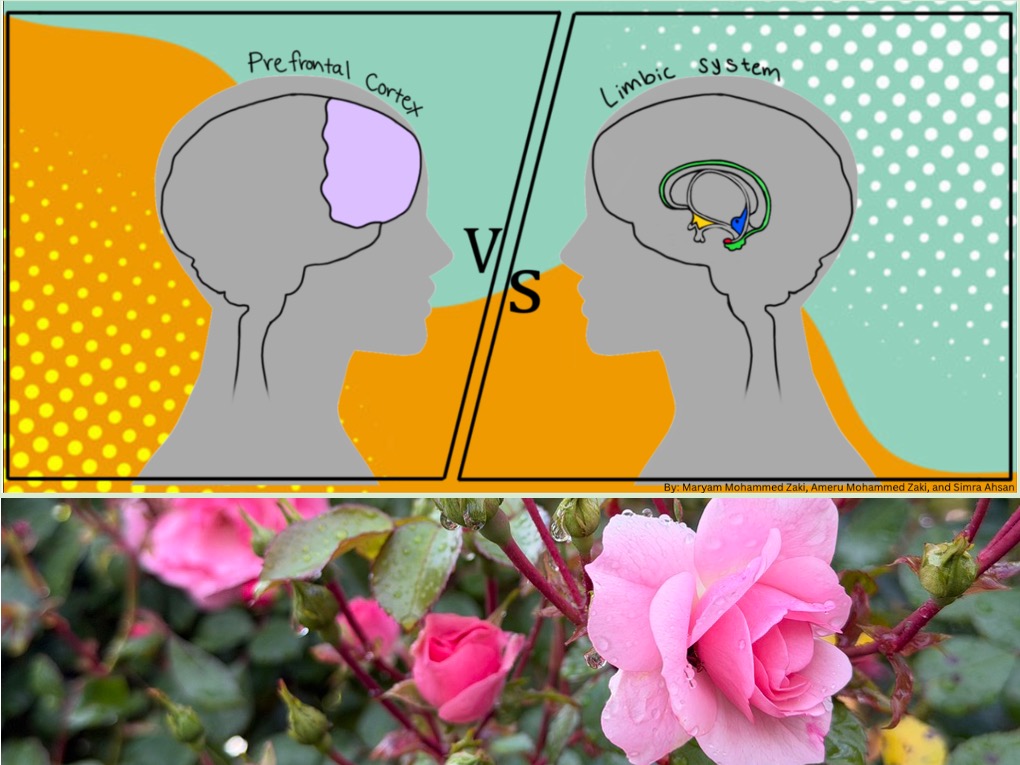
When you do one thing but constantly do another, the question isn’t whether “you” are in control or whether your brain is in control. It’s about which parts of your brain are more dominant than others in that moment of action. For akrasia, two major players of the brain in decision making include the limbic system and the prefrontal cortex. Understanding what they do and how they work together could show us how we can consciously change which brain region wins when making a choice.
The Limbic System
The limbic system, termed the “old brain”, is located deep in the center of your noggin. It is a survival based, instinctual, and often dominant part of your brain that constantly wants instant gratification. It often feels unconscious as it is fast for immediate survival, and takes less energy than the prefrontal cortex to process information.
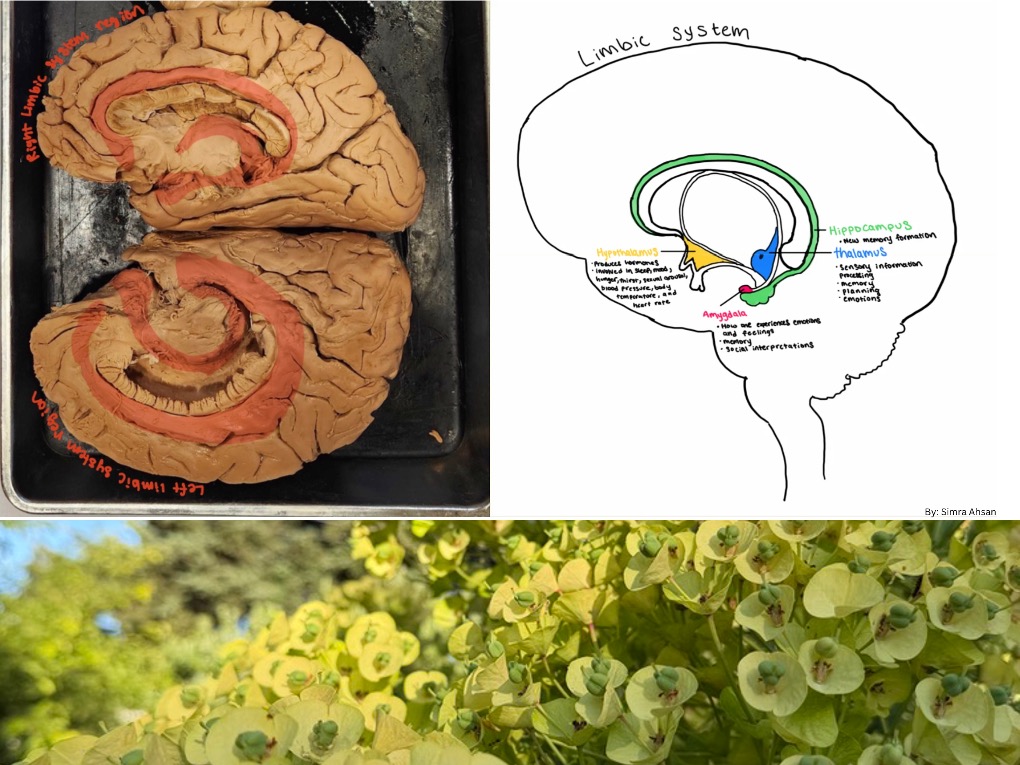
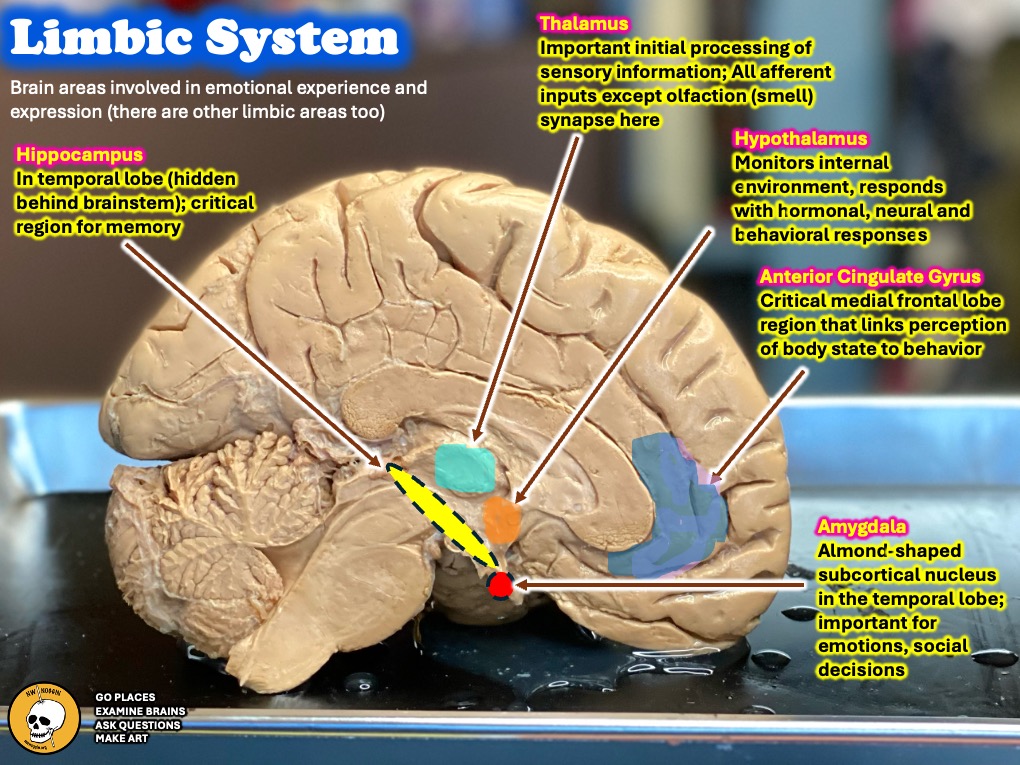
There is a lot of discourse on what parts of the brain make up the limbic system. For this post, I’m defining it by what the Cleveland Clinic includes: the hippocampus, hypothalamus, thalamus, and the amygdala. To understand what each structure does, it is helpful to imagine how they might each respond to a specific situation.
LEARN MORE: What is the limbic system?
LEARN MORE: Limbic System anatomy and physiology
LEARN MORE: Damage to the insula is associated with abnormal interpersonal trust
LEARN MORE: Lesion evidence for a causal role of the insula in aversion to social inequity
For example, the thalamus is involved with sensory processing, so it could be focused on thinking “what am I sensing and where do I send this information?” The amygdala contributes to how we feel, particularly with strong emotions relating to survival. I think it would ask, “Is this emotionally important, rewarding, or threatening?” The hippocampus helps us retain and recall memories and provides context for emotional experiences, so it might be focused on “when did this type of situation happen before?” Last but not least, the hypothalamus is in charge of basic needs for survival and regulation. It would ask, “How does this affect the body, and what do I prime for whatever comes next?”
The limbic system sends information to the prefrontal cortex regarding memory and emotions to help us recognize significant situations and determine how to react. That means that your brain often processes a strong, emotional, and instinctual response to a situation before your conscious and slower prefrontal cortex has been able to respond. That could explain why people can instinctually jump out of a car’s way before they consciously know what’s happening.
The limbic system is evolutionarily older than the prefrontal cortex.

Due to evolutionary pressures for survival, the limbic region of the brain is constantly on alert for both immediate threats and rewards, but it may not be as advantageous as it once was. Evolutionarily, reacting quickly to food, danger, safety, or social cues versus being slower and more critical often equated to better survival. Contrary to the past, modern-day challenges for survival and quality of life often require longer-term planning to reap larger rewards as human lifespans increase and immediate threats to survival decrease.

It’s super cool to note that this system has very unconscious yet direct impacts on the body. For example, the limbic system has bidirectional connections with the gastrointestinal tract and other visceral organs that make up what’s known as the gut-brain axis. You have probably experienced it in action if you have had “gut feelings.”
Because the limbic system is more integrated into the peripheral nervous system compared to the prefrontal cortex, the limbic system’s more survival and immediate reward-based judgments can feel stronger.
LEARN MORE: A brief review of limbic system anatomy, function, and its clinical implication
LEARN MORE: The Limbic System and Its Influence on Human Behavior
LEARN MORE: Gut Signals and Gut Feelings: Science at the Interface of Data and Beliefs
LEARN MORE: Gut–brain axis and neuropsychiatric health: recent advances
LEARN MORE: Feeding the mind: Gut-brain insight
Limbic-driven reactions feel immediate and convincing, almost like the body has already decided before we even realize what’s going on. It helps to respond to emotions and recognize what matters. The problem is that it is fast, reactive, and focused on immediate matters. To pause, weigh consequences, and choose based on long-term goals, the brain needs another character to step in…
The Prefrontal Cortex
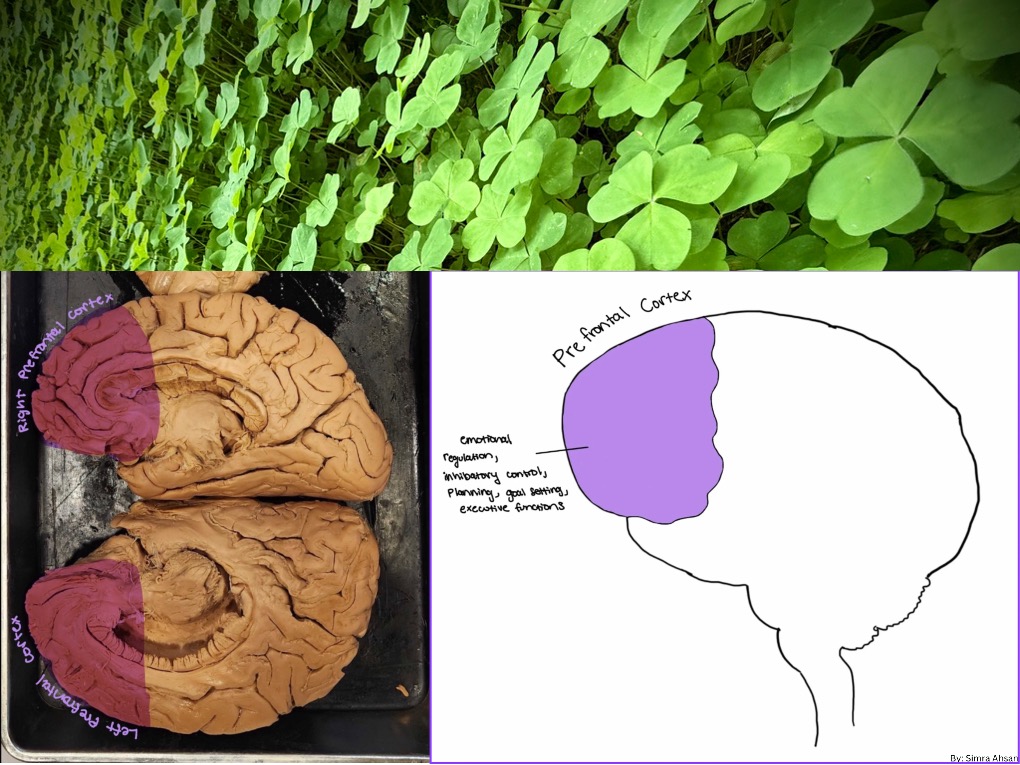
The prefrontal cortex (or PFC) is the evolutionary “newcomer” or “new brain,” as it developed a couple million years after the limbic system. The prefrontal cortex, located in the frontal outer area of your brain, is in charge of complex planning, emotional regulation, and self-control.

It’s the part of our brain that generates our conscious processing of memory and emotions to generate rational thoughts and decision-making. Due to its more complex information processing, it is slower and more energy-consuming compared to the limbic system. Once the PFC receives signals about the limbic system’s perception of a situation, it considers the information using its own holistic details to the prefrontal cortex to make the most informed decision it can to respond to the situation.
An important function of the PFC is its regulation of the limbic system.

The PFC regulates the intensity of the limbic system by sending signals that can inhibit or lessen the more intense and impulsive reactions that the limbic system generates. Situations the PFC thrives in are calm and slower situations where critical thinking skills, planning, and logical decisions can be made – as long as the PFC has enough energy to deal with the complexity of situations. Factors like an underdeveloped prefrontal cortex or impairment (whether that be via stress, lack of sleep, or from a stimulus like alcohol) impacts the PFC’s ability to control or inhibit the limbic system.
LEARN MORE: Emotion and the prefrontal cortex: An integrative review
LEARN MORE: Effective amygdala-prefrontal connectivity predicts individual differences in successful emotion regulation
LEARN MORE: Shared and distinct prefrontal cortex alterations of implicit emotion regulation in depression and anxiety
Your PFC and Limbic System control each other
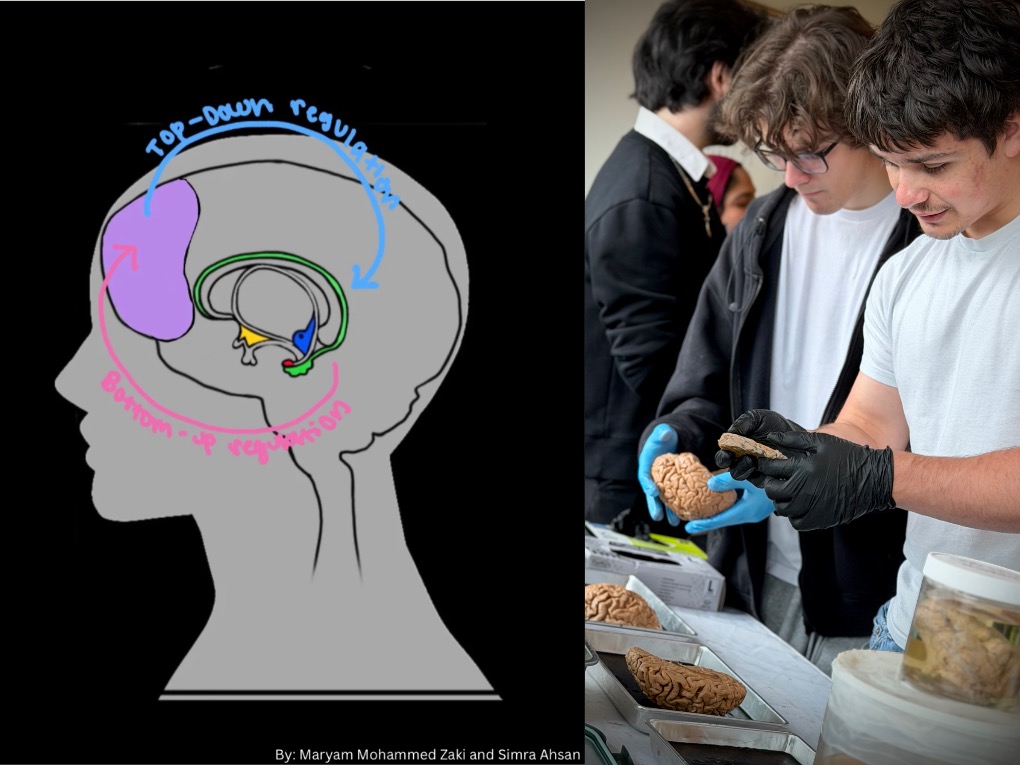
PFC in control: Top-Down Regulation
The PFC helps us with pausing, evaluating a situation, and choosing an action based on our long-term goals. This occurs by inhibiting or controlling the limbic system via top-down regulation. For example, if someone is yelling at you, your immediate emotional reaction may be to become defensive. However, the prefrontal cortex may help you reconsider the situation by logically thinking, “they might have had a bad day,” which allows you to respond more calmly. Due to its complexity, top-down regulation works best when we have enough energy for our prefrontal cortex to sufficiently inhibit the limbic system. It also needs enough stress-free time to critically think through situations.
Limbic System in control: Bottom-Up Regulation
On the other hand, bottom-up regulation is stimulus-reaction based. The limbic system is able to send signals up to the prefrontal cortex to influence a more emotional and instinct-based decision. An example of this is tensing up and immediately getting defensive or upset if someone yells at you. You may bounce into that “fight or flight” reaction even before you cognitively realize what’s going on. When the limbic system is in control, you are more likely to make decisions instinctually for immediate rewards, safety or comfort. That decision might not always be better for you in the long term.

Both responses are there to protect us in different ways, and both are trying to take control during decision making. Bottom-up regulation (limbic response) tries to keep us safe immediately in the moment while top-down regulation (PFC) can help us slow down and make more deliberate decisions. Different regulations are helpful in different scenarios, but they both try to dictate what decision is made in every situation.
The challenge of akrasia comes from the fact that the limbic system is often more powerful and faster than the prefrontal cortex, causing bottom-up regulation in situations where top-down regulation would have been more advantageous.
If both top-down and bottom-up regulation influence every action we make, we must ask that important question:
Who IS in control?
The kind of regulation you experience (AKA which brain region takes control) can change situationally. For example, factors like fast-paced environments, high stress situations, or feeling out of energy, is when your bottom-up regulation is more likely to take control. Those stimuli might put the body in a “fight or flight” mode, where the limbic system is most active and efficient.
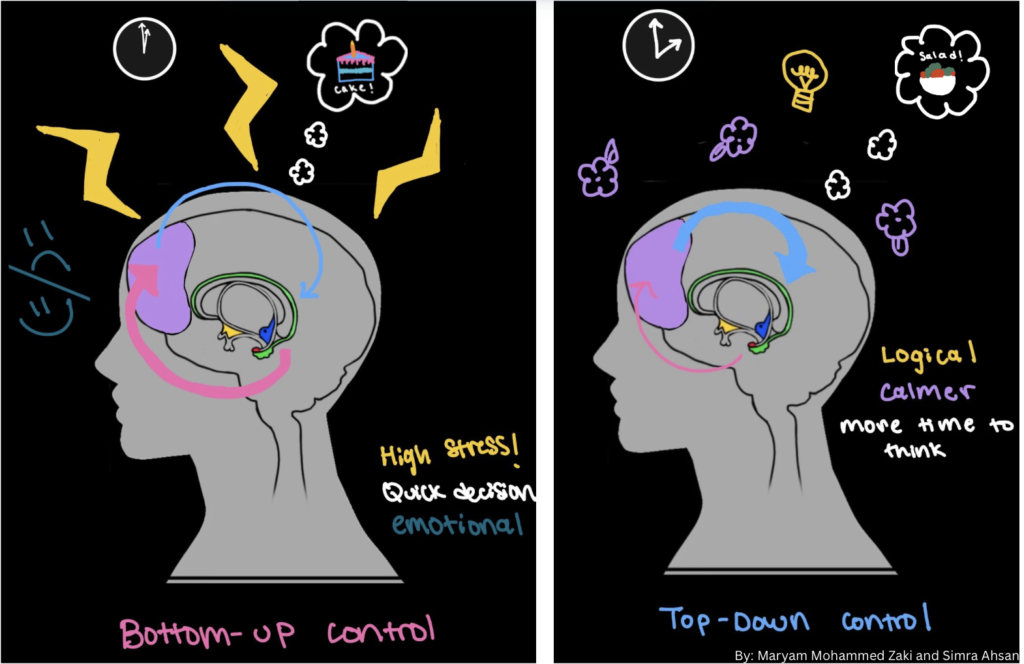
On the other hand, if you were supposed to make a decision while you aren’t as stressed out, have sufficient energy, and have time to think and weigh your decisions, control will more likely tip towards your top-down regulation. This gives the PFC the ability to take in information with enough room to assess the situation and create a plan to act on, which is when the PFC functions best.
This explains why the same person may make different decisions on the same task under different circumstances. They may be able to focus on an assignment after having a calm and restful day, but if they had a highly stressful morning, then the person may find it much more difficult to begin the same assignment. The goals have not changed, but the conditions of the brain and body have caused the change in decision-making.
The prefrontal cortex or limbic system’s ability to dominate is also impacted by genetic and environmental factors. Genetic traits impacting the way your brain is wired include conditions contributing to neurodivergence; e.g., ADHD, schizophrenia, depression, anxiety disorder, and PTSD. Some of these conditions could also be acquired because of environmental conditions like growing up or living in unsafe conditions, having limited resources that could stunt one’s ability to thrive, or experiencing trauma and abuse.
The limbic system is affected and often hyperactive in conditions like PTSD, Stress, Anxiety disorder, depression, schizophrenia, and neurodivergence. Neurodivergent brains, specifically those with ADHD, have different brain connectivity that gives wiring power to the limbic system for bottom up regulation. Less inhibition power from the prefrontal cortex to the limbic system makes getting distracted way easier. It was also found that people diagnosed with ADHD often had less volume in their limbic system which has a correlation to reduced ability to control emotions. This is because a smaller limbic system might not have enough surface area or space to receive inhibiting signals from the PFC as efficiently.
A lot of these overactive limbic system conditions are characterized by dopamine-related imbalances.
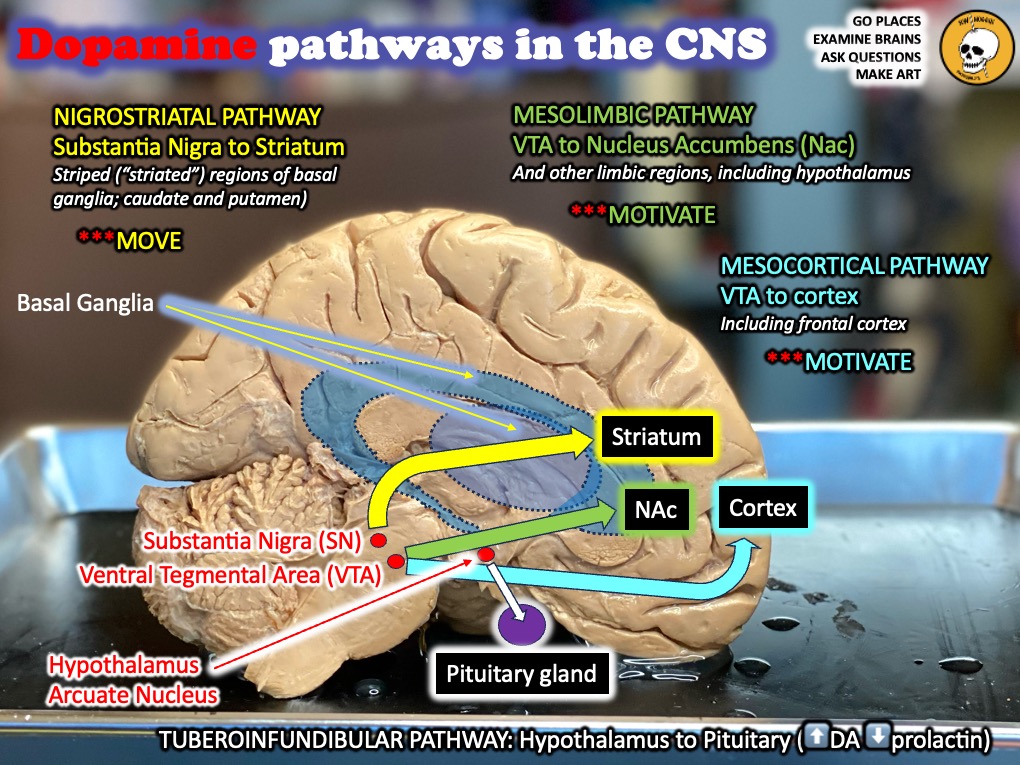
Dopamine impacts both bottom-up limbic regulation and the PFC. During fight or flight, the release of dopamine along with norepinephrine and epinephrine readies the body for motivated action and response. Dopamine is also released during actions that cause instant gratification. Compared to the limbic system, dopamine is needed at higher levels in order to activate the prefrontal cortex for top-down control, in pursuit of more complex, considered, often delayed promises of greater reward.
Conditions like ADHD, depression, and PTSD often are correlated with low tonic levels of dopamine – enough to be triggering to the limbic system but not enough to engage the prefrontal cortex. In fact, drugs for neurodivergent conditions like ADHD increase dopamine and other modulatory neurotransmitters to help activate the PFC to increase top down focus and planning. An overactive limbic system and underactive PFC due to lower tonic dopamine can explain why people with these conditions are more likely to have bottom-up dominant control and experience akrasia more strongly or often compared to neurotypical populations.
Past experiences and habits can also influence whether bottom-up or top-down processing is more dominant.
The brain draws on previous experiences to predict how it should react to a new situation, often without conscious awareness. I read about one patient who felt nauseated and on edge from the smell of coffee. During therapy, the patient recalled that coffee was brewing in the room where they had been assaulted. Though the patient wasn’t consciously aware of the coffee smell during their horrible experience, it’s interesting that their limbic system linked it to the traumatic memory. They understandably reacted in more stressed-out ways after smelling coffee because of that bottom-up regulation kicking in.
Habits work similarly. When a response is repeated often enough, certain cues can begin to trigger top-down or bottom-up based reactions depending on what reaction you now regularly deploy for the situation. An example of this is how the sound of a phone notification may prompt you to reach for your phone before consciously considering whether you should. Such immediate learned responses may temporarily outweigh the PFC’s ability to pause and consider longer-term goals.
LEARN MORE: Neurodiversity
LEARN MORE: Two Parts of the Brain Govern Much of Mental Life
LEARN MORE: Neurodiversity and Neurodivergence: Subject and Definition
LEARN MORE: PRACTICAL STRATEGIES FOR OVERCOMING ADHD PARALYSIS
LEARN MORE: Bottom-Up Versus Top-Down Processing: How Interventions Work
LEARN MORE: How Is the ADHD Brain Different?
LEARN MORE: A Dive Into Habits
LEARN MORE: A sense of self
We have explored reasons why top-down and bottom-up regulation changes situationally. We also looked into how environmental or genetic factors like tonic dopamine levels, as well as past experiences and habits can change which part of the brain takes control when making a decision.
However, that doesn’t explain why after I decide on a PFC-based intention, I still end up making a limbic system-based decision. To understand why this phenomenon happens, we need to ask another question:
Why does it feel like we do things against our will?
Part of what makes akrasia so frustrating is that it almost feels uncontrollable. It’s like you have conscious intent to do something good for you in the long term, but unconsciously end up making a decision that is more beneficial for short term rewards. Breaking down which part of your brain is consciously or unconsciously influencing your decision-making can help us understand why akrasia feels so sneaky, and how we can make our brain act more consciously.
As discussed earlier, the limbic system has more evolutionary power, lower energy requirements, and it’s faster, and more viscerally and reflexively connected to the body. These factors combined can make limbic activation feel more instinctual, automatic, and unconscious. The PFC is newer, slower, takes more energy, and doesn’t have the same immediate visceral stimulation on the body. It can feels “inside the head.”
These factors combined can make the PFC feel more conscious because of the energy requirement, and the effortful, intentional way the PFC works. It might explain why making logical choices feels like more work and why it’s easier to slip back into habits that lead to short term pleasures. So right off the bat, choosing short term/emotionally-driven choices that the limbic system craves can unconsciously draw you in. It’s up to your PFC to work hard enough to inhibit and consciously control these instincts via neurotransmitters and the conscious consideration of available actions and consequences.
To understand why you can consciously intend to do one thing but end up doing another, we need to understand the difference between intentions and decisions. Intention is the process of planning, goal matching, and predicting. It doesn’t always lead to a decision, and you intend longer than you decide to do something. Intentions can come from a multitude of different regions of the brain, whether that be from the limbic or PFC. You could consciously intend to be on a diet with your PFC while simultaneously having an unconscious intention to eat a cake from the limbic system.
Decision is more cognitive and instantaneous. Decisions have 3 stages:
- Parsing through your options taking into account internal and external factors through an emotional lens
- Cognitive lens on the options depending on needs
- Execution of action and reflection on results of such action
The battle between step 1 and 2 is basically your brain considering the fast, intuitive, and emotional bottom-up control vs the slow, intentional, cognitive top-down control. While both the limbic system and PFC have unconscious or conscious intentions, not all intentions lead to a decision. An intention is turned into a decision when the opportunity arises to act on an intention.
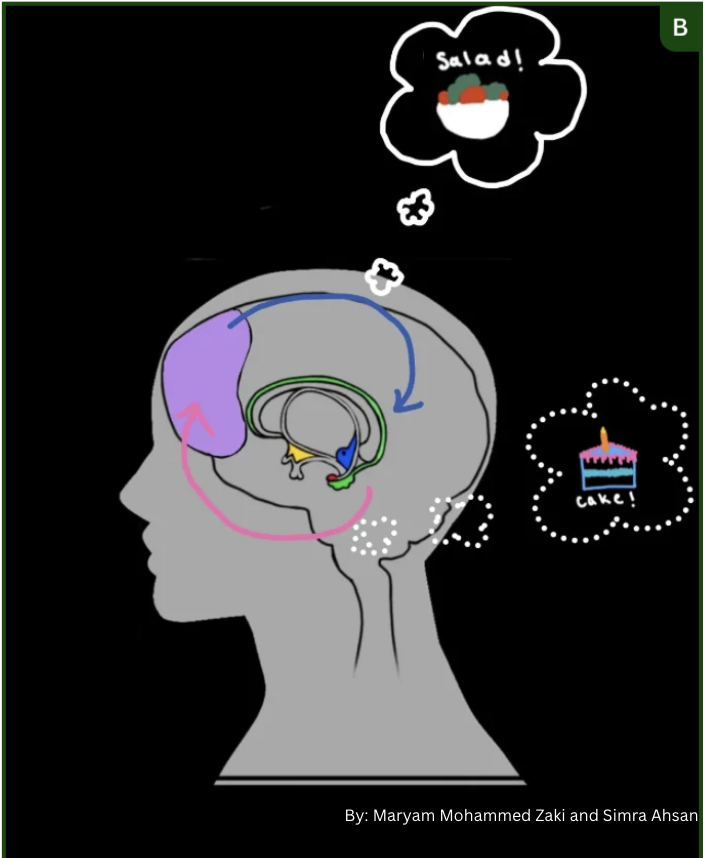
For example, if you have the conscious intention to be on a diet and your fridge has both salad and cake, it’s a battle between the top-down and bottom-up regulation to decide what you end up eating. If your PFC is stronger, you will likely stick to your goal of eating healthier. If your limbic system takes control, you might grab the cake instead.
Lets say you went to the fridge after a messy break up. Your limbic system might be hyperactive, which could be enough to tip the scale to bottom-up control. You’d be more likely to reach for the cake in that scenario. What if you had an amazing day at school? You might reach for the salad (with perhaps a controlled amount of cake). This is because your PFC could be more active than your limbic system at that moment. This shows how we often consciously intend one thing through our PFC, but unconsciously react to what’s around us via the limbic system. Depending on circumstances, it might grab control.
Making better decisions can be harder when certain unconscious responses are now habits.
If a stimulus induces dopamine release, the brain can learn to react every time it appears, or even if you think it might appear. Dopamine underlies that feeling of anticipation, and motivates our behavior. If you’re not getting much dopamine (maybe you’re bored while studying), you might crave a quick check on your phone. If you give into that craving again and again, it can become a habit. Suddenly it’s a less conscious action to check your phone. In fact, for many of us, when there’s less dopamine, the cravings for something stimulating hit, and initiate limbic control. Therefore, past experience and habits impact whether limbic or PFC dominates, and what’s around us can tip the scales (in other words, maybe while studying – hide your phone!).
LEARN MORE: Consciousness, decision making, and volition: freedom beyond chance and necessity
LEARN MORE: The Criticality of Consciousness: Excitatory–Inhibitory Balance and Dual Memory Systems in Active Inference
LEARN MORE: Synaptic plasticity of prefrontal long-range inhibition regulates cognitive flexibility
LEARN MORE: Neuronal Circuits for Social Decision-Making and Their Clinical Implications
LEARN MORE: Shared understanding of narratives is correlated with shared neural responses
LEARN MORE: The Current of Consciousness: Neural Correlates and Clinical Aspects
LEARN MORE: An integrative view of the role of prefrontal cortex in consciousness
LEARN MORE: Executive control and decision-making in the prefrontal cortex
How to take control of your brain
If bottom-up regulation has become your unconscious default, what can be done about it? If the problem of akrasia is that the limbic system has too much bottom-up control, then we must strengthen our prefrontal cortex to exert top-down regulation.

Some ways that we can do that include creating an environment that the PFC thrives in, using organizational and reflective tools, building habits that supports the PFC, working with our brain, having a growth mindset, and seeking external help when needed.
“Until you make the unconscious conscious, it will direct your life and you will call it fate.” –Carl Jung
If you don’t consciously acknowledge the unconscious cravings and tendencies, you will never introduce your PFC into the decisions your limbic system is making. It’s almost like trying to fight an invisible opponent. To boost the PFC to have a stronger impact with top-down control, you have to play to the PFC’s strengths by cultivating an environment that it naturally takes control of. For example, practicing meta cognition by naming your feelings switches you from reliance on your emotional limbic system to your more cognitive PFC. This helps you view a situation through a more expansive social perspective. This strategy does not eliminate emotion, but it does help prevent the limbic system from becoming the sole influence on a decision. Forcing yourself to make outcome predictions before going with instincts also flexes your PFC and helps it step into a decision.
We can also reduce the amount of information and stress the brain has to deal with internally by managing akrasia using external tools. For example, while shadowing a cardiology nurse, I learned that they carry a sheet of paper where they record plans, reminders, and passing thoughts throughout the day. They described it as an “external brain.” Whether that be a planner, to-do list, a brain dump, journaling, daily affirmations, or any other method that helps you keep your thoughts in order and goals in sight, this practice pushes your prefrontal cortex into action.
Long term akrasia management comes back to consistency and building habits that support your prefrontal cortex while preventing overstimulation of the limbic system. Focusing on creating habits that hit basic needs makes a big difference to the PFC. Getting enough sleep, nourishment, movement, enjoyable activities, and stress management impact the ability for the prefrontal cortex to initiate top-down regulation.
Part of this journey means knowing how to work with your brain. For example, if you know that you are a morning person, do exercise or homework in the morning and do less energy demanding things later in the day. Changing the environment can make helpful choices easier as well. If you know your phone is an unconscious stimulus, keeping a phone out of reach while studying removes a cue that might trigger an automatic habit. If you know your brain often makes bottom-up decisions when given a big project, breaking a large task into one small first step can make the beginning feel less overwhelming. Habit stacking, adding a new behavior after something you already do regularly, can also reduce the effort needed to remember and initiate it. You could do this by doing a few push-ups after brushing your teeth to make a new habit of exercise feel more approachable. The entire goal is to externally lessen the energy and resistance for top-down control when the opportunity to make a decision arises.
While it’s easy to say these things, it’s hard to follow through, especially when there will be lots of mistakes along the way. Adopting a growth mindset can lessen the activity of your limbic system and strengthen your prefrontal cortex in many ways. A growth mindset can support this process by changing how we respond to mistakes. Rather than treating a setback as proof that change is impossible, we can treat it as information about what triggered the behavior and what support might help next time. Research has associated a growth mindset with greater attention to errors and better adjustment after making them. The mindset itself does not magically strengthen the PFC, but it encourages learning, reflection, and practice through which neuroplastic change occurs. The goal is therefore not to eliminate emotion or place the prefrontal cortex in complete control. It is to repeatedly practice responses that help top-down and bottom-up systems work together more effectively. Over time, pausing, regulating stress, changing the environment, and returning to a long-term goal become more familiar and easier to do.
Seeking external help when needed is super important, especially if you have been diagnosed or suspect that you may have a mental health condition or are neurodivergent. Connecting with a life coach, trying therapy, perhaps getting prescribed medications, or asking for help from professionals may be beneficial if you are struggling severely with akrasia.
LEARN MORE: The Neuroscience of Growth Mindset and Intrinsic Motivation
LEARN MORE: Neuroscience Says This Embracing This Powerful Mindset Actually Rewires Your Brain
LEARN MORE: Impact of short- and long-term mindfulness meditation training on amygdala reactivity to emotional stimuli
LEARN MORE: Neural mechanisms of symptom improvements in generalized anxiety disorder following mindfulness training
LEARN MORE: How Our Brain Preserves Our Sense of Self
LEARN MORE: Sense of self in mind and body
And…not everyone can do this
Situations that cause a limbic system to become hyperactive include high stress, unsafe environments, and a lack of energy. There are so many reasons why certain populations are more likely to be stuck in situations that induce bottom-up control. To manage akrasia we should reduce stress, change our environment, and build healthier habits. But if you live in areas under assault like Palestine, or in an abusive or unsafe home, these are not viable options.
Taking care of basic needs and seeking professional help are important, but not everyone has access or resources to fulfill their nutritional, housing, and medical needs. There could also be cultural stigmas that could make seeking help more difficult.
Say for example, you are a lower income college student who is neurodivergent. If you don’t have insurance, maybe you can’t afford medications. You may already struggle with being able to focus and plan ahead, causing more stress and school avoidance, putting you at a further disadvantage. Excessive akraisa can inhibit our quality of life, self confidence, and potential for progress. It’s important to recognize these disparities in order to fund research and solutions that support these populations as everyone deserves the right to take control of their own brains.
LEARN MORE: Safe Places in Unsafe Times
LEARN MORE: Association of War Zone-Related Stress With Alterations in Limbic Gray Matter Microstructure
LEARN MORE: Neurobiological Imprints of Trauma
So to answer the question…
Are you in control of your brain or is your brain in control of you?
You can’t separate yourself from your brain, but you can have opposite judgments from different parts of your brain.
After going down this research rabbit hole over who is in control, I learned that it depends.

It depends on the context of the question, the situation of the decision, and the people and brains involved!
This question was so complex and compelling. Yet through research I discovered how to combat my own experience of akrasia. I have already started implementing the findings from this post into my life, and I’m improving top-down control when akrasia starts to creep in. Being able to know why I act the way I do and knowing what to do to change it has honestly changed my life, and I feel a new sense of control over my actions.
I am so thankful to experience the outreach opportunity as I wouldn’t have deep dived into the neuroscience of akrasia if it weren’t for the brilliant student with her curious questions!