


Post by Haile Wells, undergraduate in Psychology with a minor in Interdisciplinary Neuroscience at Portland State University. Haile is a research trainee for the TALENT lab at PSU. In her free time, she volunteers with Art on the Brain, an art therapy program for traumatic brain injury survivors.

As a college student, the use of AI has become a prominent topic of conversation amongst my peers and teachers. One term, we are told never to touch large language models (LLM’s) like ChatGPT, and the next, LLM use is encouraged. As more research emerges surrounding AI, disputes are arising over whether or not AI has a place in the classroom.
What is AI?
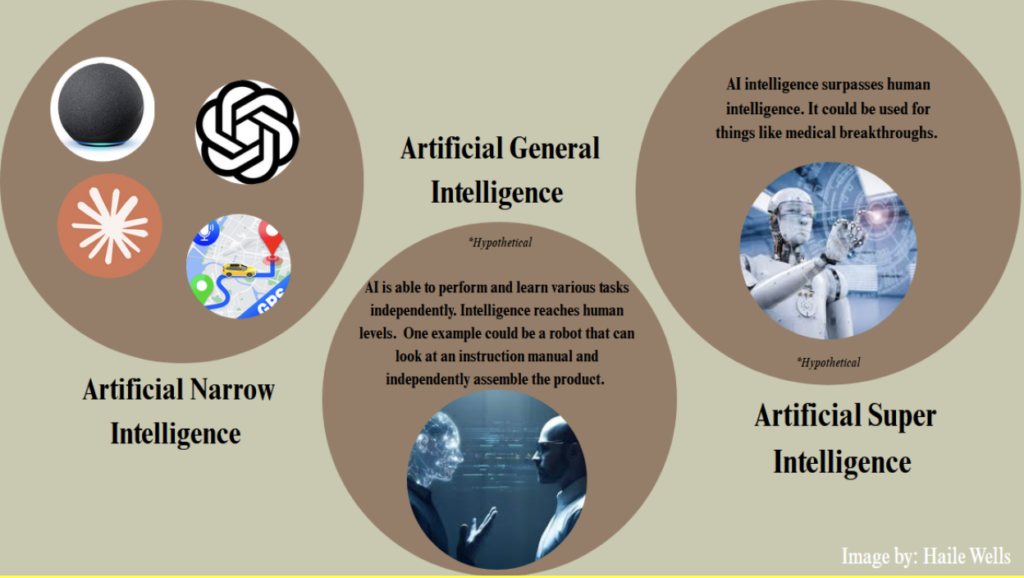
Artificial intelligence (AI) is the use of computer technology to accomplish tasks that are typically performed by people. AI can be defined and divided up in many ways, but two types that often impact classrooms (and the culture at large) are Artificial Narrow Intelligence (ANI) and Artificial General Intelligence (AGI). Artificial Super Intelligence (ASI) systems are defined as those transcending human intelligence.
“Within a few decades, machine intelligence will surpass human intelligence, leading to The Singularity — technological change so rapid and profound it represents a rupture in the fabric of human history. The implications include the merger of biological and nonbiological intelligence, immortal software-based humans, and ultra-high levels of intelligence that expand outward in the universe at the speed of light.”
― Ray Kurzweil
Artificial Narrow Intelligence (ANI)
ANI is everywhere in our day-to-day lives and has been around for a while. It specializes in one thing, like Global Positioning Systems (or GPS) for navigation, and is not the primary focus of this post. However, LLMs including Chat GPT and other generative AI platforms, are considered by some as ANI as they also serve a single purpose, like generating text.
LEARN MORE: Three Types Of Artificial Intelligence
LEARN MORE: A Deep Dive on the Differences Between Narrow AI and AGI
LEARN MORE: Understanding AI Technology
Artificial General Intelligence (AGI)
The main form of AI being discussed in this post is generative AI.
Gen AI is “a set of models designed to learn the hidden underlying structure of a dataset and to generate new data points that plausibly could be part of the original dataset” (Bordas et al, 2024). In other words, it uses these datasets to make predictions, much like our brains anticipate outcomes based on past experience. There are many forms of GenAI, but for this post I’m focusing on those intended for public use that are becoming more and more ingrained in daily life.
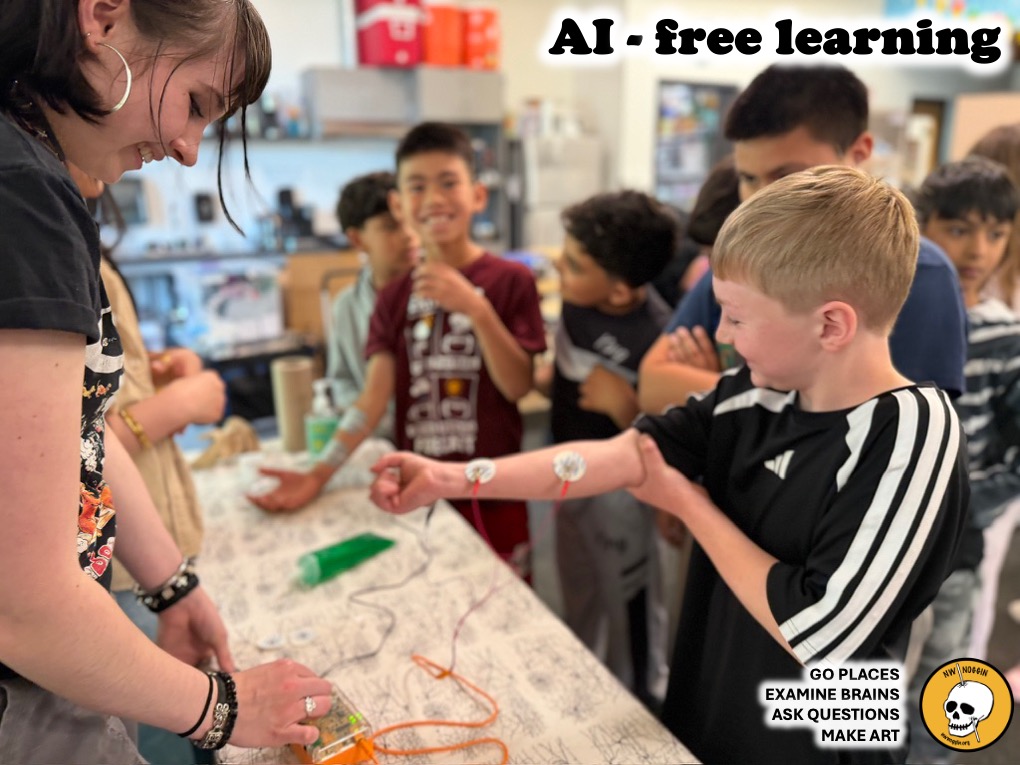
Whether we like it or not, Generative AI is suddenly showing up everywhere. Almost 🙂
LEARN MORE: New Research: Majority of High School Students Use Generative AI for Schoolwork
LEARN MORE: ‘I wish I could push ChatGPT off a cliff’: professors scramble to save critical thinking in an age of AI
Many employers are now screening for ChatGPT or Claude prompting skills, and even a simple Google search will greet you with an AI-generated answer. Portland State University’s own Associate Vice Provost for Academic Innovation “is charged with identifying challenges and opportunities for generative AI in teaching and learning…”
LEARN MORE: What is generative in generative artificial intelligence? A design-based perspective
LEARN MORE: Google Search Is Becoming Something Fundamentally Different. Here’s What That Looks Like
LEARN MORE: PSU PARTNERS WITH GOOGLE TO LAUNCH OREGON AI ACCELERATOR
LEARN MORE: Portland schools’ AI guidebook faces backlash amid brain impact fears
LEARN MORE: AI in Americans’ lives: Awareness, experiences and attitudes
AI is (currently) a hallucinating suck up
Information surrounding the risks of using AI is readily available.
Leading Generative AI companies like Microsoft have admitted that “these (Gen AI) systems are built to be persuasive, not truthful (…) This means that outputs can look very realistic but include statements that aren’t true” (Weise & Metz, 2023, cited in Barassi, 2025). This phenomenon is known as AI hallucination. In addition, Gen AI is prone to confirm existing biases, engaging in what researchers call algorithmic sycophancy.
AI hallucinations and sycophancy are well-documented and are just some of the risks of relying solely on AI.
LEARN MORE: There are significant differences among AI large language models when answering scientific questions
LEARN MORE: Can generative AI reliably synthesise literature? exploring hallucination issues in ChatGPT
LEARN MORE: A Concise Review of Hallucinations in LLMs and their Mitigation
LEARN MORE: AI hallucination: towards a comprehensive classification of distorted information in AI-generated content
LEARN MORE: Algorithmic sycophancy: A new source of systematic distortion in AI-driven biomedical research
LEARN MORE: Sycophantic AI decreases prosocial intentions and promotes dependence
LEARN MORE: AI chatbots are sycophants — researchers say it’s harming science
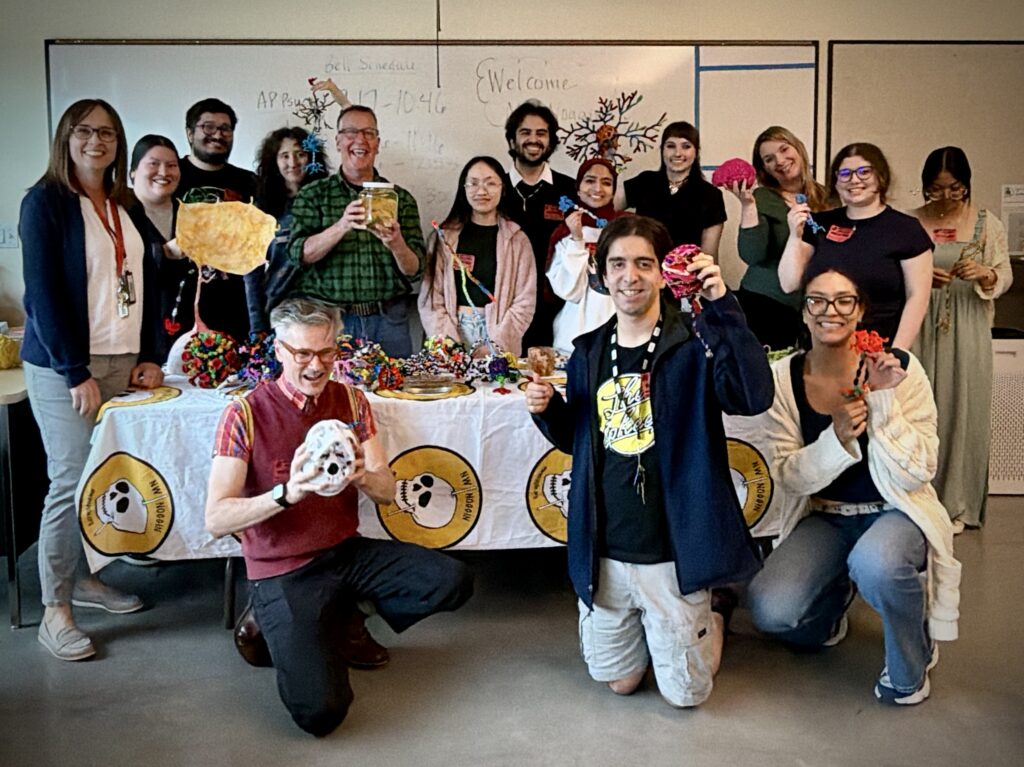
After visiting K-12 classrooms with Northwest Noggin, I saw that this was not just an issue for students. Their teachers were also asking questions like “how does AI affect the brain?” and “does AI impact learning?” With technology and its deployment advancing day by day, I thought it was important to examine how AI affects learning and our brains.
LEARN MORE: Some on Portland School Board Express Distaste for District’s Emerging AI Agenda
LEARN MORE: Natural language processing: state of the art, current trends and challenges
LEARN MORE: ChatGPT is fun, but not an author
What is Learning?
Learning is a crucial component of cognition and an integral part of our everyday lives.
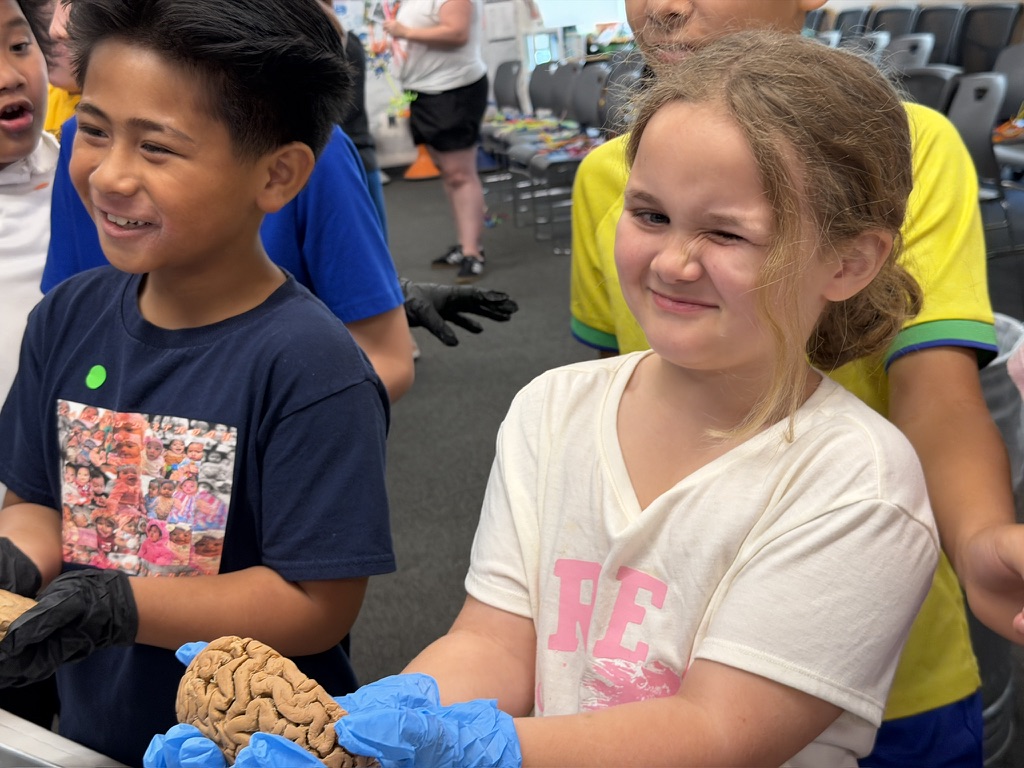
Learning is a very broad concept, but in short, it is the process by which we acquire and store new information.
Learning changes the neural network connections in our brains.
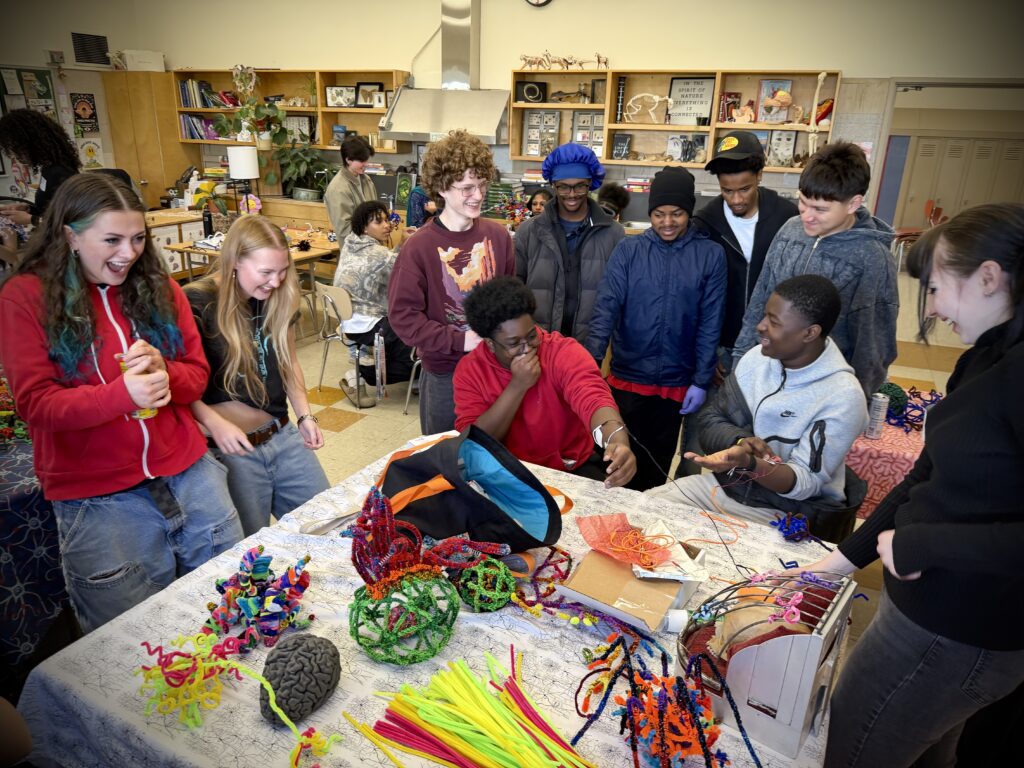
Even if you’re now out of school settings, you are still busy learning. Learning in adulthood takes many forms. Reading about new topics and developing new hobbies all involve learning. Just because it doesn’t take place in a classroom, learning is still a key component of life, and keeps your brain sharp as you age.
LEARN MORE: You can learn new things at any age
LEARN MORE: Common Mechanisms of Learning in Motor and Cognitive Systems
LEARN MORE: Neural Correlates and Molecular Mechanisms of Memory and Learning
LEARN MORE: Exploring the Role of Neuroplasticity in Development, Aging, and Neurodegeneration
LEARN MORE: A Network Neuroscience of Human Learning
Brain areas involved in learning
Learning is a complex cognitive process that requires a plethora of different brain functions.

Here are a few of the important processes and structures.
Perception and Attention
In order to learn, you need to be able to attend to and focus on what you are learning.
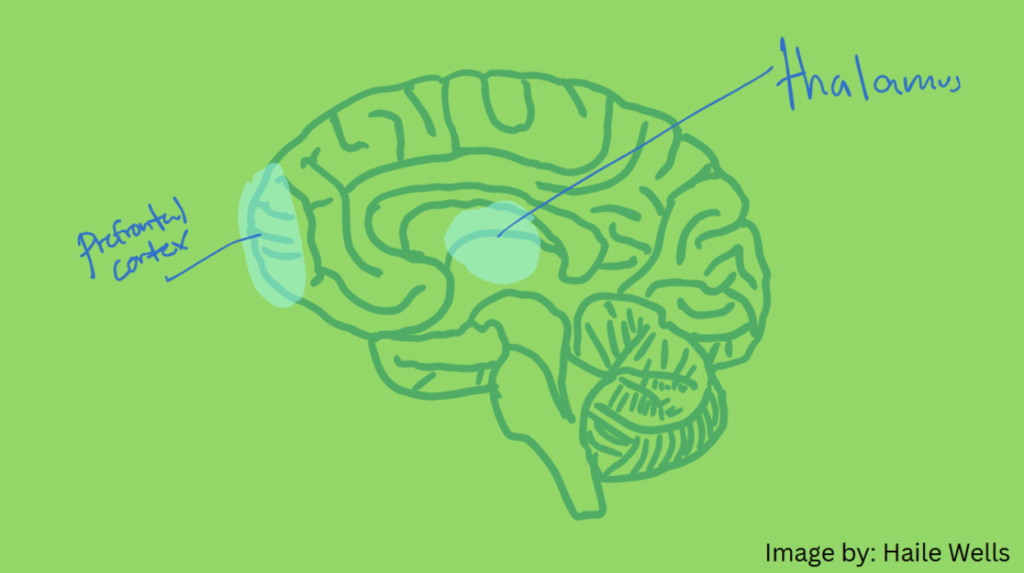
We all have specialized sensory receptors in our eyes, ears and body, which selectively capture energy in our environment, converting (transducing) it into neural activity. Many of these informative electrochemical signals travel to a structure in the center of our brain called the thalamus. The thalamus then links bidirectionally with higher-level cognitive areas like the prefrontal cortex. These brain areas and sensory networks allow us to perceive and attend to incoming information.
Attention requires conscious efforts to block out distracting stimuli and focus on something specific. Achieving this requires coordination of what are called “task-positive” networks of connected areas of the brain. You build these attention networks by attending, and being present, and they are ultimately able to direct what you attend to and perceive. Decreased effort in training these networks can lead to distractibility and memory deficits. Additionally, they can be undermined by short-form video consumption and generative AI use, reducing your ability to attend to important aspects of your environment.
LEARN MORE: Task Positive Network
LEARN MORE: From Perception to Attention
LEARN MORE: Brain health consequences of digital technology use
LEARN MORE: The association between problematic social media use and ADHD symptomatology
LEARN MORE: Flexible adaptation of task-positive brain networks predicts efficiency of evidence accumulation
LEARN MORE: Prefrontal Contributions to Attention and Working Memory
LEARN MORE: Mobile phone short video use negatively impacts attention functions: an EEG study
LEARN MORE: Synapses to Shares
Integration
Once we have perceived and attended to incoming information, we need to integrate it with what we already know.
We integrate new knowledge in many different ways. We use cognitive processes like schemas, organized frames of reference or expectations, to interpret new information, and we apply heuristics to make conclusions about what new information is important, and what it likely means. Schemas help us consolidate and integrate what we’re learning into frameworks we already understand (how does this new learning fit in?). Heuristics are shortcuts that allow us to make decisions based on past experience.
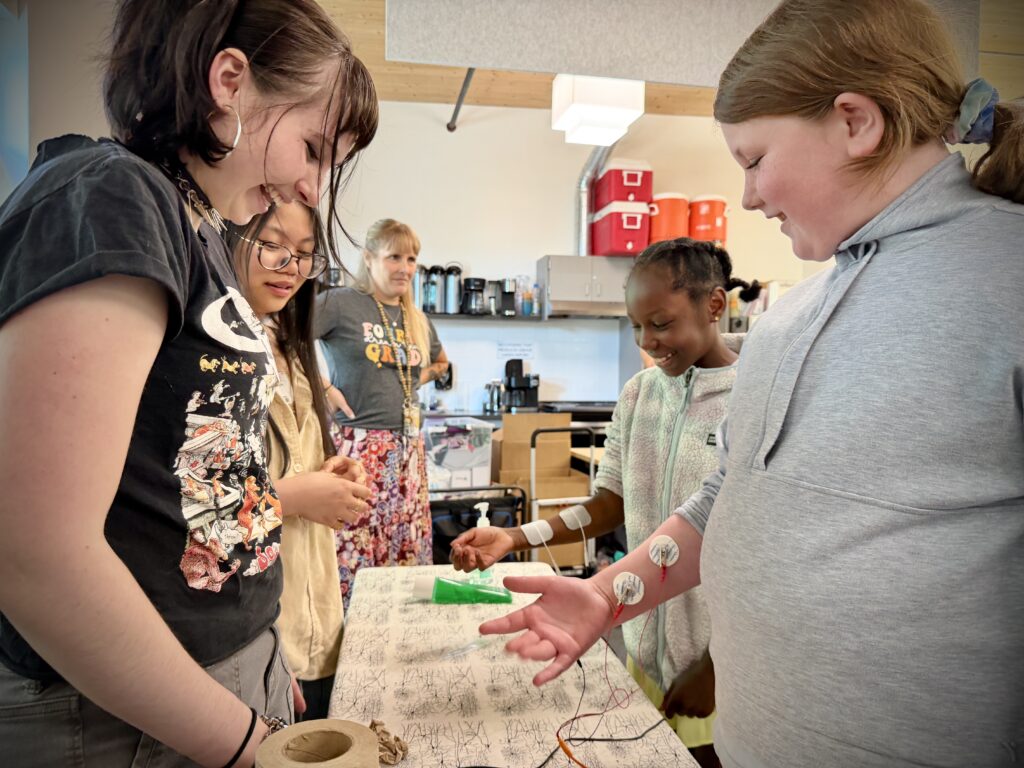
In sum, our brain develops frameworks for learning, based on our own experience, that help us select, comprehend and store the vast amount of information we encounter on a daily basis. New knowledge is integrated with what you already know, and this integration is crucial to acquiring new awareness and skill.
LEARN MORE: Heuristic Decision Making
LEARN MORE: Schemas and Memory Consolidation
LEARN MORE:Hippocampal-neocortical interactions in memory formation, consolidation, and reconsolidation
LEARN MORE: Exploring Cognitive Processes of Knowledge Acquisition to Upgrade Academic Practices
LEARN MORE: Science Education
Memory
In order to truly learn something, you need to be able to recall it.
It’s no use taking a survival course – and then go camping, encounter an emergency, and not be able to remember what you learned. Memory is an equally complex and important step in the learning process. We have many different forms of memory, each dependent on different networked areas of the brain. We can divide memory up by how long you retain it (short term or working memory versus long term memory), and we can also divide it up by type (explicit/episodic, semantic, implicit, emotional).
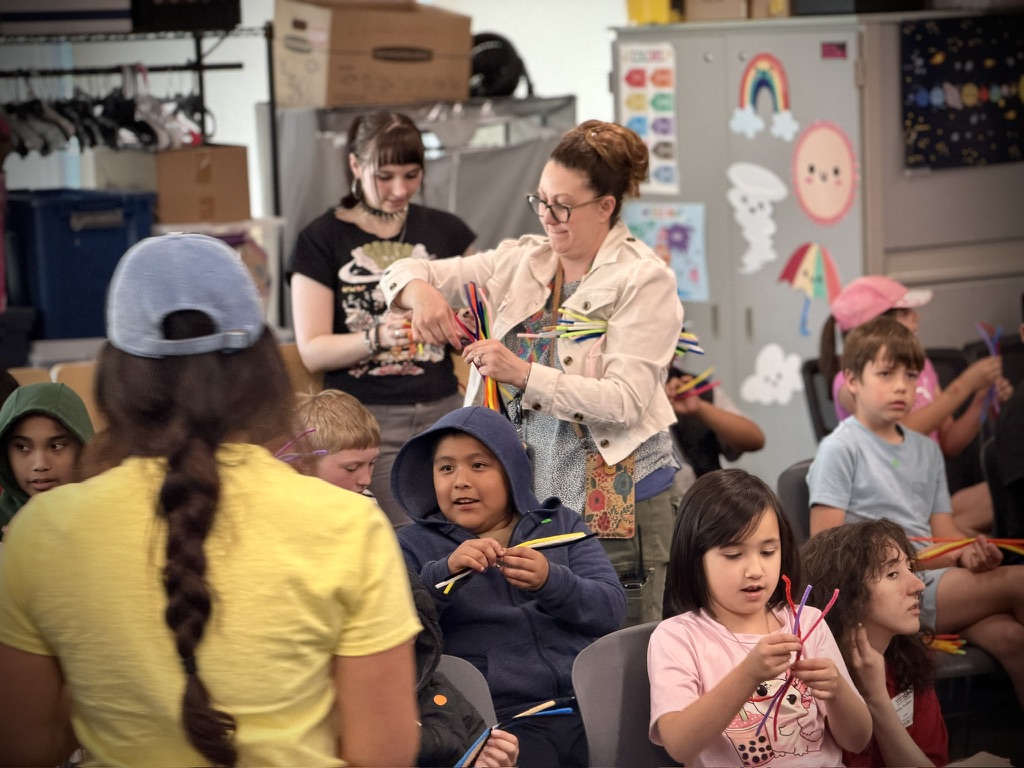
Memory is a key part of our knowledge integration process. It’s what allows us to recall past experiences and thus connect it to new information. Memory is built on what we experience, developmental factors, and the environment around us. Getting out into that environment, being present and attentive and engaged and challenged, is critical for learning and memory.
LEARN MORE: Children Are Sponges
LEARN MORE: Déja Vu, Dreams, and Mechanisms of Memory
LEARN MORE: The Neuroanatomical, Neurophysiological and Psychological Basis of Memory
LEARN MORE: Study illuminates structural features of memory formation at cellular & subcellular levels
A Hippo on Campus?!?!

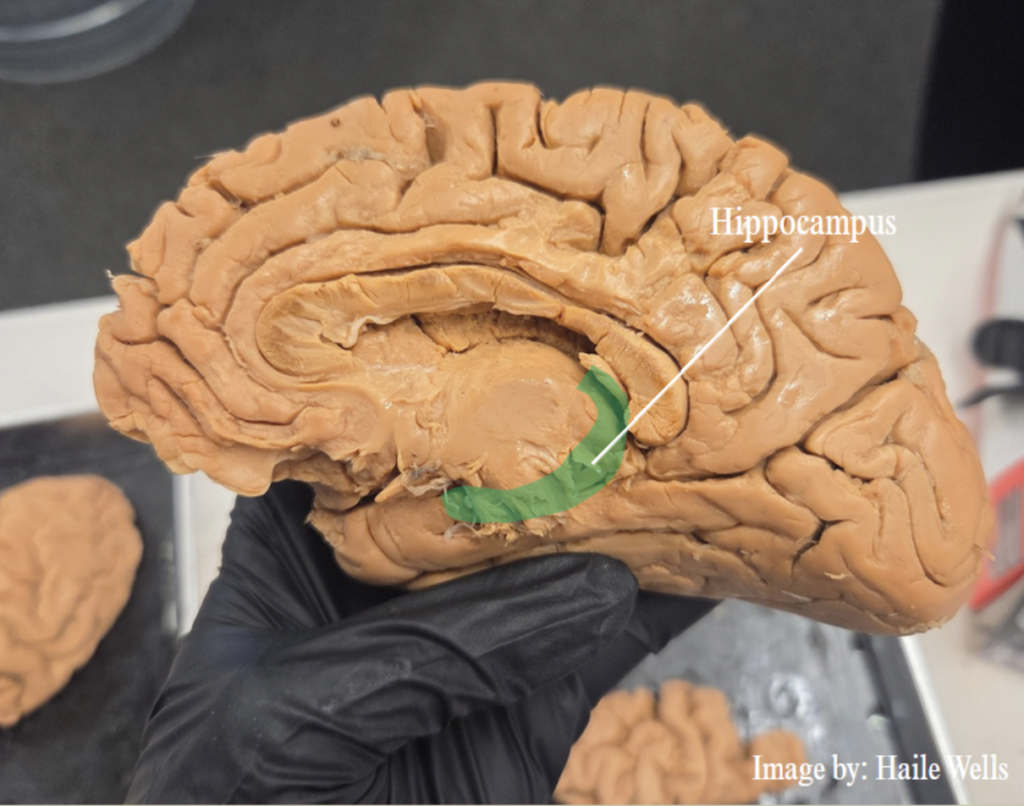
Each of these different types of memory involves a different cognitive network, but one star player in explicit, episodic memory is a structure called the hippocampus. The hippocampus is part of your limbic system and is a key component in transferring short term or working memory into long term memory. It plays a huge role in our ability to recall information, facts, and events.
LEARN MORE: The hippocampus and memory: insights from spatial processing
LEARN MORE: The prefrontal cortex controls memory organization in the hippocampus
LEARN MORE: Interplay of hippocampus and prefrontal cortex in memory
In sum, learning is a complex cognitive process that involves many parts of your brain working together.
Your brain selectively processes information from your senses, it perceives and responds and attends to new information, and then integrates that information into what you know and recall. This active integration allows you to store and retrieve information, thus completing the learning process. With this in mind, it’s important to know how we can aid, or in some cases hinder learning.

Learning Tools
Learning tools can be defined as models, media, and aids that support learning.
These learning tools can range from mnemonic naming devices (ex: ROY G BIV = Red, Orange, Yellow,…) to large language models (LLMs) like ChatGPT or Claude. There is a lot of research surrounding the impacts that learning tools like mnemonic devices have on the learning process. This however is not true for LLMs. Because artificial intelligence is so new to the scene, there is still limited research on how interacting with an LLM during the learning process can affect the brain.
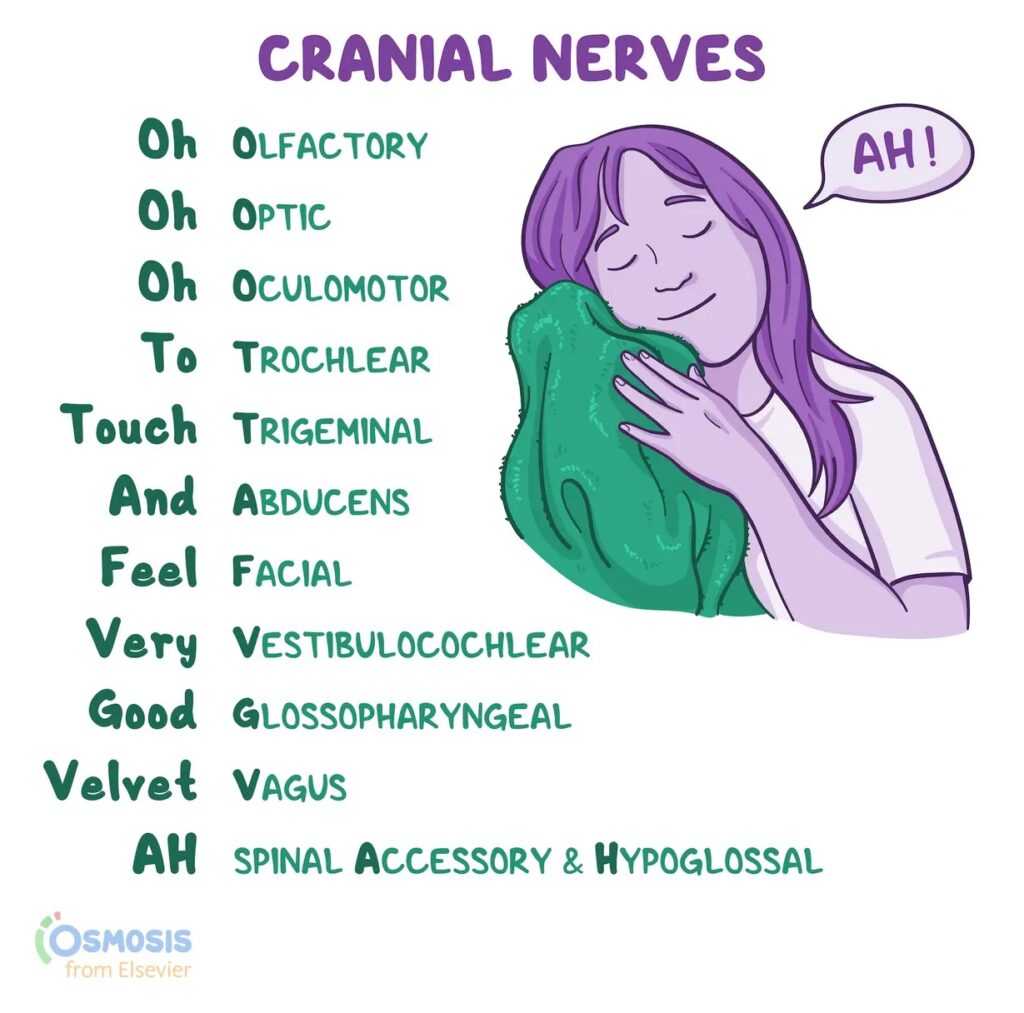
IMAGE SOURCE: Oh Oh Oh To Touch And Feel Very Good Velvet AH
LEARN MORE: Neuroanatomy of the Cranial Nerves
Some studies have found online learning tools and learning technologies effective.
If you have ever gone through the onboarding process for a new job, and were given a manual to read followed by a retention quiz, that was a form of learning technology. Simulations can also be used to teach skills, and there are various other tools that combine technology and learning.
Is AI becoming one of these effective tools?
LEARN MORE: Effects of using educational technology tools to enhance EFL students’ speaking performance
LEARN MORE: The use of digital technology in foreign language learning
AI versus Brain
When we use AI in a learning environment, it is crucial to examine how we use it.
Unlike a lot of learning tools, AI can generate “answers.” Yes, some of these AI responses are hallucinatory and sycophantic, but by using AI, we’re able to offload a lot of our cognitive effort to an LLM. You don’t really need to perceive, attend, integrate or remember much – you just need to formulate a “prompt.”
But not using your own brain can be dangerous, especially in a school setting where the goal is to challenge yourself, engage your noggin, get involved and learn new things.
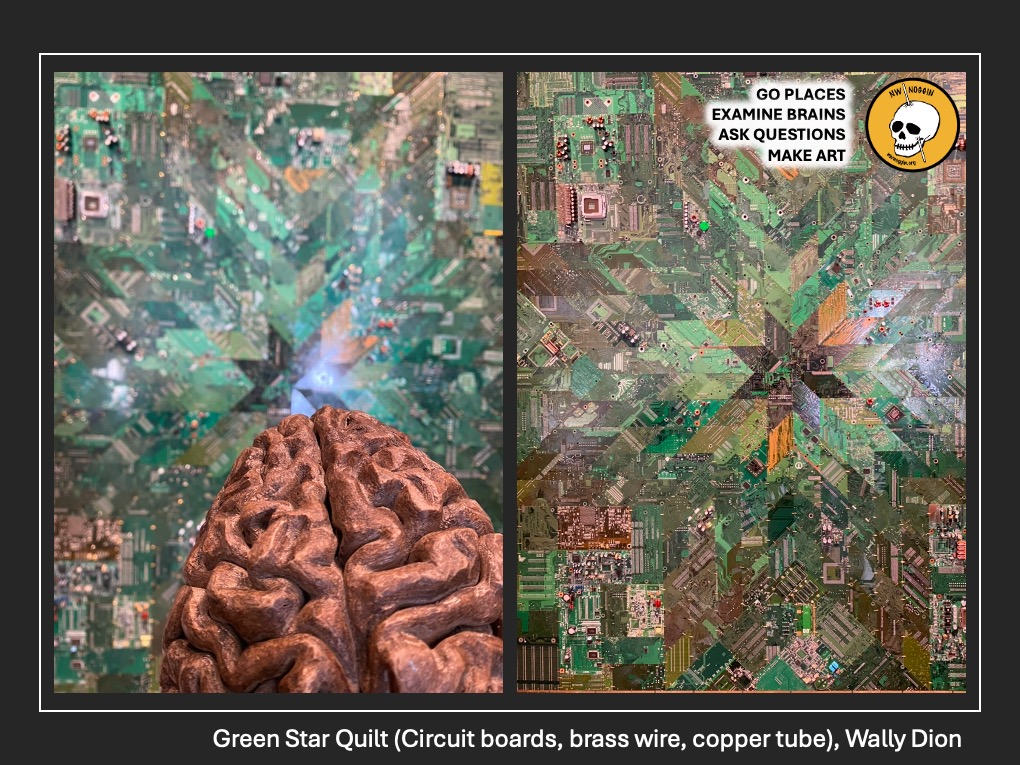
A recent study by Liu et al (2026) found that students labeled AI as an “active” partner in their learning experience, but they frequently engaged in short, one prompt sessions and immediately accepted the responses produced by their “partner” LLM. This is not only a problem due to the frequent hallucinations and tendency of LLMs to offer false, fabricated and flattering data – it also completely undermines the learning process.
By skipping over all the complex cognitive processes involved in learning, and offloading that to AI, the brain’s neural networks do not get activated or engaged. Your own brain doesn’t get involved, pay attention, or change. This not only leads to short-term learning losses, but research suggests that there are long term consequences as well.
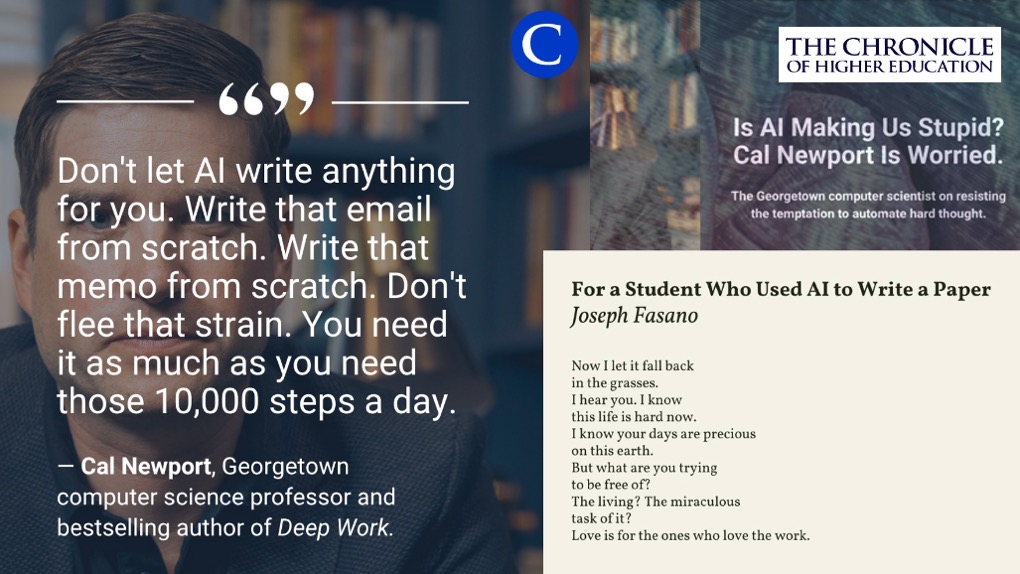
LEARN MORE: Your Brain on ChatGPT: Accumulation of Cognitive Debt when Using an AI Assistant for Essay Writing Task
LEARN MORE: A Meta-Analysis of the Impact of Generative Artificial Intelligence on Learning Outcomes
LEARN MORE: A New Direction for Students in an AI World: Prosper, Prepare, Protect
LEARN MORE: The Impact of Artificial Intelligence (AI) on Students’ Academic Development
LEARN MORE: The Psychology of AI’s Impact on Human Cognition
LEARN MORE: Minds in Crisis: How the AI Revolution is Impacting Mental Health
LEARN MORE: Cognitive Consequences of Artificial Intelligence: Is Human Intelligence at Stake?
LEARN MORE: From tools to threats: a reflection on the impact of artificial-intelligence chatbots on cognitive health
LEARN MORE: Is AI Making Us Stupid? Cal Newport Is Worried
LEARN MORE: Is AI dulling our minds?
Use It or Lose It
The “use it or lose it” principle of neural plasticity emphasizes our need to engage our brain areas, or we risk losing them. Especially within our hippocampus, we lose neuronal connections if we don’t actively engage them and learn ourselves.
“Spoon feeding in the long run teaches us nothing but the shape of the spoon.”
― E.M. Forster
When it comes to AI, this presents a pressing issue. Offloading cognition to AI becomes less a case of short-term learning losses, and shifts more towards potential long-term effects. If we don’t engage our brains in the learning process, we run the risk of losing them altogether. What is scarier is that this is not just a question of “if,” as research suggests it is already happening.
LEARN MORE: Use it or lose it: How neurogenesis keeps the brain fit for learning
LEARN MORE: .use it or lose it (what happens when AI does our thinking)
Even using Artificial Narrow Intelligence, including GPS, has consequences for the brain.
A well-known study examining the brains of London cab drivers found increased grey matter volumes in parts of their hippocampi, that memory area crucial to remembering spatial landmarks and navigation. In order to be a cabbie, they are required to learn the streets and navigate without a map. Years of driving and exploring the streets of London using only their brains helped to build these essential neural networks and update this critical memory structure.
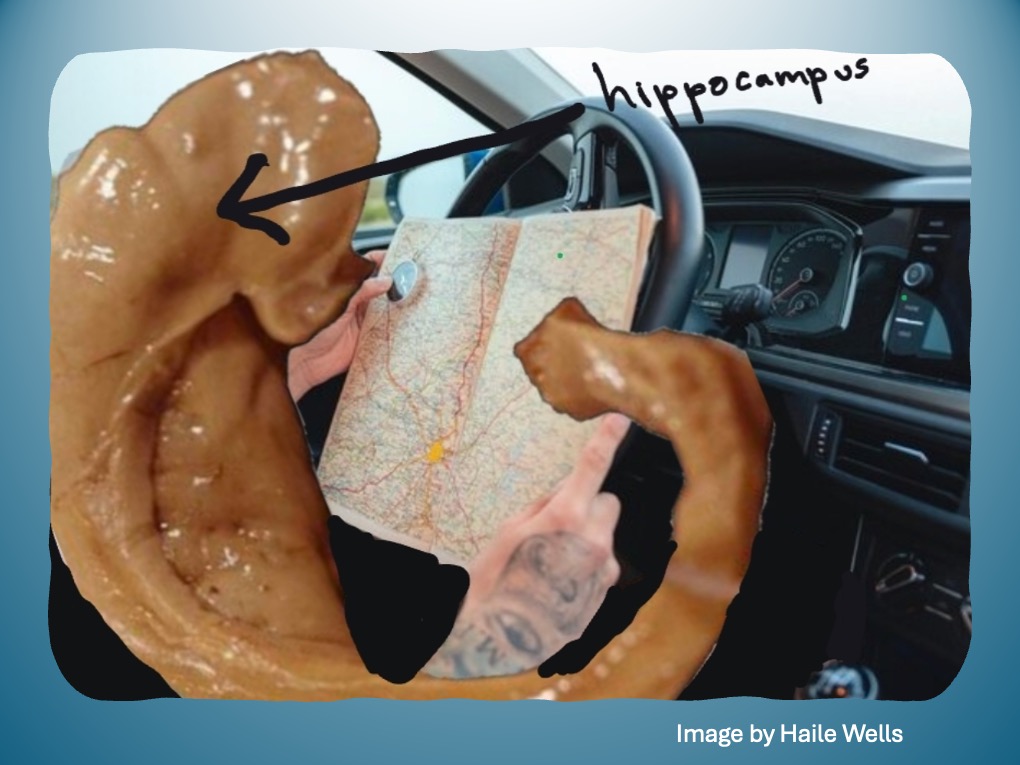
Meanwhile, new studies suggest that reliance on GPS navigation systems does not promote the same cortical development and can actually hinder navigational skill development and spatial mapping abilities. Technologies like GPS are certainly useful, but it is also important to recognize the significant structural and functional impacts on our brains.
LEARN MORE: London taxi drivers and bus drivers: a structural MRI and neuropsychological analysis
LEARN MORE: Habitual use of GPS negatively impacts spatial memory during self-guided navigation
LEARN MORE: Hippocampal neurogenesis: Bridging stress, cognitive decline, and therapeutic strategies for neural health
LEARN MORE: How GPS Weakens Memory–and What We Can Do about It
LEARN MORE: Here’s what gets lost when we rely on GPS
What Did We Learn?
So AI use doesn’t immediately causes your brain to rot. BUT…we need to examine how we use it.
Using LLMs as a learning tool has a few research-backed positives, but it is important to understand what happens if you get lazy. Technology like GPS is crucially useful (and I definitely don’t expect everyone to return to navigating via paper maps), but it is important to be informed about how these technologies might affect your brain.
If you offload cognitive tasks to write essays, complete assignments, write emails, or create and understand new things, you are neglecting the pathways that let you perceive, attend, integrate and remember. Your brain is like a muscle, and it needs to be used in order to stay sharp. It may seem easier to just ask AI to generate answers to all your problems – but it’s dangerous long term.
“Self-education is, I firmly believe, the only kind of education there is.”
― Isaac Asimov
Always remember that you have a BRAIN.
And if you want to improve it, and don’t want to lose it – you should USE it.