


Hello there! My name is Bahar Madani and I am a senior at Portland State University studying Public Health with a minor in Interdisciplinary Neuroscience. As a URISE and NIH BUILD EXITO scholar, my work centers on bridging clinical research, public health, and neuroscience, with a focus on improving outcomes for patients with neurological conditions such as epilepsy.
The importance of rare disease research
A rare disease is a medical condition that affects a small number of people in the population. In the United States, a disease is considered rare if it affects fewer than 200,000 individuals nationwide. Many rare diseases are genetic, chronic, and difficult to diagnose or treat. Examples include Cystic Fibrosis, Huntington’s Disease, and Dravet Syndrome.
Rare disease research is incredibly important because while each condition might affect a small number of people, collectively rare diseases impact millions worldwide. Many of these conditions are under-diagnosed, understudied, and lack effective treatments. This creates a gap not only in care, but in understanding.
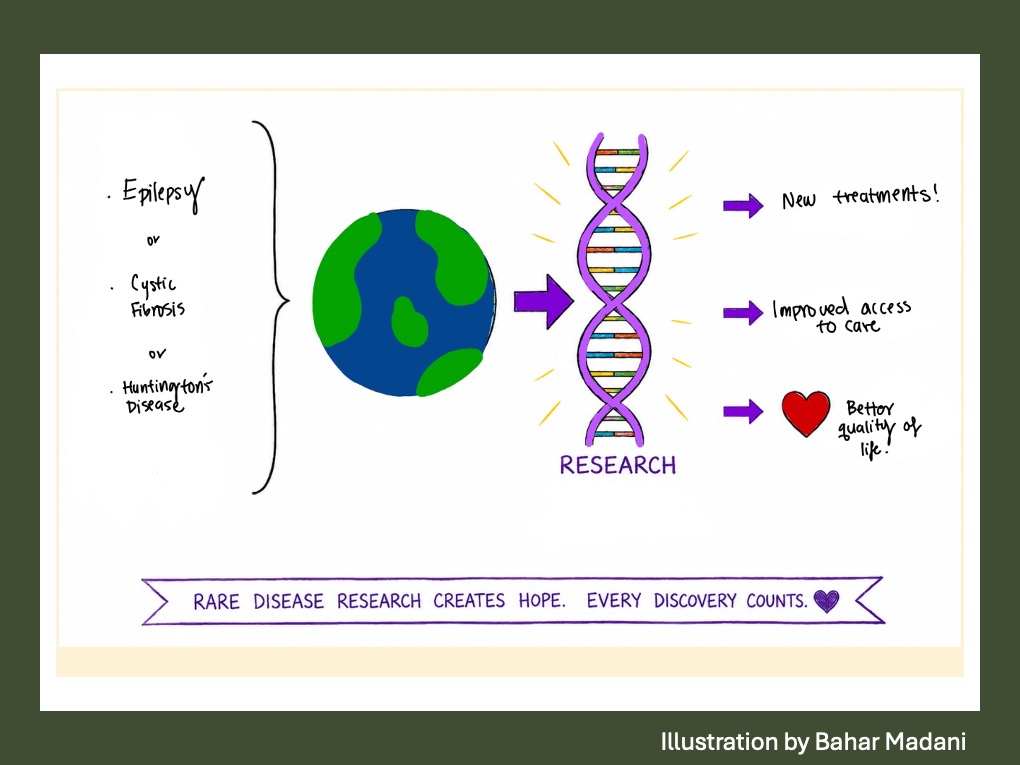
Through my work, I began to see that studying rare diseases is not just about numbers or data. It is about the patients who often go years without answers. It is about families navigating uncertainty. And it is about using science to bring clarity where there has been very little before.
LEARN MORE: Rare Diseases FAQ
LEARN MORE: What Is Cystic Fibrosis?
LEARN MORE: What is Huntington’s disease?
LEARN MORE: What is Dravet syndrome?
Rare disease research in epilepsy has grown substantially with advances in genetic testing, precision medicine, and neurogenetics, though funding and access to research opportunities remain uneven across different conditions.
Epilepsy syndromes with stronger advocacy networks, higher public awareness, or greater pharmaceutical interest, such as Dravet Syndrome and Lennox-Gastaut Syndrome, often receive more research support than ultra rare genetic epilepsies. Research on rare epilepsies has contributed to major scientific breakthroughs in seizure genetics, targeted therapies, and personalized medicine, including improved understanding of ion channel disorders and development of gene based treatment approaches. These advances continue to influence broader neurology and neuroscience research beyond rare epilepsy alone.
LEARN MORE: Introduction to Neurogenetics
LEARN MORE: Precision medicine for genetic epilepsy on the horizon
LEARN MORE: Ion Channels: Therapeutic Targets for Neurological Disease
LEARN MORE: Ion Channels Involvement in Neurodevelopmental Disorders
LEARN MORE: Ion Channels and Neurological Disease
LEARN MORE: What is Lennox-Gastaut syndrome?
What particularly interests me about rare disease research is how deeply collaborative and meaningful the field is. Because many rare conditions are understudied, even small research efforts can make a significant impact on patients and families.
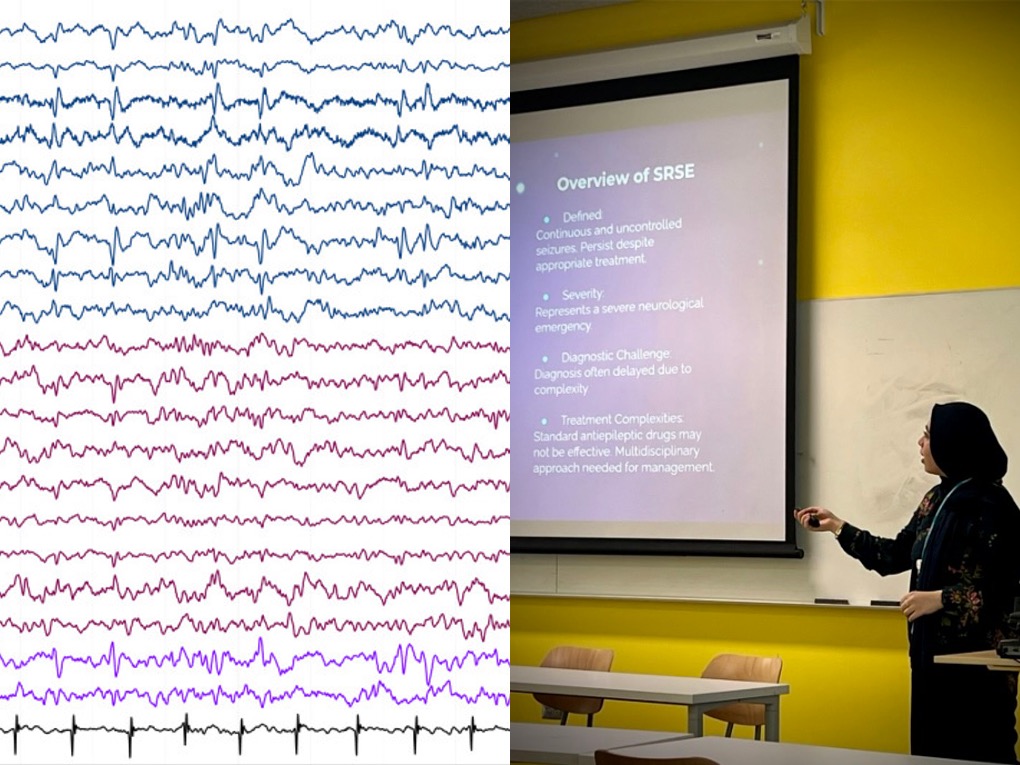
Presentation on rare neurological diseases and epilepsy research during a neuroscience seminar. The presentation highlights how rare diseases can affect brain function and quality of life, emphasizing the importance of research to improve diagnosis, treatment, and patient care.
I also appreciate how much collaboration is encouraged across institutions, clinicians, researchers, and patient communities in order to better understand these conditions and improve care for vulnerable populations.
LEARN MORE: What are rare diseases and why do they matter?
LEARN MORE: Why rare disease research drives major scientific breakthroughs
LEARN MORE: Genetic and Rare Diseases (GARD) Information Center
LEARN MORE: Rare Diseases Clinical Research Network
How I got involved in epilepsy research
As a Build EXITO scholar, I had the opportunity to connect with the Genetic Epilepsy Adult Network (GEAN), a collaborative network of researchers, clinicians, and patients from across the country and internationally. GEAN focuses on advancing research in genetic epilepsies, particularly those caused by rare mutations.
BUILD EXITO was an NIH funded program that supported students from under-represented backgrounds pursuing careers in biomedical research and healthcare through mentorship, research opportunities, and professional development. Although no longer active, it demonstrated the importance of investing in diverse future scientists and physicians. Programs like BUILD EXITO are essential for strengthening research, expanding opportunity, and improving the future of healthcare within our communities.
Epilepsy is a neurological disorder in which a person experiences recurring, unprovoked seizures caused by abnormal electrical activity in the brain. Seizures can vary in severity and may affect movement, awareness, behavior, or sensation. Epilepsy can develop from genetic factors, brain injury, infection, stroke, or other neurological conditions, though sometimes the cause is unknown.
GATOR1-related Epilepsy refers to a group of rare genetic epilepsies caused by mutations in genes of the GATOR1 complex, most commonly DEPDC5, NPRL2, and NPRL3. These genes normally help regulate the mTOR signaling pathway, which controls cell growth and brain development. Researchers hypothesize that mutations in these genes disrupt normal regulation of brain cell activity, leading to abnormal neuronal excitability and seizures. Ongoing research also suggests that different mutations may influence seizure severity, treatment response, and risk for focal cortical malformations.
Through GEAN, I was introduced to research on the GATOR1 gene complex, which includes DEPDC5, NPRL2, and NPRL3. These genes play a critical role in regulating the mTOR biological pathway, which is essential for cell growth and neuronal signaling. When mutations occur in these genes, it can lead to abnormal brain activity and epilepsy.
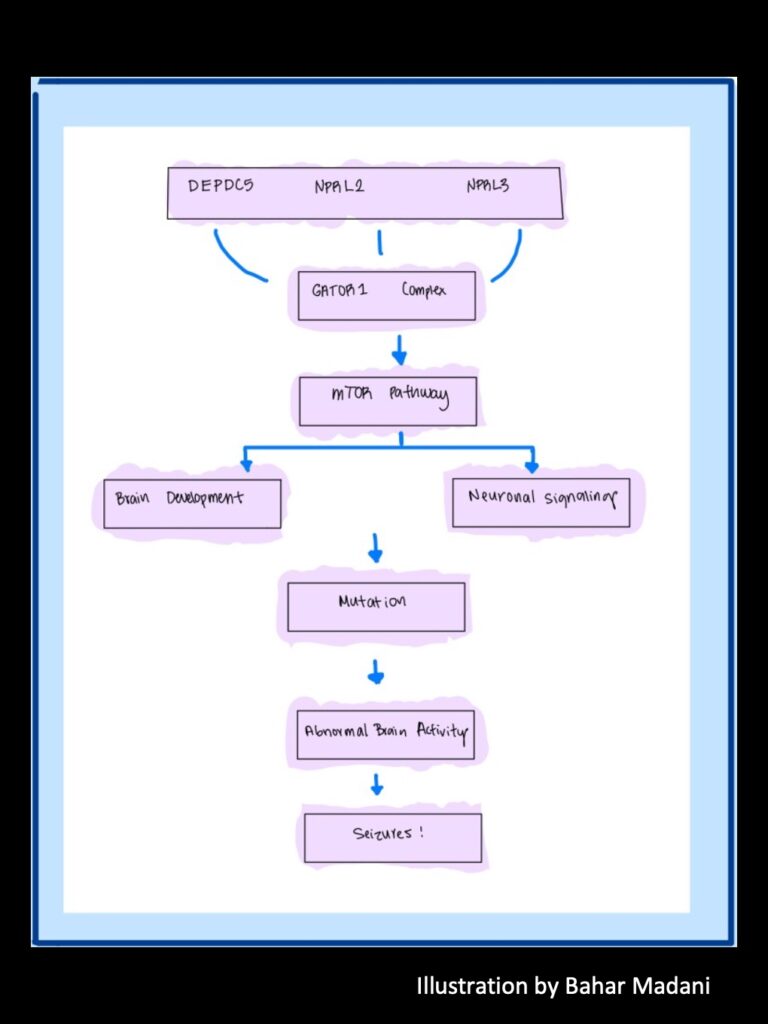
In genetic epilepsies, especially those involving GATOR1, patients often experience early seizure onset, drug-resistant epilepsy, and in some cases require surgical intervention.
LEARN MORE: What is epilepsy?
LEARN MORE: Types of Epilepsy & Seizure Disorders
LEARN MORE: What are GATOR1-related epilepsies? (Epilepsy Foundation)
LEARN MORE: DEPDC5, NPRL2, NPRL3 and GATOR1-related epilepsy
LEARN MORE: The Genetic Epilepsy Adult Network (GEAN)!
LEARN MORE: How do biological pathways work?
LEARN MORE: NIH BUILD EXITO
My role in the GATOR1 gene research
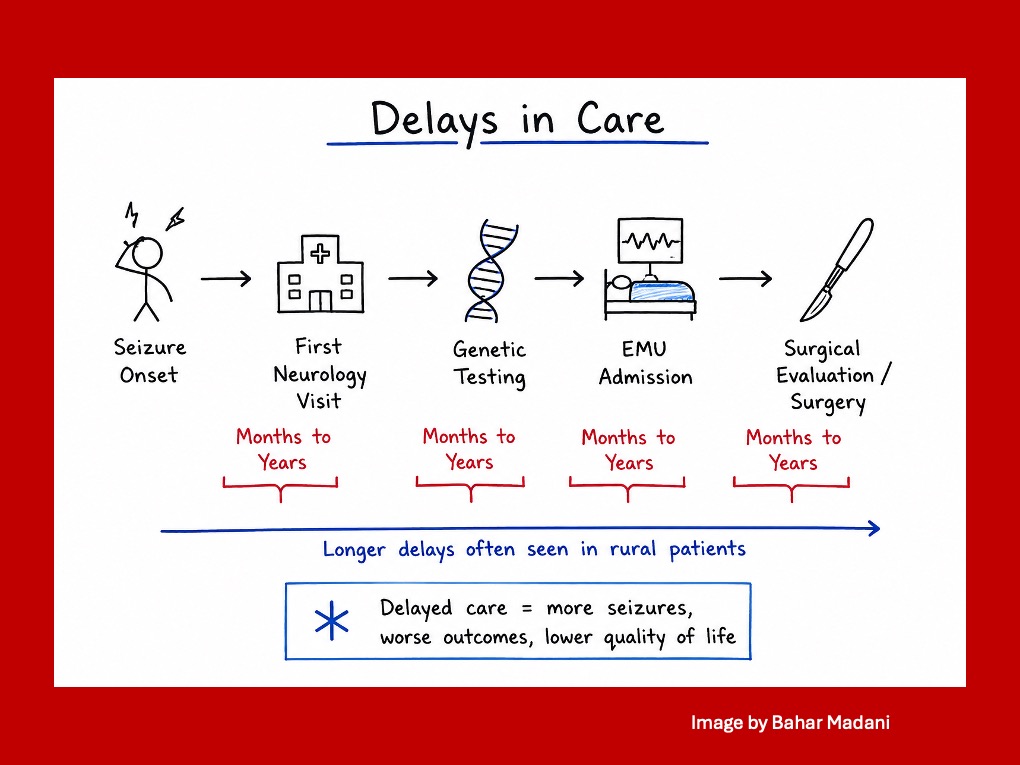
As part of the GATOR1 gene study, I worked on abstracting detailed clinical data from patient records. This included variables such as age of seizure onset, time from diagnosis to genetic testing, time to first neurology visit, epilepsy monitoring unit admissions, and surgical outcomes.
Working with this data required careful attention to detail and consistency. Many patient records had gaps, and part of the process was learning how to interpret incomplete clinical histories while still maintaining accuracy. Through this, I developed a deeper understanding of how variable epilepsy can be across patients, even when caused by mutations in the same gene pathway.
I also began to see patterns in delayed diagnosis and barriers to care, which reinforced the importance of both research and health equity. The data we collected contributes to a larger effort to better understand how these genetic variants influence patient outcomes and how we can improve treatment strategies.
Reviewing these patient histories also made me recognize how deeply access to specialized care can shape patient outcomes. Some individuals experienced seizures for many years before receiving genetic testing or referral for advanced epilepsy treatment, particularly those patients from rural communities.
LEARN MORE: Why genetic testing matters in epilepsy
LEARN MORE: What is an Epilepsy Monitoring Unit (EMU)?
LEARN MORE: Bridging the Health Care Gap in Rural Populations
LEARN MORE: Rural Health: Addressing Barriers to Care
Presenting at OHSU’s first Rare Disease Day!
One of the most meaningful parts of this experience was presenting my research poster at OHSU’s Rare Disease Day. This event brought together researchers, clinicians, and organizations focused on rare disease advocacy and research.
IMAGE SOURCE: OHSU Celebrates Rare Disease Day 2026 with Research and Collaboration
LEARN MORE: What is Rare Disease Day?
I had the opportunity to share my work, engage in conversations, and connect with individuals involved in the Rare Disease Research Network. Being in that space made the work feel bigger than just a project. I became part of a larger community working toward the same goal.
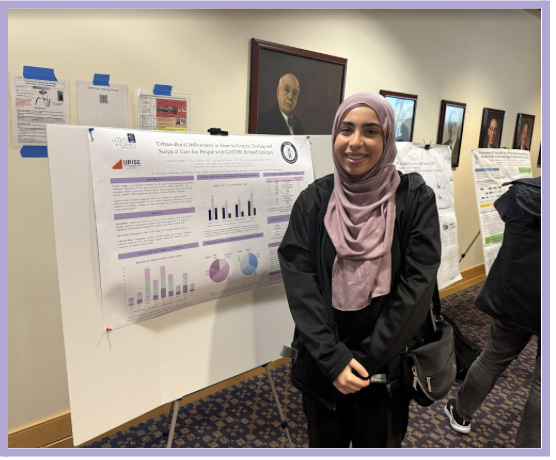
Presentation of my research poster at Rare Disease Day at Oregon Health & Science University. My work focused on genetic epilepsy research through the Genetic Epilepsy in Adults Network (GEAN), highlighting the importance of rare disease awareness, patient advocacy, and improving care for individuals living with neurological conditions.
At the same time, presenting was honestly nerve-wracking.
Walking into a room where many people have years of experience, while being one of the youngest, can feel intimidating. But what I realized is that people are not there to judge. They are there because they care about the science and the impact it can have.
Why sharing research matters
One of the biggest lessons I took from this experience is that research does not end when the data is collected. It continues when we share it. Presenting, publishing, and discussing research are all forms of advocacy.
When we talk about rare diseases, we increase awareness. When we share findings, we contribute to better care. And when we make science accessible, we help bridge the gap between research and real-world impact.
Sometimes the most important part of research is simply making sure it is seen and understood.
LEARN MORE: Why scientific communication matters
LEARN MORE: How research impacts patient care
Looking forward
I hope to continue this work as I pursue medical school, where I plan to combine clinical care, research, and public health advocacy. My goal is not only to better understand rare diseases, but also to support affected individuals and communities.
I would encourage people to stay curious and continue learning about rare diseases and patient experiences.
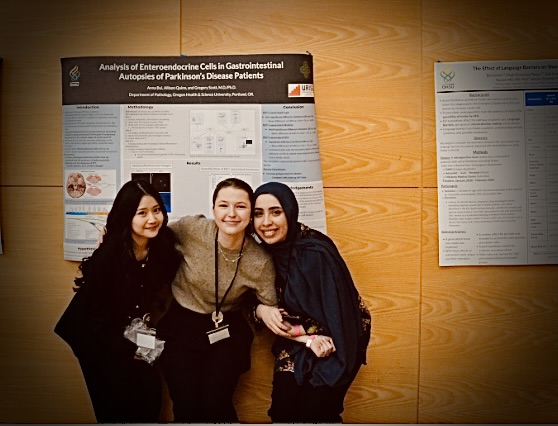
One of the most meaningful aspects of doing research is the people you meet along the way.
Pictured above are my fellow researchers and friends from OHSU, Anna B. and Domnica R. Together, with the assistance of several pre-health organizations, and the Black Student Union (BSU), we helped organize Building Bridges to Healthcare at Portland State University. Through this conference we connected students with researchers, clinicians, and healthcare professionals while sharing our own research and promoting pathways into healthcare and science. Experiences like these demonstrate how research, advocacy, and science communication can come together to create a more informed, engaged, and supportive community.
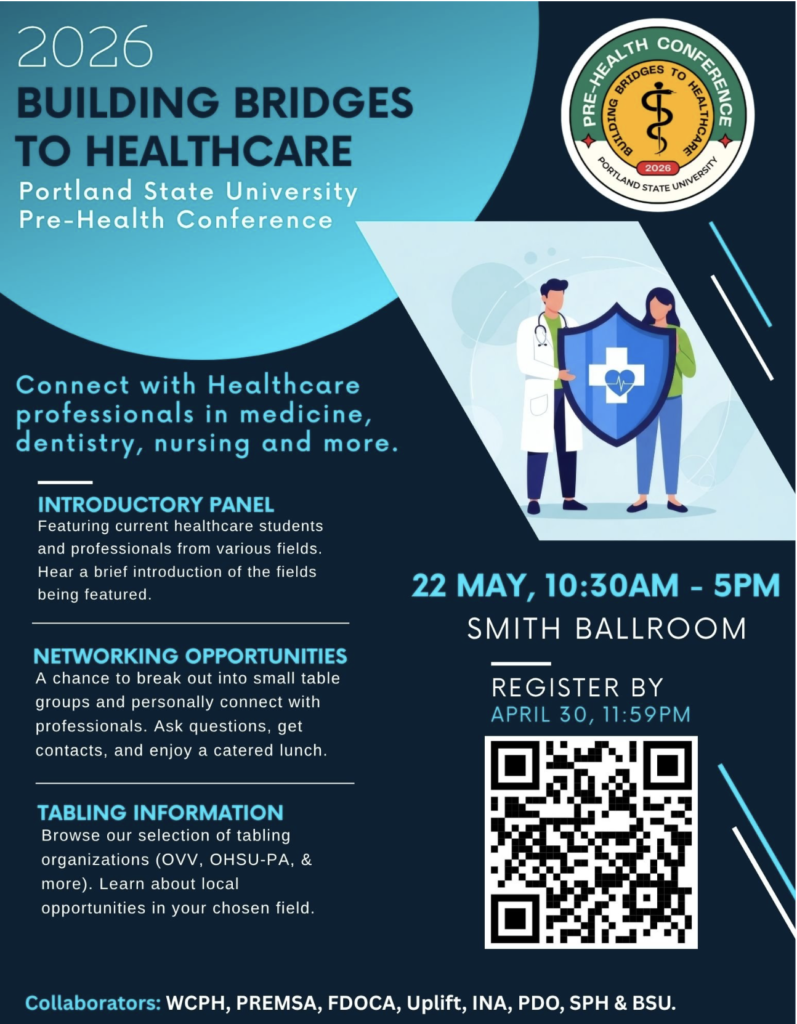
LEARN MORE: Building Bridges to Healthcare at Portland State University
LEARN MORE: Building Bridges to Healthcare (Instagram)
Advocacy can be as simple as sharing knowledge, supporting awareness events, or getting involved in research opportunities at schools or hospitals. For individuals living with a rare disease, organizations such as National Organization for Rare Disorders and patient advocacy groups can provide educational resources, support communities, and information about research and treatment options. By continuing to communicate the science we are doing, we can create a more informed and aware society.
And ultimately, that is how we move science forward!