


Post by Berlyn Bankhardt, a senior at Portland State University, graduating in June 2026 with a Bachelor’s of Science in Psychology and a minor in Interdisciplinary Neuroscience. Berlyn has worked with children for 6 years, and is fascinated by human development. They hope to pursue a Masters in Speech and Hearing Sciences and become a Pediatric Speech Language Pathologist.
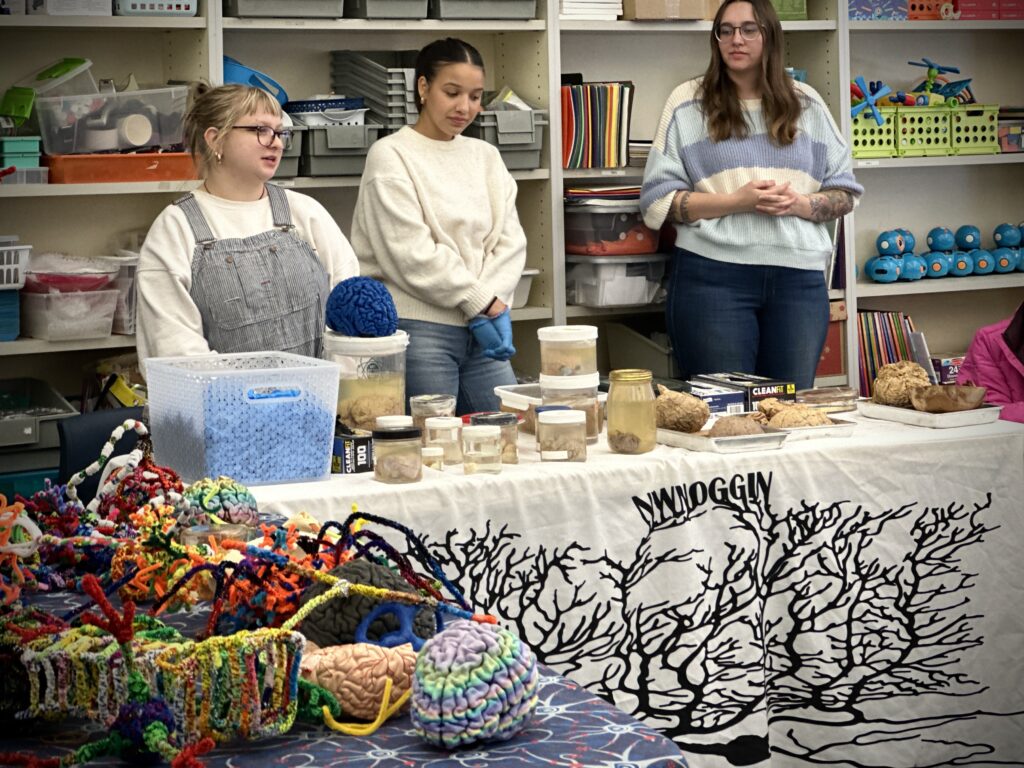
Piquing my interest
Before volunteering with Northwest Noggin, I was afraid of not being smart enough to offer information to other people or answer their questions about brains.
After visiting Columbia City Elementary, I realized that anything I say to these children, they’ll remember for a long time. Standing in an elementary school classroom made me think back on my own school days, my teachers, and activities we did including a Poetry Jam and learning about the Oregon Trail interactively. I was struck by how much detail I recalled.
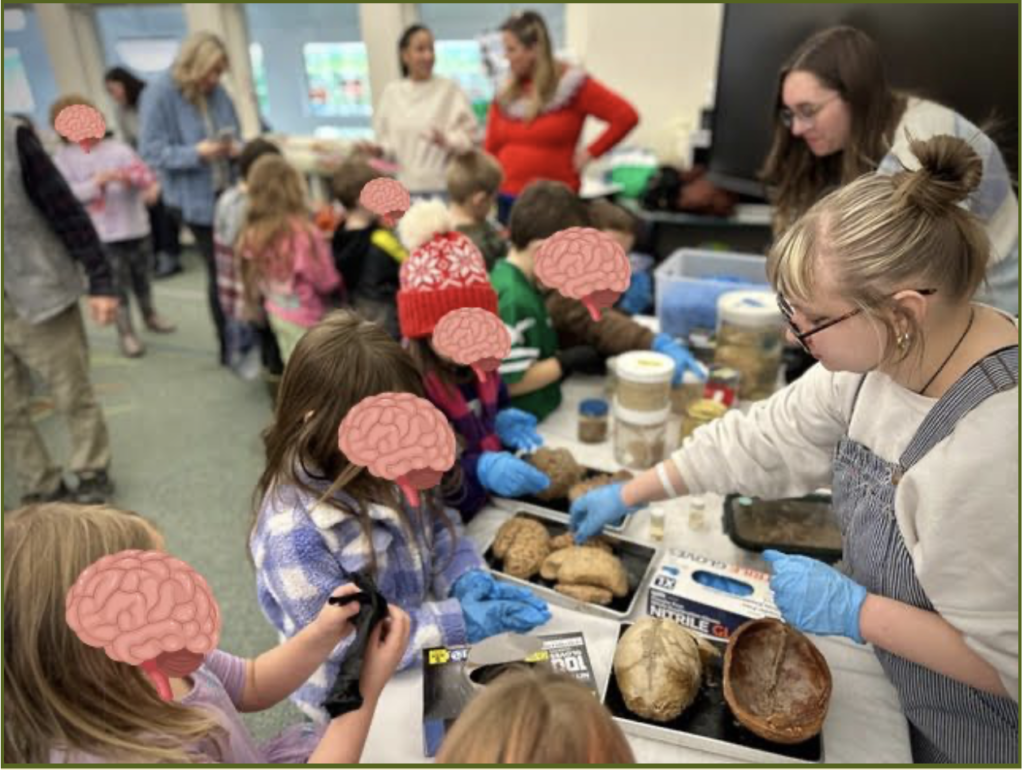
While standing in K-12 classrooms with a table of real human brains in front of me, I thought back to when I held my own first human brain: freshman year of my high school biology class.
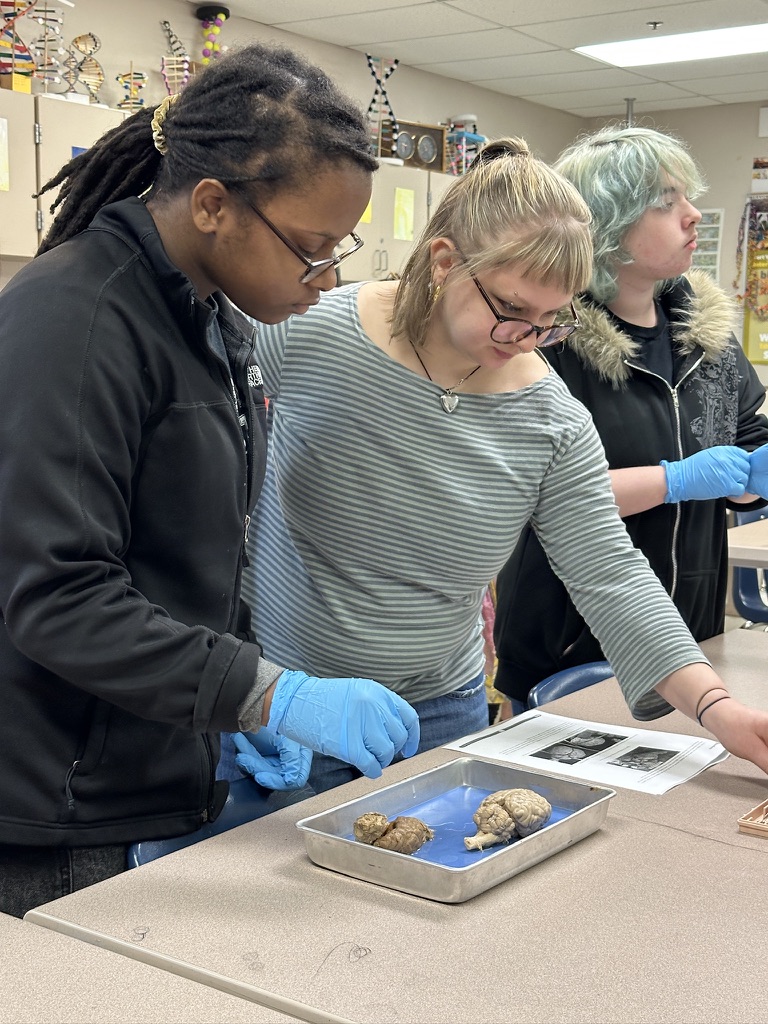
With all these memories flooding back to me, I realized that these kids are probably going to remember me and these brains for a long time. This made it even more nerve-racking.
LEARN MORE: Oregon Trail Interactive Learning
LEARN MORE: Introducing Poetry to Elementary Schoolers
“Our Brains are Floating?”
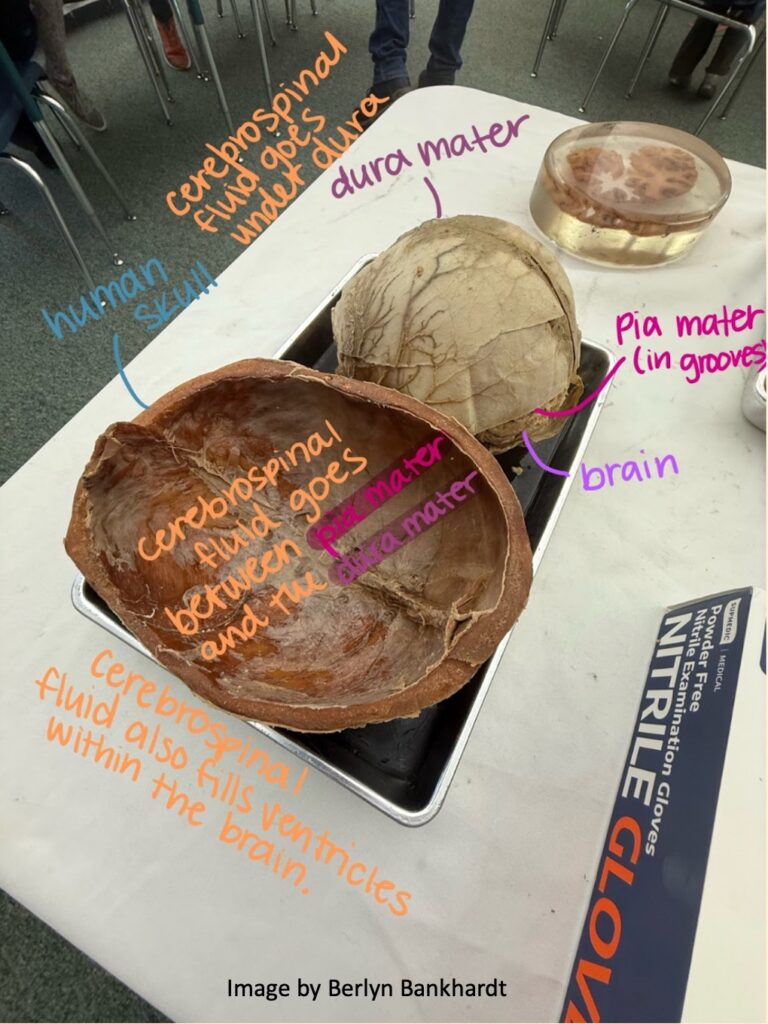
When I was telling this little boy about the layers of protection our brain has, he was shocked to learn that our brains are floating in our heads in a substance called cerebrospinal fluid. Me, being a toddler teacher, asked him to repeat “cerebrospinal fluid” to me, and he did.
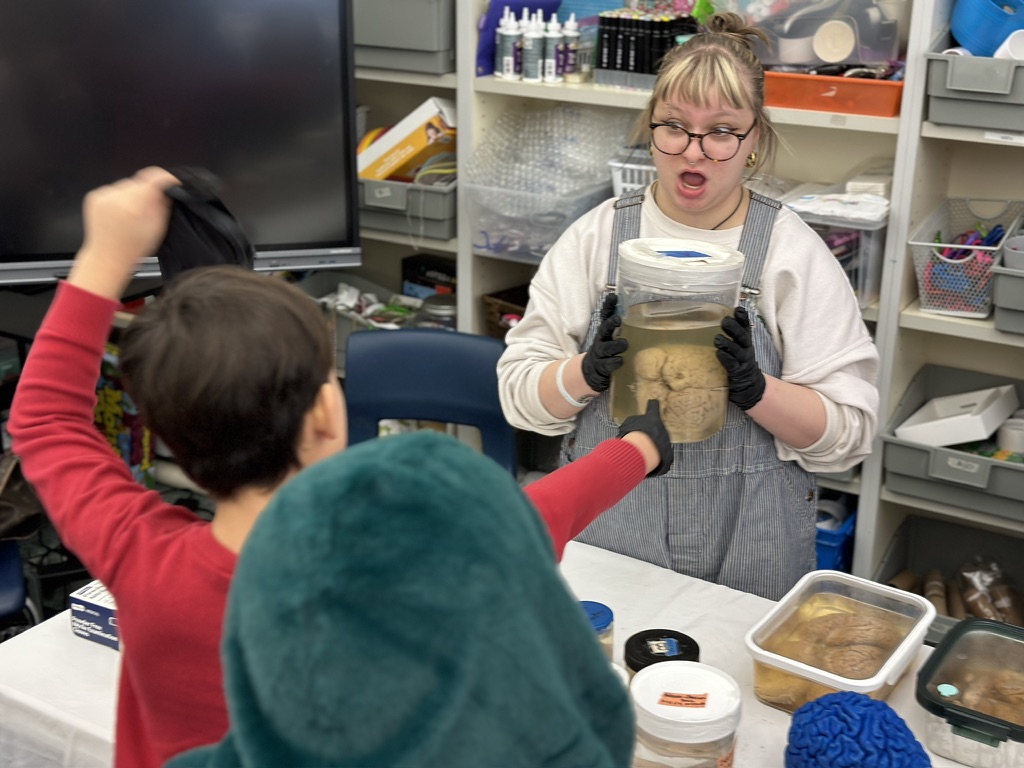
His friend then came up to the brain specimen table and was asking me questions about the tough layer of membrane over the brain (the dura mater, or “tough mother”), and the boy explained to his friend how our brains are floating in cerebrospinal fluid.
LEARN MORE: Meninges: The Brain’s Shield
LEARN MORE: Advances and controversies in meningeal biology
LEARN MORE: Meninges: A Widespread Niche of Neural Progenitors for the Brain
LEARN MORE: Cerebrospinal fluid circulation: What do we know and how do we know it?
LEARN MORE: A Brief Overview of the Cerebrospinal Fluid System and Its Implications for Brain and Spinal Cord Diseases
I was amazed he picked up all of that information and was able to explain to his friend in a scientifically accurate yet “kid-ified” way. This made me worry that if I said something wrong, they’d remember it and tell their friends the wrong information.
But, this also made me wonder, how do children remember things? And will they remember me standing awkwardly in the front of their classroom?
“Repeat, Repeat, Repeat!”
If you’ve ever taken a foreign language class, or learned a new language on your own, you probably know that repetition makes you remember words in that new language.
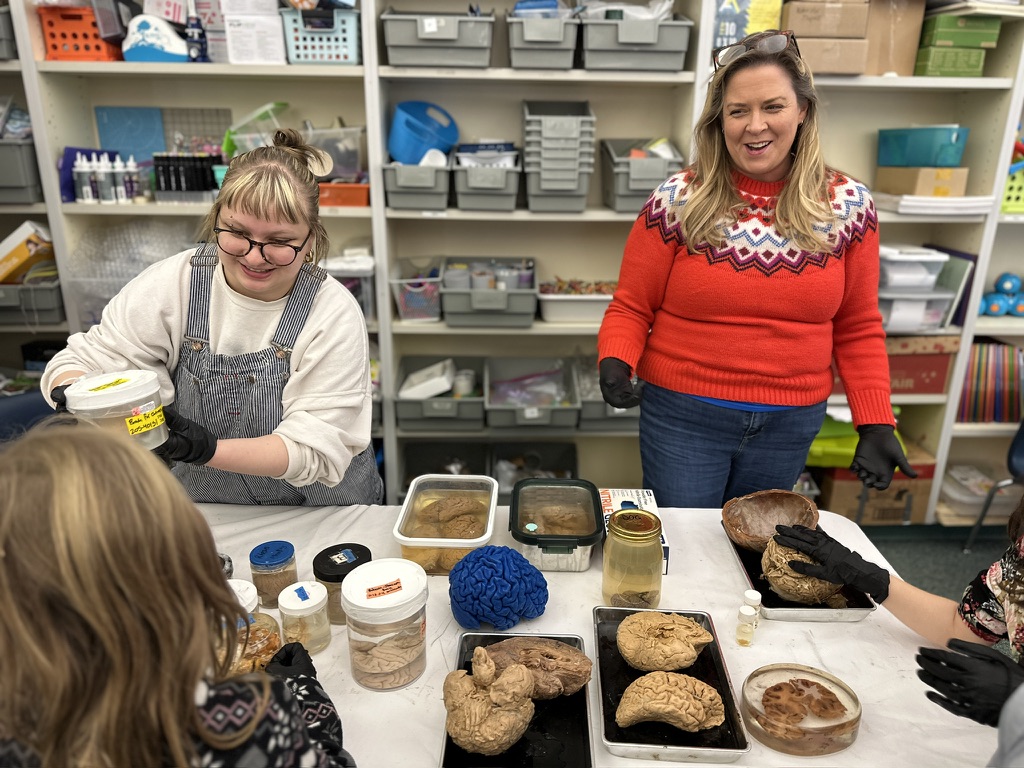
I tell kids to repeat words all the time at work, to make sure they’re saying their words correctly, without even thinking about how it can also help them remember things. As I was explaining to the little boy about the layers of protection of the brain, I probably said “cerebrospinal fluid” and “dura mater” a million times, and I asked him to repeat “cerebrospinal fluid” to me like it was a tongue twister.
LEARN MORE: Why is Repetition Important for Learning?
LEARN MORE: Contributions of repeated learning to memory in humans
LEARN MORE: Recency, Repetition, and the Multidimensional Basis of Recognition Memory
“Neuro..plasticky?”
Kids, fresh from the womb, have 150- 200 billion neurons, as opposed to an adult, who has around 86 billion neurons, depending on your sex and age.
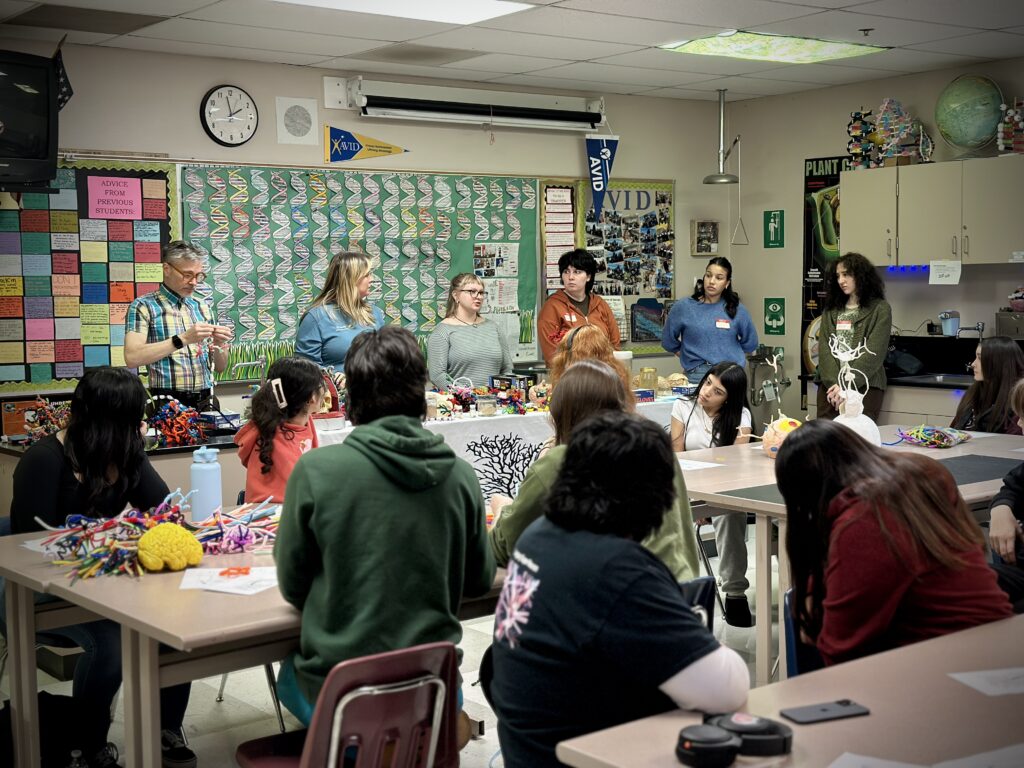
As Bill and Jeff said at almost every outreach, you can learn anything you want when you’re young. This is because our brains have more neuroplasticity when we’re young. The more neurons a person has, the more malleable the brain, and the more neural connections you can make.
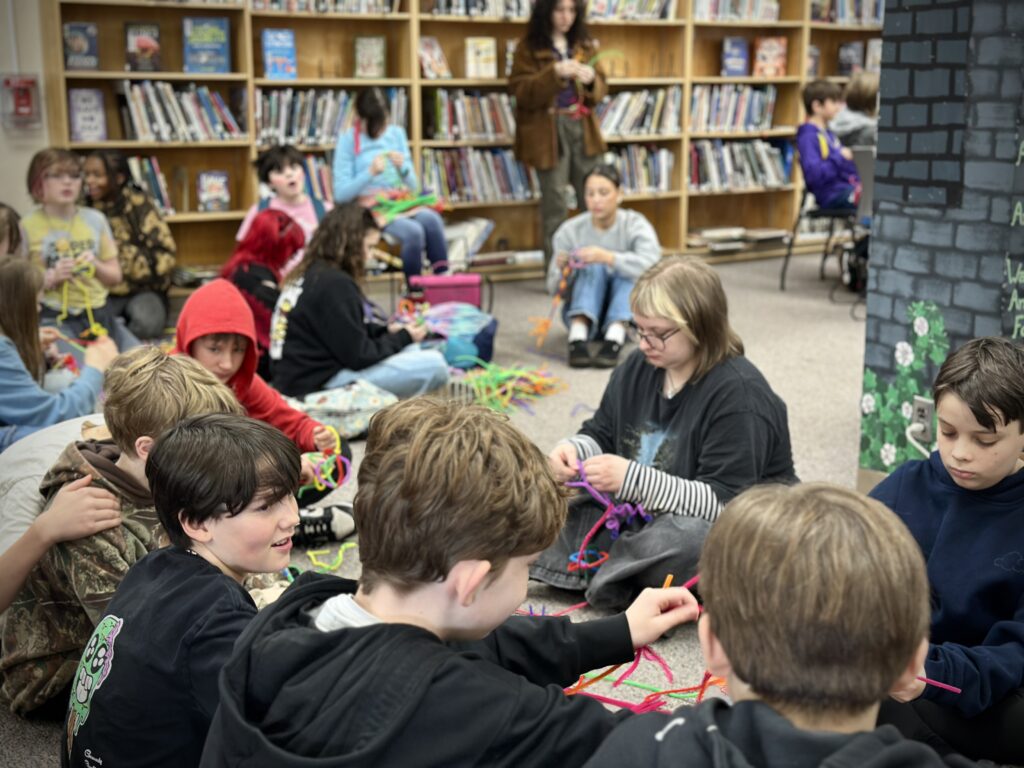
Neuroplasticity refers to the brain’s ability to change.
Making connections between neurons is what makes it so easy for kids to learn and remember things, because they have so many new neurons that can make new connections. New neural connections are the brain’s response to new information! It’s organizing it in categories for us, and letting us remember.
LEARN MORE: Why (and How) do Newborns Have So Many Neurons?
LEARN MORE: How does Sex and Age Affect How Many Neurons We Have?
LEARN MORE: Neuroplasticity
LEARN MORE: What is Neuroplasticity?
How Does Memory Work?
Memory is a complex system, and psychologists and neuroscientists have studied it for a long time. There are many terms in this field, which is so critical for our ability to function and thrive; however it’s now clear we have at least three distinct categories of memory.
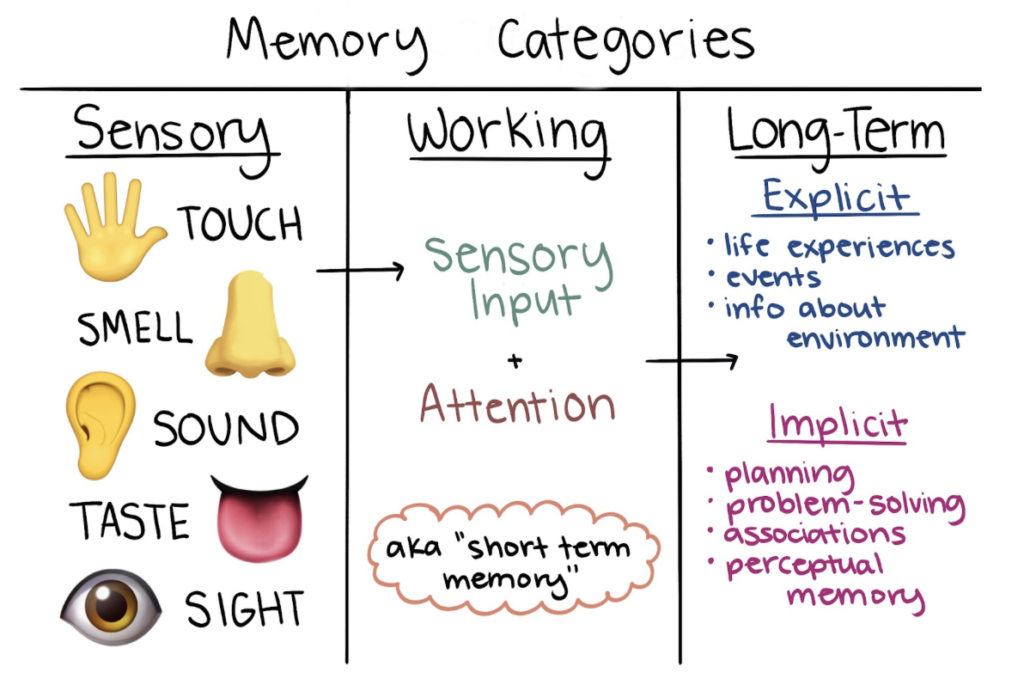
Image by Berlyn Bankhardt
The memory process for explicit memory for experiences and events goes something like this:
- A sensory stimuli is created by touching, smelling, hearing, tasting, or seeing something. That sensory input gets stored in our sensory memory for about a few seconds. Any information you aren’t actively focusing on is forgotten.
- Any information that we’re focusing our attention on is then stored in our working memory (also known as short term memory). Rehearsal (repetition, flash cards), refreshing (recalling information repeatedly over periods of time) and maintenance are needed for information to stay in short term memory. Any unretained information is forgotten.
- For information to go from our working memory to our long-term memory, it needs to be encoded.
- Then, once something is encoded and set in our long-term memory, we can recall it by bringing it back to our working memory. Information stored in long-term memory can be lost over time.
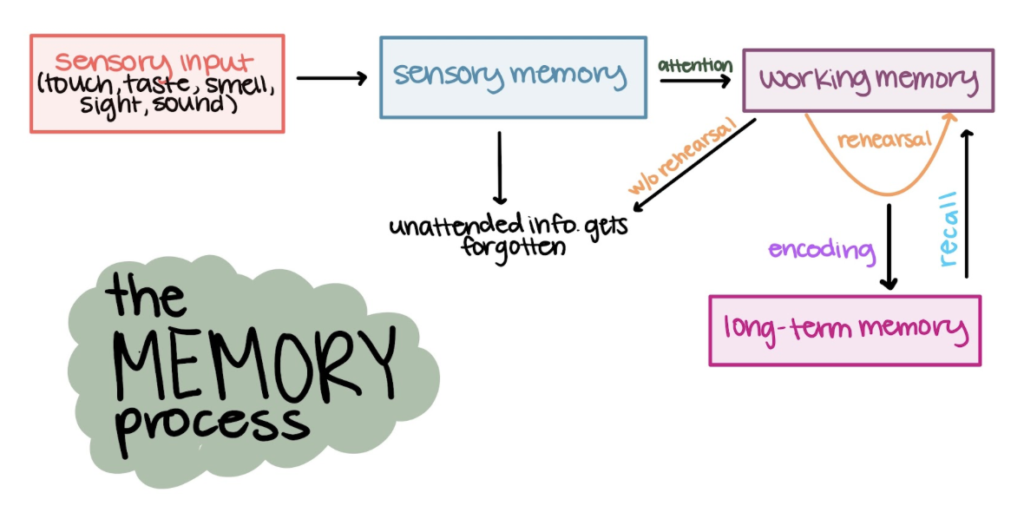
Image by Berlyn Bankhardt
While some things come and go (sensory memory, short term/working memory), some things stick and are stored in our brains for a long time (long-term memory). When we remember memories, we recall them.
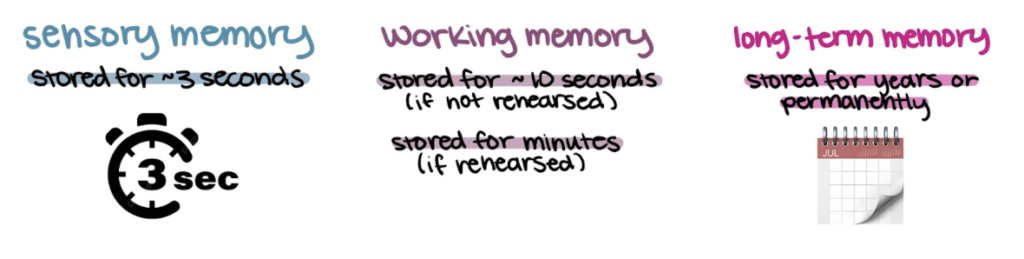
Image by Berlyn Bankhardt
Explicit memories are stored in various parts of the brain. For example, our short-term working memory depends on networks of neurons in the prefrontal cortex, while long-term memory (for one to three years after an experience) requires the hippocampus (in the temporal lobe). For very long term memories (remote memories), the networks that allow for recall are found in the cortex.
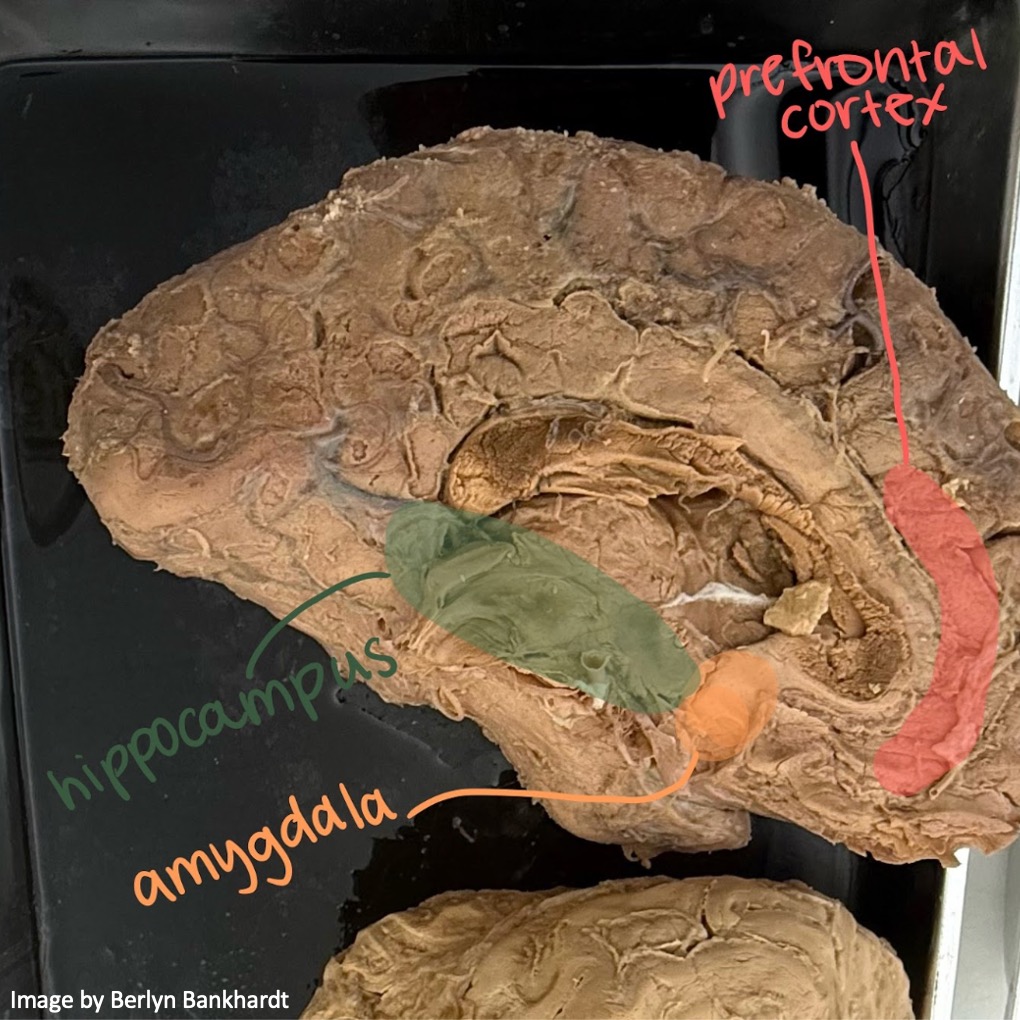
The amygdala, a subcortical (below the cortex) clump of neurons in our temporal lobe, also helps attach emotions to our memories, sometimes strengthening memories for more intense (or salient) experiences.
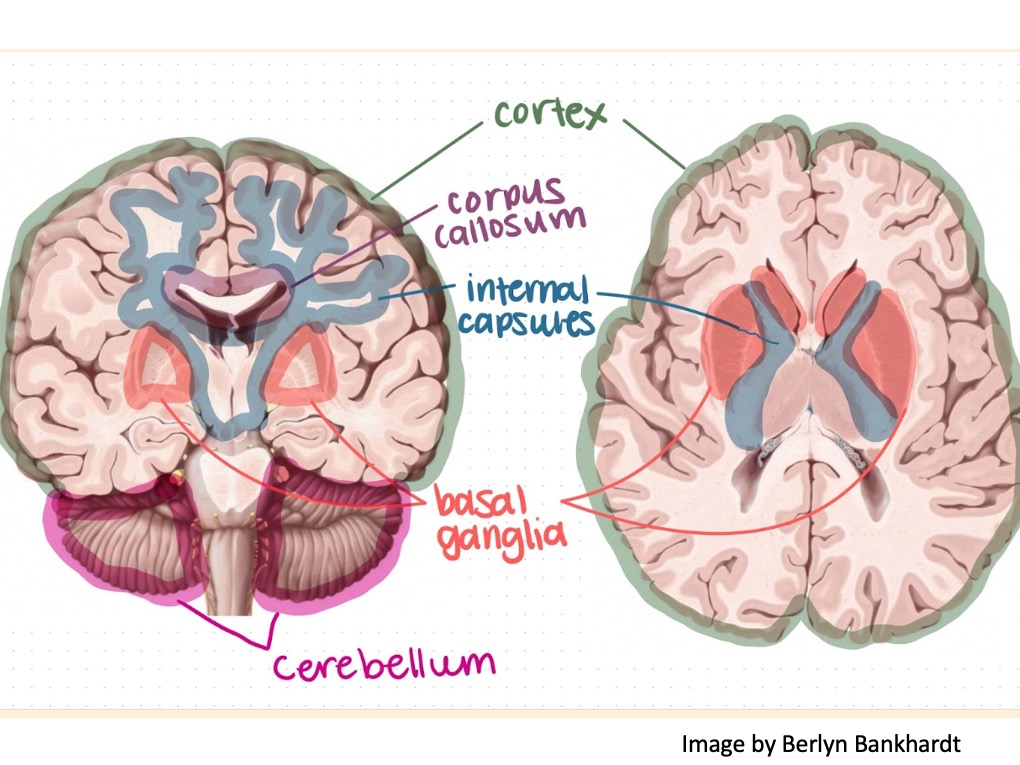
Several additional subcortical brain networks, including the cerebellum and basal ganglia, play important roles in forming our implicit memories (how to ride a bike, for example, or play an instrument, or dance).
LEARN MORE: It’s Just Like Riding a Bike…Except It’s Not!
LEARN MORE: Déja Vu, Dreams, and Mechanisms of Memory
LEARN MORE: Is memory physical?
LEARN MORE: Memory & Kids
LEARN MORE: Memory – Cleveland Clinic Article
LEARN MORE: Brain Parts and Memory
LEARN MORE: Memory Processing
The moral of my story is…
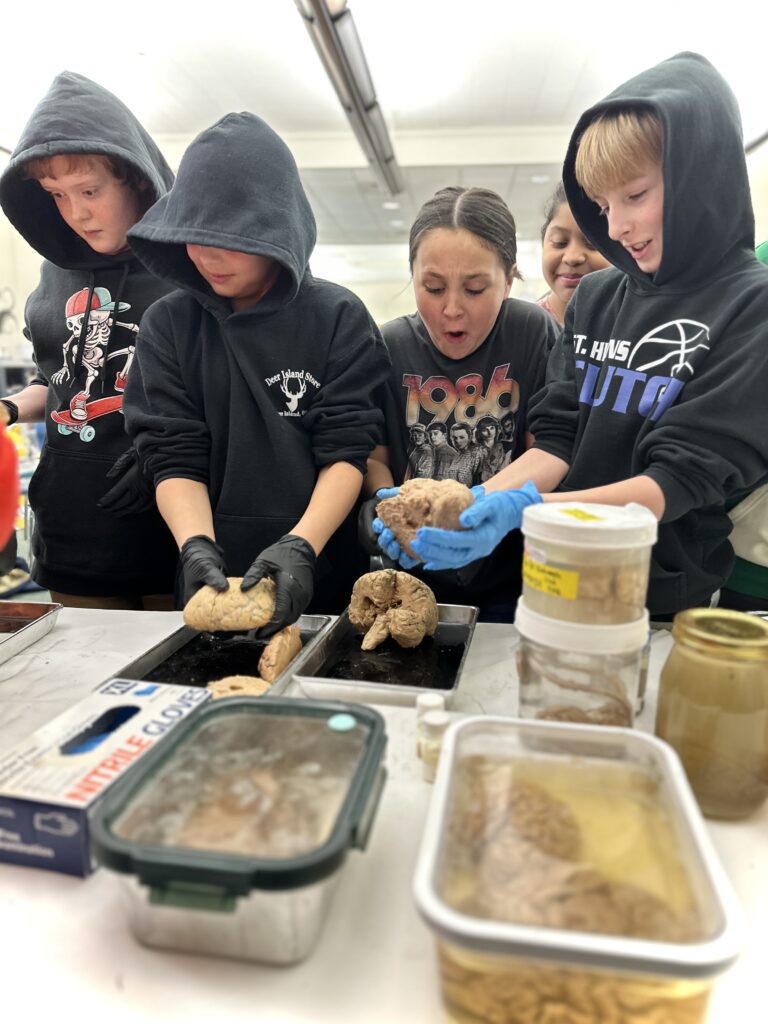
The kids I visited during my outreach held a brain for the first time (sensory memory), asked questions about it, reacted to it, and talked to their friends about holding a brain (recall, maintenance, refresh).
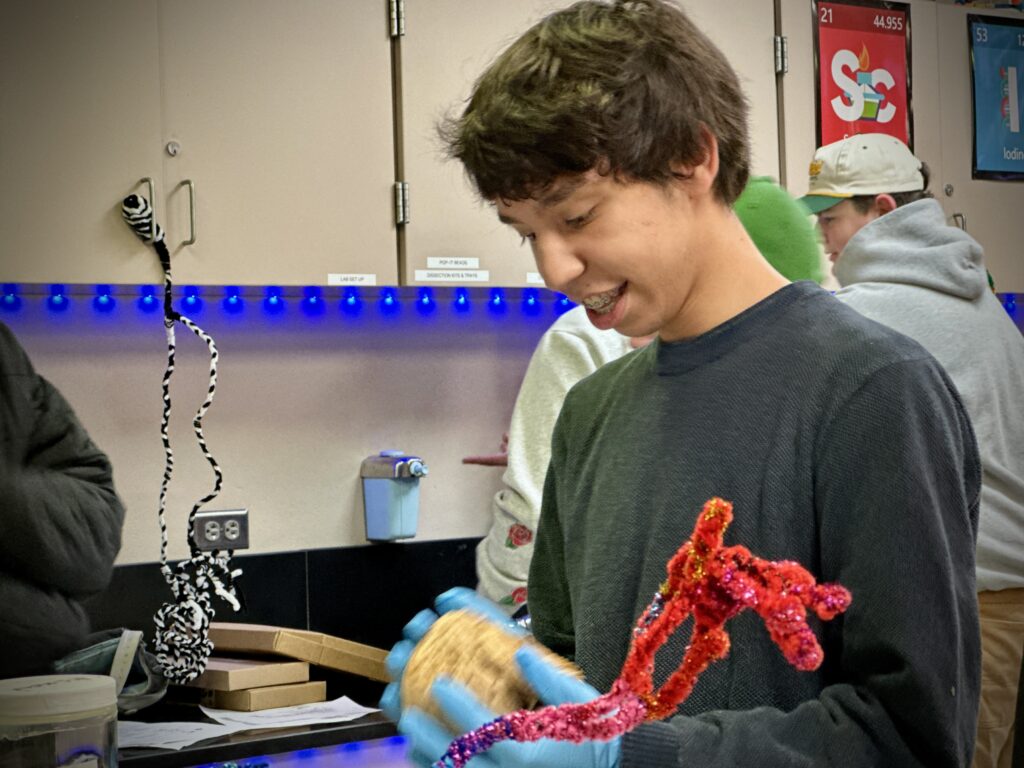
So it is likely that their first time holding a brain has been encoded into their long-term memory, as this was a first for them. Their amygdala’s will enhance the memory through the awe, disgust, or fear they felt when seeing/holding a real human brain for the first time.
Yet unless they were constantly talking about the awkward person standing behind the table of real human brains, I have nothing to worry about when it comes to them remembering me.
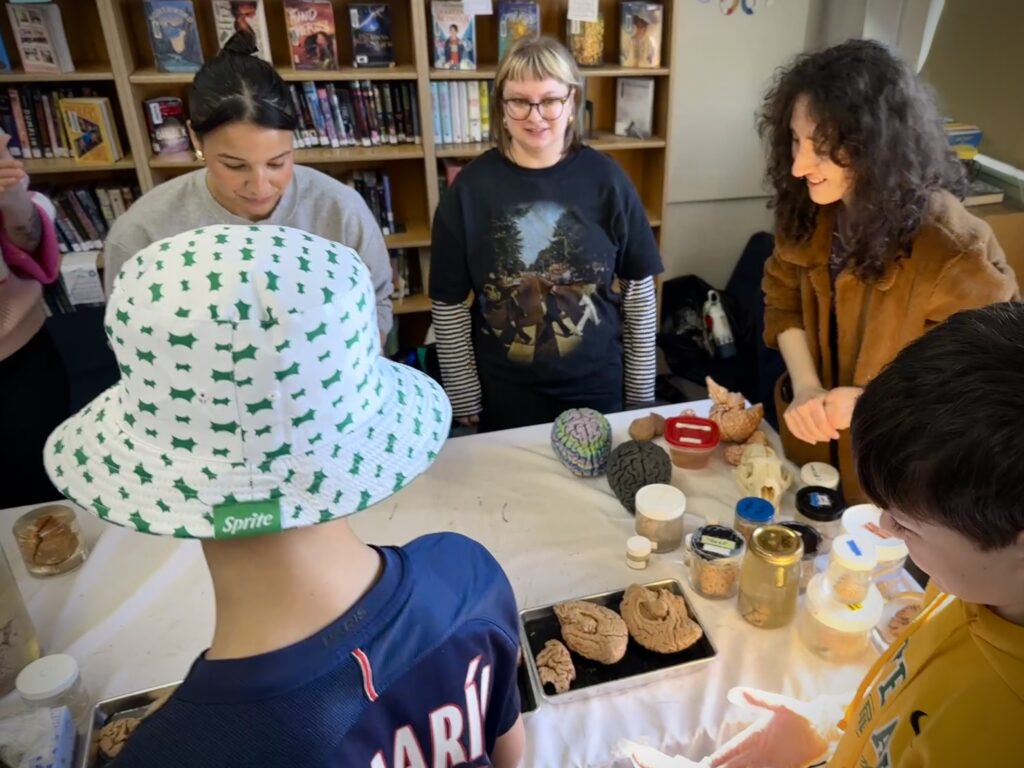
I, however, learned MANY new things about the brain from my peers.
If we didn’t know an answer to a question, it was no sweat. There was no shame in googling something peer-reviewed or asking graduate students, or Bill or Jeff. Repeating new information about the brain to different groups of students (rehearsal!) really engrained that information into my long-term memory. Even though I’m an adult, with fewer brain cells, these experiences had impact and I’ll remember.
I am grateful for this opportunity to learn!