


Post by Morgan Motsinger, undergraduate in Psychology and Interdisciplinary Neuroscience at Portland State University. Morgan works in the research lab of Amanda Chiapa, Ph.D., a clinical psychologist at Oregon Health and Science University.
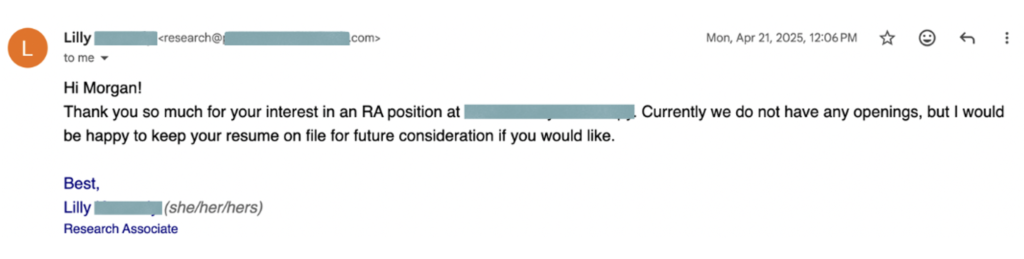
“We currently don’t have any openings.”
“Unfortunately, my research projects have ended or will be terminated by the government.”
“We’re not looking for another research assistant at this time.”
*crickets*
I knew it could take a while to find a place to contribute as a research assistant or get some sort of lab experience, but I didn’t know how many closed doors I would encounter.
My interests lie at the intersection of clinical psychology, neuroscience, and family systems. I’m particularly drawn to understanding how grief, anxiety, loss, and chronic stress impact the brain, and how a neuroscientific perspective can help us develop more robust interventions for parents caring for children with chronic or life-limiting medical conditions.
I sent out my first inquiry email in April of my junior year, knowing I wanted to fulfill my neuroscience minor requirements by getting some time in a lab. After three months and over a dozen inquiries I was finally connected to Dr. Amanda Chiapa, a child psychologist at Oregon Health & Science University.
LEARN MORE: OHSU VOLUNTEER/RESEARCH OPPORTUNITIES
Dr. Chiapa meets with pediatric patients when they are admitted to the hospital to coordinate mental health resources and offer real time tools for coping. She sees patients who are in hospital for everything from acute injury like a traumatic brain injury to Type 1 Diabetes mellitus and disordered eating.
I was excited to learn how I could contribute and eager to understand how research is actually conducted. Little did I know that finding a position in a lab was just the first of many steps I needed to take before any actual researching could take place.
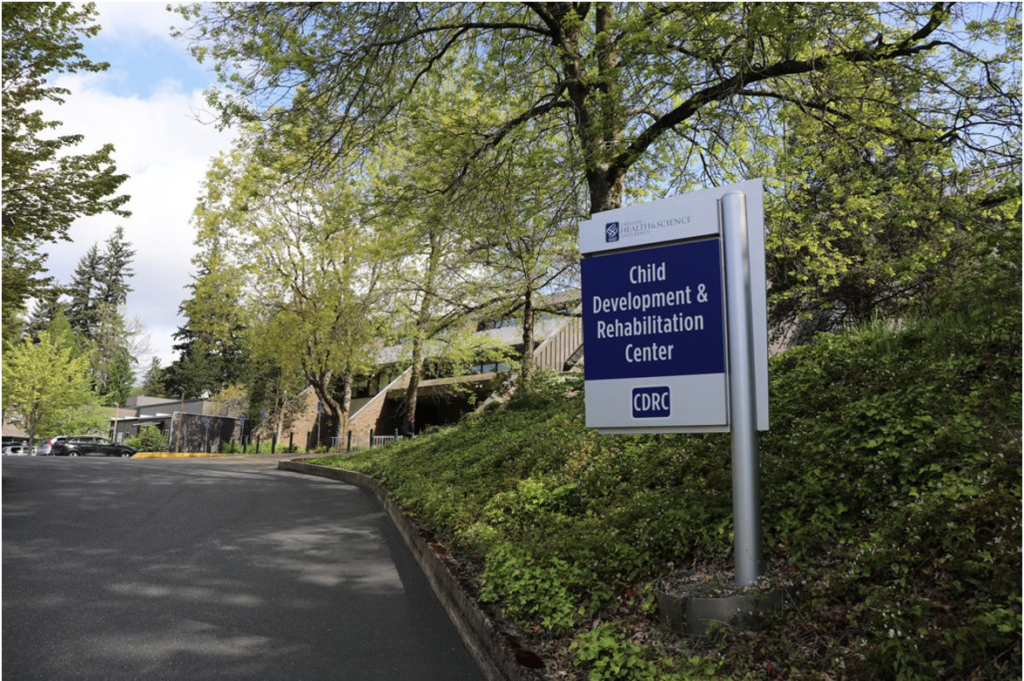
IMAGE: CDRC at OHSU Credit: OHSU/Christine Torres Hicks
So much waiting
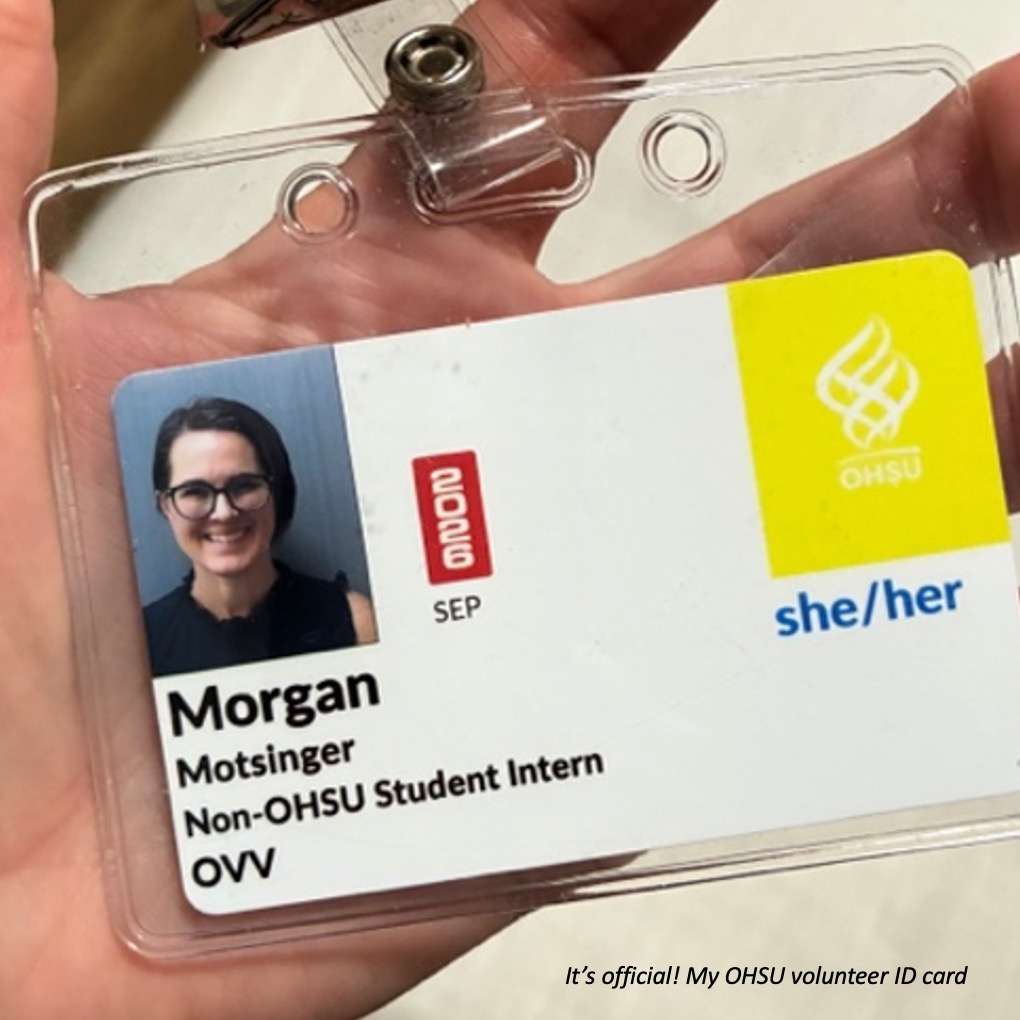
Working at OHSU meant hours of volunteer training before I could start.
“Dreaming is happiness. Waiting is life.” –Victor Hugo
I learned emergency procedures, patient confidentiality protocols, research compliance standards, and good clinical practices. Because I was joining an active study already approved by the IRB (Institutional Review Board), I had another layer of training to ensure that I understood those specific guidelines. And since I’d potentially be in patient care areas, I needed medical clearance which included getting blood work and a rough medical history.
LEARN MORE: Training – What is an Institutional Review Board (IRB)?
What gets measured gets managed
Months after I was accepted to my role, I was finally approved to dig in and contribute to tracking data. “What gets measured gets managed” is true in the realm of patient interventions.
How does a physician know if what they’re doing is working? How will they know if the tools they give a patient are utilized, both in clinical settings and at home?
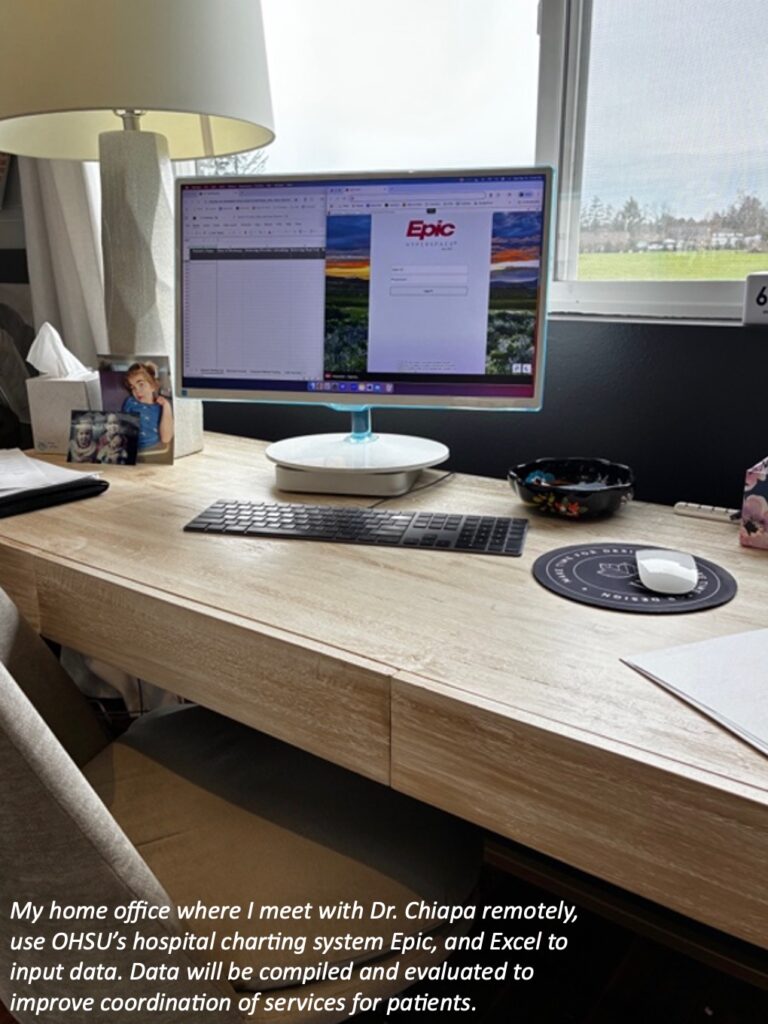
Dr. Chiapa wants to understand how her role as a child psychologist impacts her patients and their families. Her study collects data on which patients receive psychology consultations, why they’re referred, and what outcomes they experience.
The long-term goal is that the “de-identified” (anonymous) information would be used to improve the quality of what’s provided and develop further programs to meet patients’ needs.

IMAGE: IRB review and approval flowchart
LEARN MORE: Modes of De-identification
LEARN MORE: Principles and Best Practices for Protecting Participant Privacy
LEARN MORE: Use and Understanding of Anonymization and De-Identification in the Biomedical Literature
As a research assistant I track patient data in study-relevant categories and report directly to Dr. Chiapa. Remote work arrangements made this opportunity possible despite my coastal Oregon location.
Hospitalization can be genuinely traumatic for kids, and not only in cases of catastrophic illness. Scary procedures, loss of control, pain, and uncertainty can create real stress responses in developing brains, particularly in regions like the hippocampus, prefrontal cortex, and amygdala. These areas are critically involved in memory, decision-making, and emotional regulation.
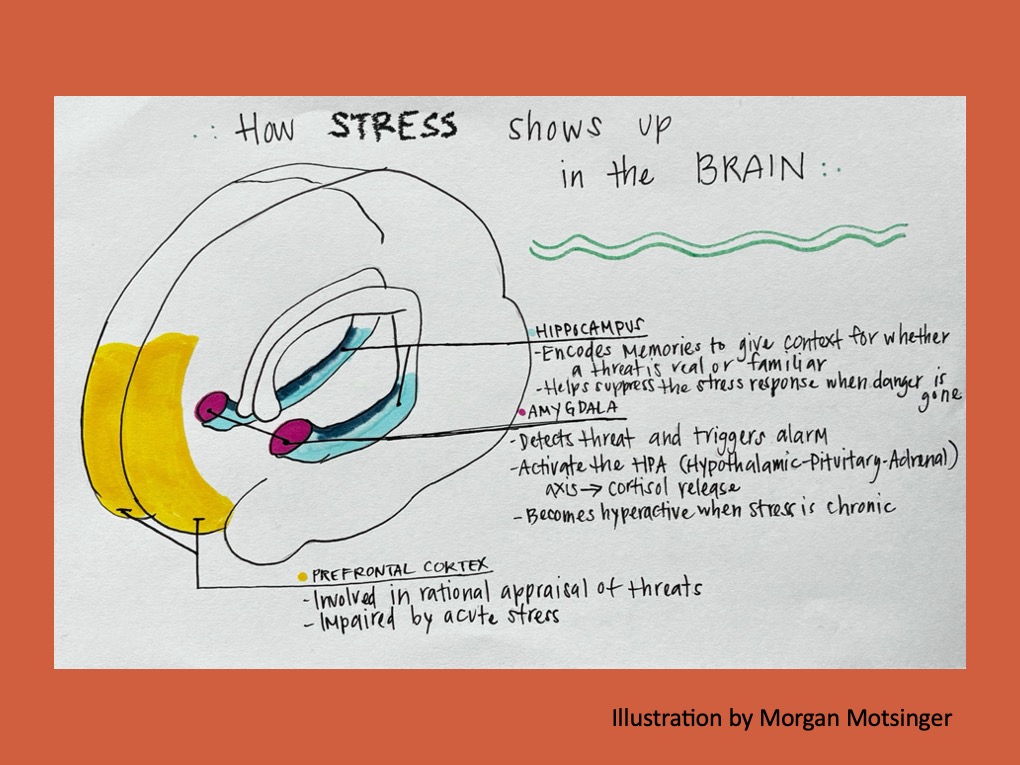
Children are not small adults. Their brains are still being built, and what happens to them during these sensitive windows of development matters in lasting ways. This is part of what makes Dr. Chiapa’s work feel so important to me.
Embedding psychological support directly into pediatric medical care is a relatively new practice, and there is still a significant gap between what the evidence supports and what most hospitalized children actually receive.
LEARN MORE: The Biological Effects of Childhood Trauma
LEARN MORE: Pediatric Psychosocial Care: Historical Context and a theoretically informed practice model
LEARN MORE: Streamlined Prevention and Early Intervention for Pediatric Anxiety Disorders: A Randomized Controlled Trial
LEARN MORE: Trauma, PTSD and the Developing Brain
How can we help?
Children facing hospital stays, chronic illness, or the onset of a new diagnosis are intimately familiar with their worlds shrinking and choices being limited.
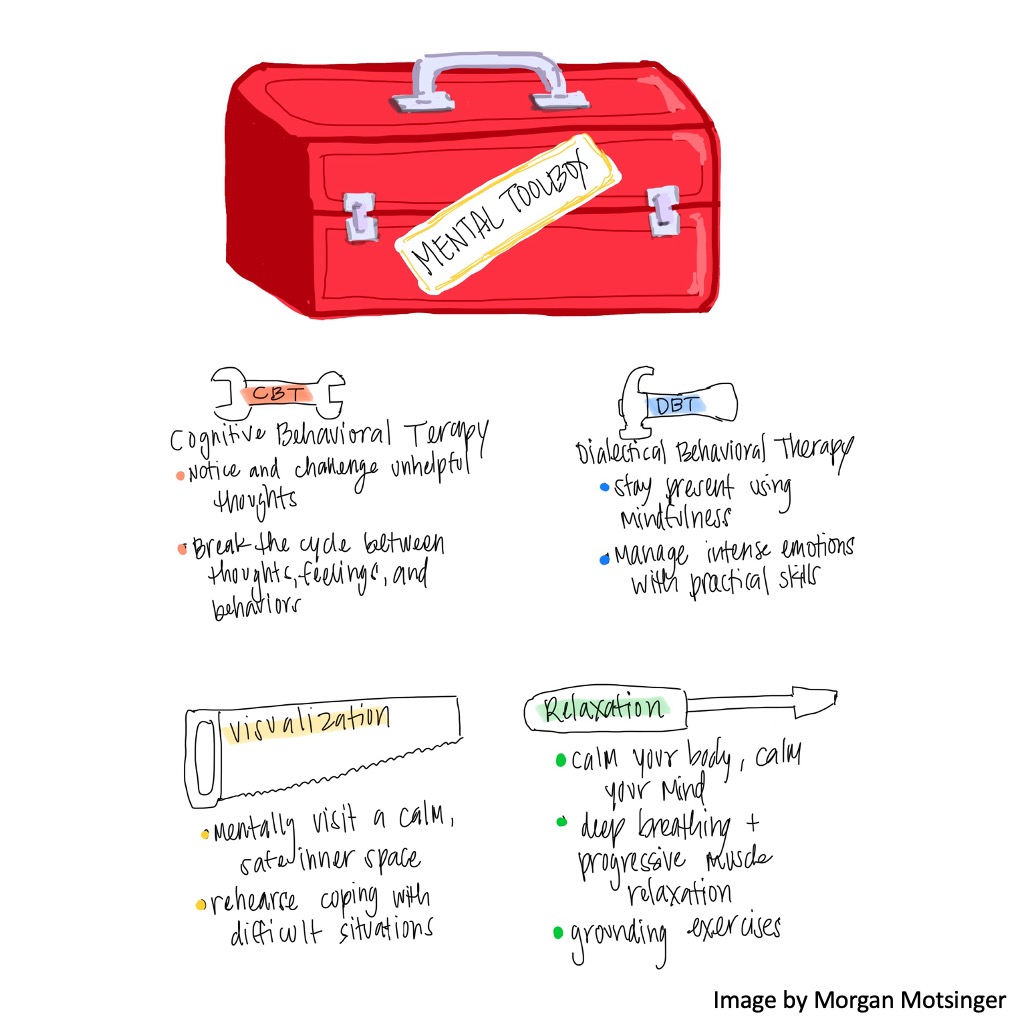
Tools like Cognitive Behavioral Therapy (CBT), relaxation training, dialectical behavioral therapy (DBT), and guided visualization aren’t feel-good extras, they are evidence-based interventions that give children something medicine alone often can’t: a sense of agency over their own experience. Research shows these approaches improve daily functioning and reduce anxiety and depression, even when pain itself doesn’t immediately go away. When parents are supported alongside their children, we see even better outcomes which show consistently this isn’t just a patient problem. It’s a family one.
LEARN MORE: Psychological therapies for the management of chronic and recurrent pain in children and adolescents
LEARN MORE: Relaxation Techniques: What You Need To Know
LEARN MORE: The Multiple Uses of Guided Imagery
I came to academia after a long time as a part time entrepreneur and a full-time parent and caregiver. Academia moves much more slowly than a one-person organization and doesn’t have the easy flexibility required to match the energy and chaos of a household. There is so much oversight and red tape, and I often felt like a horse at the racetrack, waiting for the gate to swing open so I could RUN! I wanted to put my skills and passion into action. Finishing training, waiting for approvals, and then learning the systems felt like a slog.
However, I came to appreciate that each training module, every email asking for clarification, troubleshooting in real time, all offered valuable insight into what it means to be a good researcher and an effective patient advocate.
All of these perceived obstacles are crucial stopping points to make sure that researchers are properly trained, behaving ethically, and working under proper oversight. This process has given me greater confidence in how research is approved and conducted.
The skills I’ve learned
The skills I’ve developed while learning the ins and outs of research are easily applicable to the research setting specifically, but also to life:
Persistence
Illustrations made using Canva
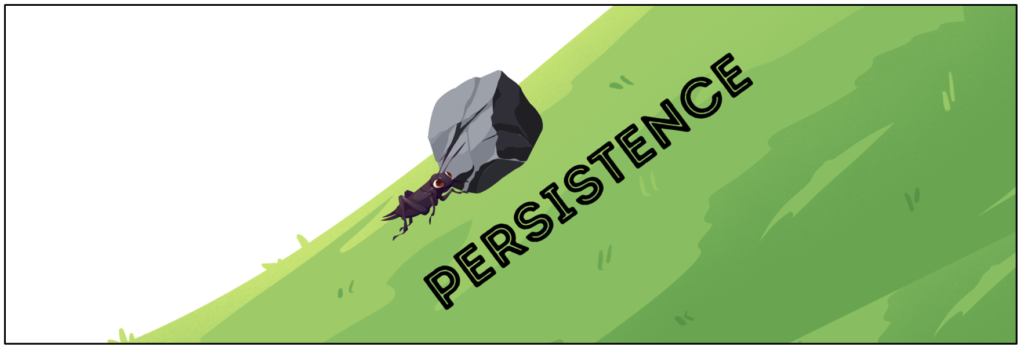
Research is a long-distance race, not a sprint. In our world of information at our fingertips and headlines that don’t last in the news longer than 15 minutes, the slower pace of research can feel daunting. Developing the skill of persistence (and patience) is essential for long-term impact.
Application: when applying to labs, don’t be afraid to apply, inquire if you have questions, and follow up (you’re not being annoying). Persist through training and mundane tasks. It’s often the mundane and repetitive that provide the needed data.
Flexibility
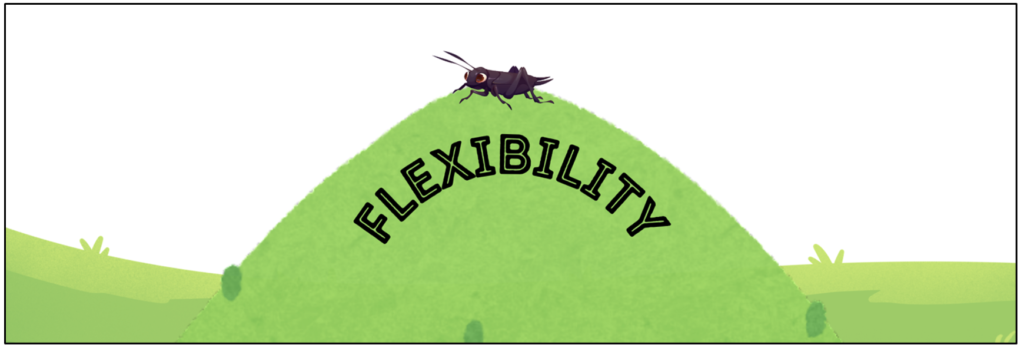
You may not get a research position you originally thought you’d get or wanted. When the lab I applied to rejected me, I was very disappointed, but they thought that my interest and skills would likely work well with what Dr. Chiapa was working toward. If I had been too narrowly focused on my original plan, I would’ve missed an opportunity that fits me very well.
Application: there may not be a lab that is doing exactly what you want, but that doesn’t mean your experience won’t be valuable. Allow for small deviations from your plan and you may find something you unexpectedly love.
Communication
Kind and clear communication is an essential skill. Telling people you appreciate them and being quick to respond shows people it’s nice to work with you.
Application: become skilled at being succinct and direct in your messages. People are busy and they appreciate when you get to the point. Don’t be afraid to ask questions when you don’t understand and accept feedback for how you can improve.
Initiative
I was working on my University Honors College thesis and I had to submit my project for IRB approval. Instead of asking my supervisor to fill out my paperwork, I did as much as I could on my own, and then sent it to her for edits. If you don’t know how to do something, take the initiative to try finding answers on your own first, and then ask if you got it right. People are more willing to help if you can prove by your efforts that you have a vested interest in the outcome. It may not be perfect, but at least you tried.
Application: don’t be afraid to try things on your own. Find blogs or websites, or start conversations that can get the ball rolling. Then send for edits. Don’t be afraid to make mistakes. Humility goes a long way when you can admit you didn’t know but you tried to figure it out.
Big picture view
I chose this opportunity because I could see how even mundane or introductory tasks in a lab could fit into my long-term educational goals. I expected that being a newbie in a lab would come with tasks that weren’t necessarily going to feel life changing. But I was committed to learning the ropes, knowing that my efforts would pay off in experience and skill development. No time spent working toward bettering yourself is wasted. I not only got experience in a lab I consider to be doing very important work, but I gained an incredible mentor.
Application: pay attention to how even the small tasks fit into the bigger picture. On the path to becoming a researcher, the most important research subject is yourself. Get to know your strengths, shore up your weaknesses, and embrace failure as an integral step toward success.
What’s next?
These five skills will serve me well beyond this undergraduate research experience.
In a Ph.D. program, I’ll need persistence through years of study, flexibility when hypotheses don’t pan out, clear communication with collaborators and research participants, initiative in designing studies, and the big picture view to remember that each data point, each MRN (Medical Record Number) in my spreadsheet represents a real person, a story, a human being living in a world full of challenges and deserving of robust support.
The least rewarding part of this experience is the waiting. But what I learned most about psychology and neuroscience research is that the rigor protects vulnerable populations and ensures that interventions are grounded in evidence, not just enthusiasm.
The most rewarding part of my experience has been witnessing how pediatric medical crises affect entire family systems and how the care and support offered by medical professionals can help. While I track data on patient interventions, what captivates me is what’s happening in the background. I see so many parents navigating medical trauma, coordinating complex care, and shouldering psychological burdens that are often unaddressed.
Dr. Chiapa’s work has crystallized my research interests.
I want to understand how chronic caregiving stress actually changes the brain, and use that neuroscientific foundation to develop interventions that support the caregivers themselves, whose experiences are often invisible in pediatric healthcare settings.
LEARN MORE: Caregiver Burden and Depression in Parents of Children with Chronic Diseases
LEARN MORE: Psychosocial factors related with caregiver burden among families of children with chronic conditions
When I sent out those first emails and heard nothing back, I thought that crickets meant no one was listening. But crickets aren’t necessarily silence. I just hadn’t yet learned to listen differently for a frequency I wasn’t familiar with.
Finding this lab and everything that came with it taught me that persistence, flexibility, communication, initiative, and a big picture view aren’t just research skills. They’re the tools that help you tune in. If you’re in a liminal space, surrounded by what sounds like nothing, the crickets aren’t telling you no. They’re just waiting to see if you’ll learn their language.