Post by Cassidy Rickel, an undergraduate pursuing a bachelor’s degree in Psychology and an Interdisciplinary Neuroscience minor at Portland State University.
How EDM moves the mind, body, and brain
In Amsterdam on King’s Day, the entire city turns orange.
Streets overflow with energy as people dance on boats in the canals, throw parties on balconies and bridges, and electronic dance music (EDM), predominantly house music, fills every part of the city.

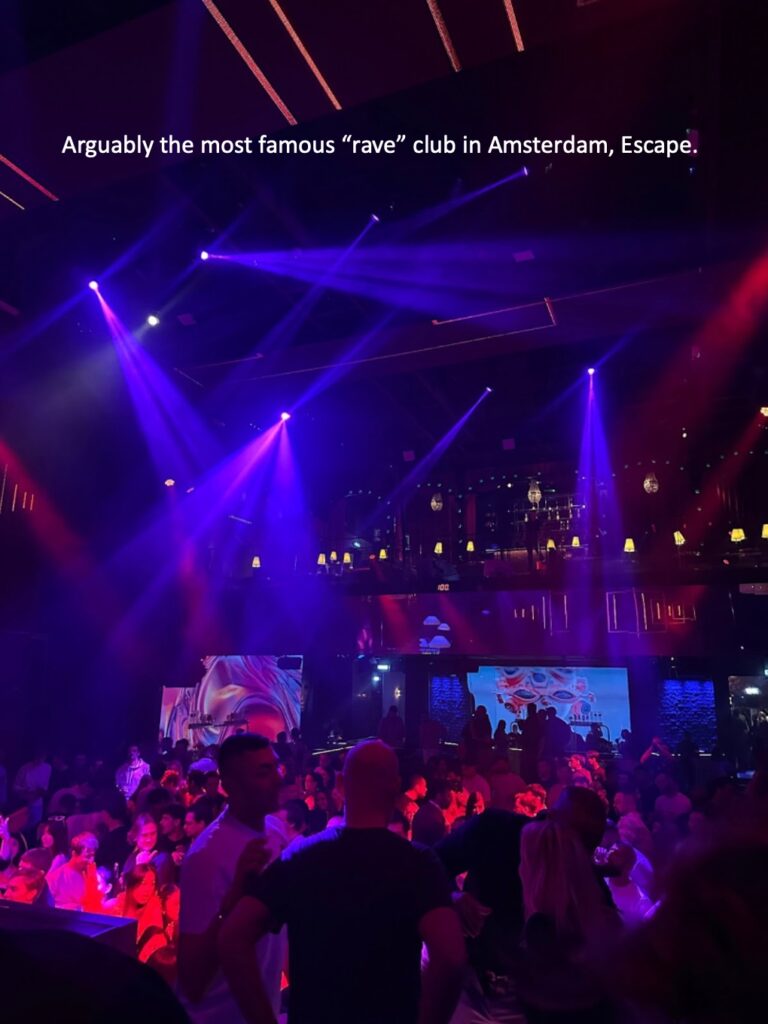
This wasn’t a typical EDM rave — it was something bigger: a nationwide celebration of rhythm, joy, and movement. The celebration carried into the night, and my friends and I went to a converted church-turned-club to see a famous DJ from the Netherlands, MAU P.
He is known for headlining massive festivals like Coachella and Electric Daisy Carnival (EDC) and for his creation of techno tracks, originally blowing up with his iconic song Drugs From Amsterdam.
LEARN MORE: History of King’s Day
LEARN MORE: King’s Day (Koningsdag) in Amsterdam
LEARN MORE: King’s Day: a national holiday and the ultimate Dutch party
LEARN MORE: King’s Day in the Netherlands
LEARN MORE: A ‘Rave’ Review: Conceptual Interests and Analytical Shifts in Research on Rave Culture
LEARN MORE: EDC
LEARN MORE: House Music
LEARN MORE: Coachella
LEARN MORE: Mau P
As a student who loves EDM, is curious about neuroscience, and a volunteer with the NW Noggin outreach community, experiencing the cultural celebration of King’s Day I couldn’t help but think: What’s happening in everyone’s brains right now?

EDM as a whole-brain experience
In the converted church venue, lights strobed like electric synapses, the bass thumped through our bodies, and as the beat dropped, you could feel a surge of euphoria. This wasn’t just a party—it was a full-brain experience. It was neuroscience in motion.
Electronic Dance Music (EDM), from pulsing techno to explosive drum and bass, has a unique power to affect us emotionally, physically, and even cognitively. But what exactly happens in the brain when we are moved to dance nonstop for hours on end? Let’s learn about our brains on EDM.
Dopamine on the dance floor
When a song builds toward a drop, the brain’s nucleus accumbens, part of the reward system, lights up. That moment of anticipation, right before the beat lands, triggers a dopamine release, the brain’s anticipatory and motivational neurotransmitter.
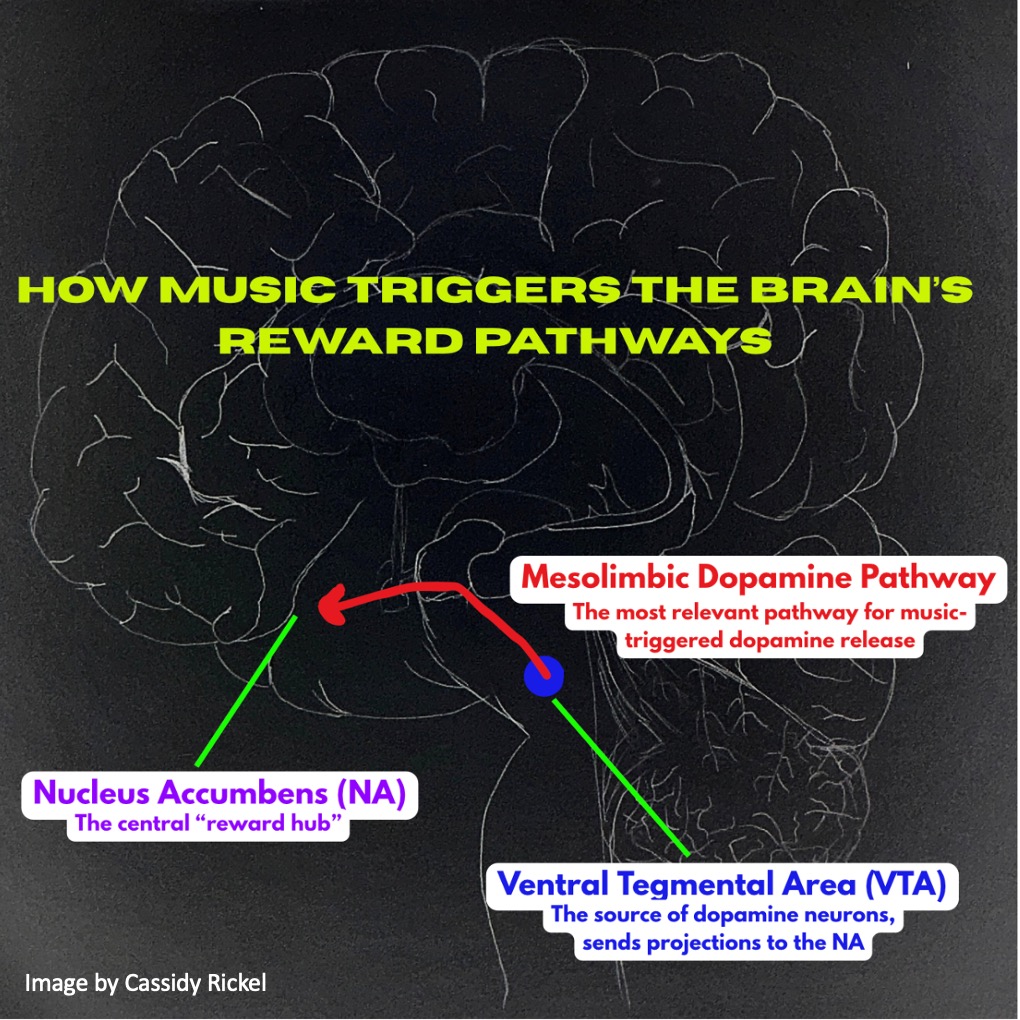
The more tension and build-up, the greater the emotional payoff when the drop hits. Techno and house, known for their predictable 4/4 beats and moderate rhythmic complexity, are especially effective at stimulating this system, enhancing both emotional arousal and movement.

LEARN MORE: Dopamine Modulates the Reward Experiences Elicited by Music
LEARN MORE: The Emotional Response of Techno
LEARN MORE: The transformative power of music: Insights into neuroplasticity, health, and disease
LEARN MORE: Why Does House Music Feel ‘So Damn Good’?
LEARN MORE: When the Beat Drops
Motor cortex on the move
Whether it brings about the slightest movements or an urge to full-body rave, the premotor cortex, motor cortex, and also the cerebellum get activated when listening to the sounds of EDM.
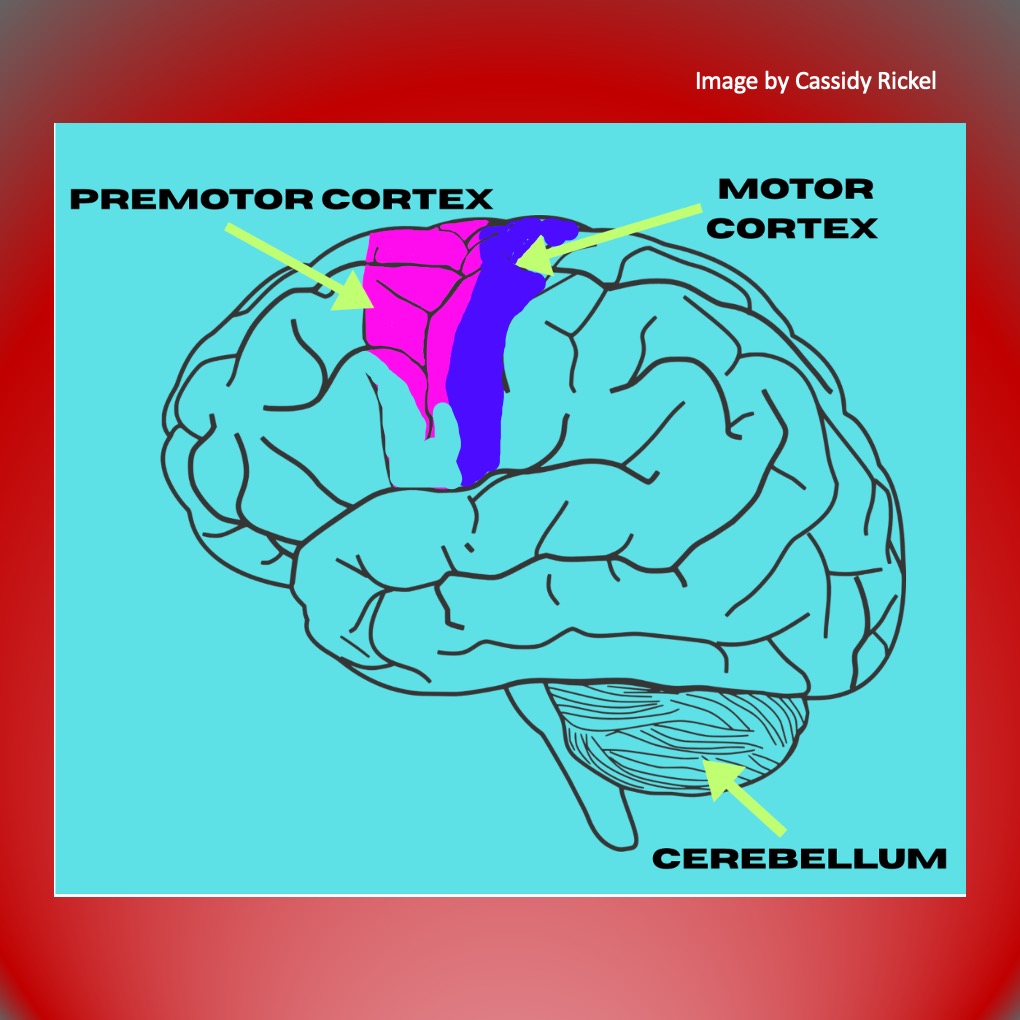
These regions control movement and coordination, and EDM’s repetitive structure primes them to entrain with the beat. This means that your brain’s response to the auditory experience is literally gearing you to move.
As mentioned before, techno is specifically efficient in such processes. Studies have found that participants show increased motor activity when listening to techno, including spontaneous body movements and finger tapping. These movements were linked to the rhythmic, driving 4/4 beats characteristic of the EDM subgenre of techno, confirming that repetitive rhythms stimulate motor areas in the brain.

Genres like drum and bass, though rhythmically complex and unpredictable, can still activate these regions, especially in seasoned listeners or those more familiar with EDM and their specific intrinsic tastes. Although bass genres like dubstep and those similar were less effective in eliciting these neurological responses in some studies, others found that low frequencies physically resonate with the body, creating a somatosensory experience—you feel it in your chest.
Studies suggest bass may activate reward and motor circuits more deeply than higher-frequency sounds, reinforcing pleasure and movement.
LEARN MORE: Grooving to Techno and Bass
LEARN MORE: Recruitment of the motor system during music listening
LEARN MORE: Neurological Findings on Techno
LEARN MORE: What is Bass Music
LEARN MORE: Why the Brain Loves Bass
LEARN MORE: Binaural Beats’ Effect on Brain Activity and Psychiatric Disorders: A Literature Review
LEARN MORE: Frequencies @ Franklin: Your brain on sax!
LEARN MORE: Bagpiper of the brain
This isn’t just dance—it’s entrainment, the brain syncing internal rhythms to external ones.
Entrainment: The brain’s groove mode
Rhythmic entrainment is at the center of EDM’s effect on the brain.
Research shows that regular beats synchronize brainwaves, particularly beta waves (13–30 Hz), which are linked to alertness and motor planning. Simultaneously, alpha wave activity (linked to calm) decreases, shifting the brain into a state of focused arousal—perfect for peak experience on the dance floor. Entrainment, the brain’s synchronization with beats, activates the motor cortex, basal ganglia, cerebellum, and dopaminergic reward circuits. This is because the repetitive structures in EDM enhance not just emotional arousal, but prediction, attention, and pleasure via circuits involving the auditory cortex and nucleus accumbens. These effects are amplified when listeners move or dance, making the music neurologically immersive.
LEARN MORE: The Science of Dubstep
The trance state: Altered consciousness

Beyond movement, EDM—especially trance and techno—can produce flow states, where time disappears and self-awareness fades. This happens via activity in the prefrontal cortex, linked to decision-making and consciousness. In these states, listeners report deep absorption and emotional intensity, not unlike meditation or psychedelics.
Applying this trance experience to the rave culture of Amsterdam, participants and avid goers of raves use drugs to enhance their experiences and replicate heightened flow states. The state is referred to as Dancestasy, a play on words combining the semantics of dance and a common party drug known as ecstasy. When people are under the influence of drugs and dancing to EDM, they sometimes describe their trance-like states as being timeless and lacking self-awareness. They believe their body is the rhythm as they become one with the song.
LEARN MORE: “Dancestasy”
LEARN MORE: Flow, The Secret to Happiness
LEARN MORE: A Review on the Role of the Neuroscience of Flow States in the Modern World
LEARN MORE: Go with the flow: A neuroscientific view on being fully engaged
LEARN MORE: Escape Amsterdam
Emotion + memory: Music that sticks
It’s not just the beat that moves us—it’s the feeling the music creates. That overwhelming euphoria during a drop, the tears that come out of nowhere during a trance breakdown, or the lifelong memory attached to a single song… These deeply emotional and memorable experiences are governed by the amygdala and hippocampus, two key regions in the limbic system.
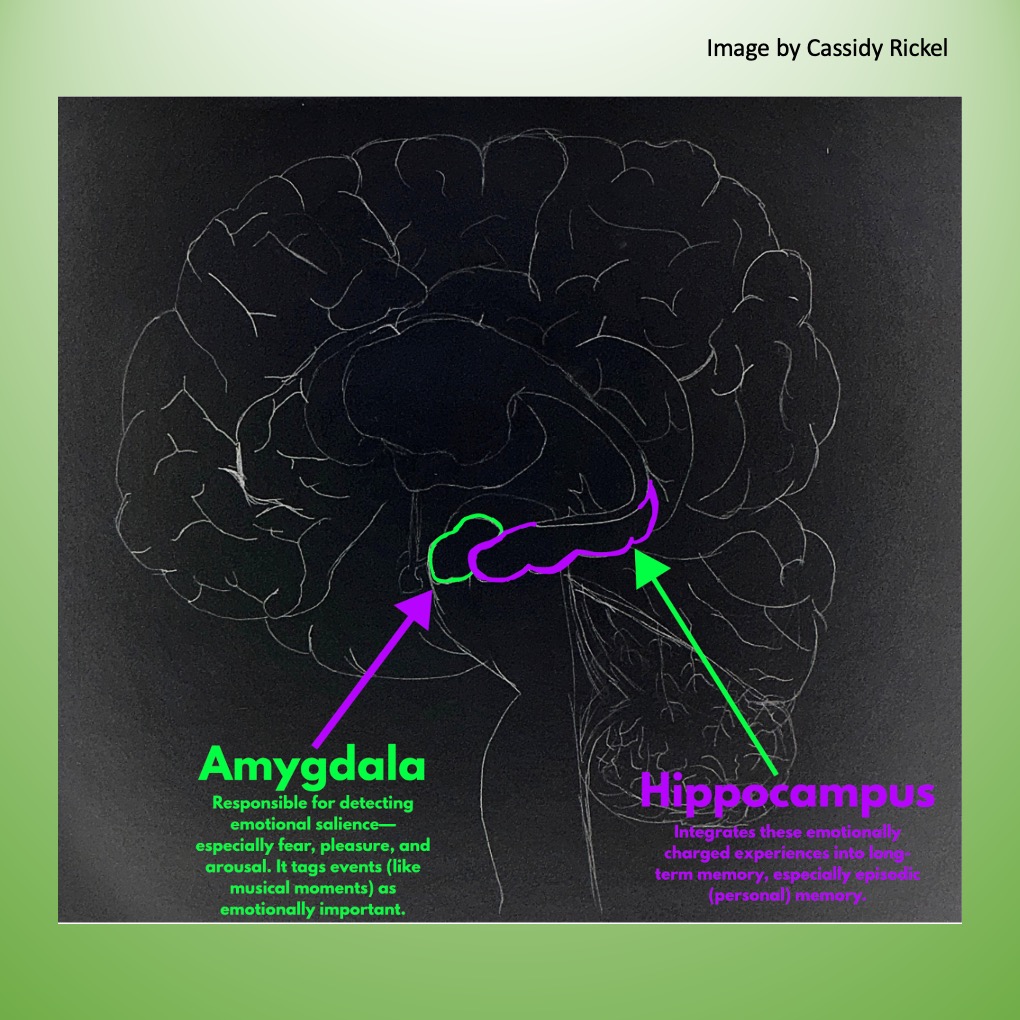
Together, these structures help explain why we remember a rave set years later—or feel an intense emotional flashback when we hear a particular bass line. This effect is particularly strong when ravers are moving or dancing. Physical motion boosts dopamine and norepinephrine, heightening emotional responses and solidifying memory storage.
Additionally, emotional memory is strongest during states of high arousal, like those induced by notorious experiences in EDM, including the bass-heavy drops, trance experiences, rhythmic entrainment, crowd energy, and sensory overload.

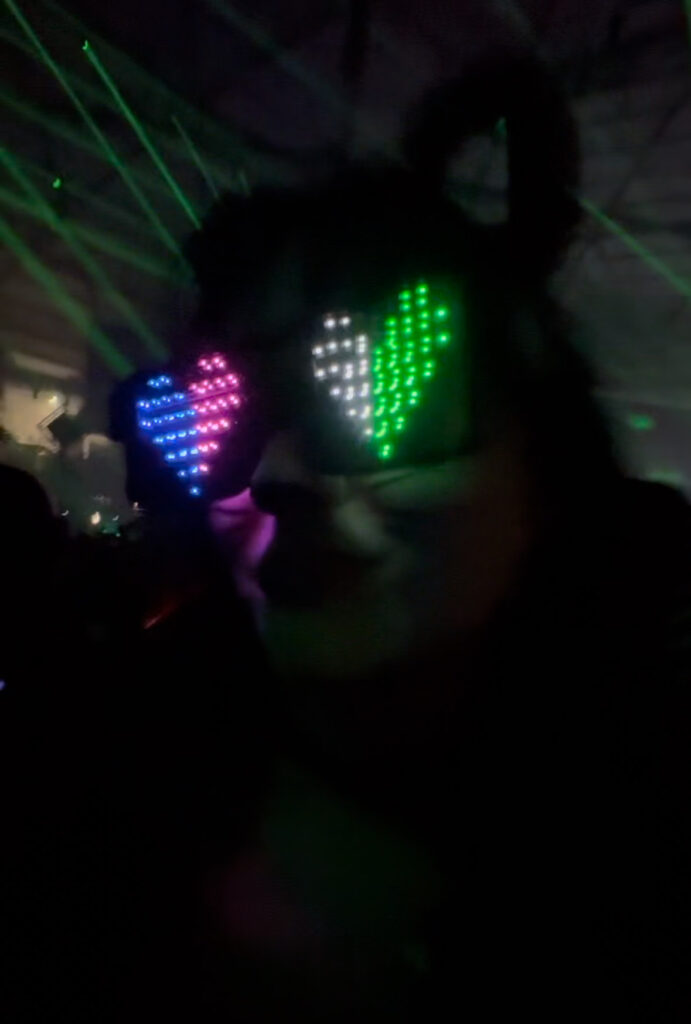
This was me experiencing history at the Sphere in Las Vegas, watching the first EDM artist to headline, Anyma. The Sphere’s immersive experience engraved memories in my mind that I will never forget.
LEARN MORE: Anyma Will Become First Electronic Music Act to Headline the Sphere in Las Vegas
LEARN MORE: Neurological Findings on Techno
Learn More: World’s Most Advanced Audio System at Sphere
LEARN MORE: Your Brain on Techno
LEARN MORE: The limbic system
Visualizing the brain on EDM
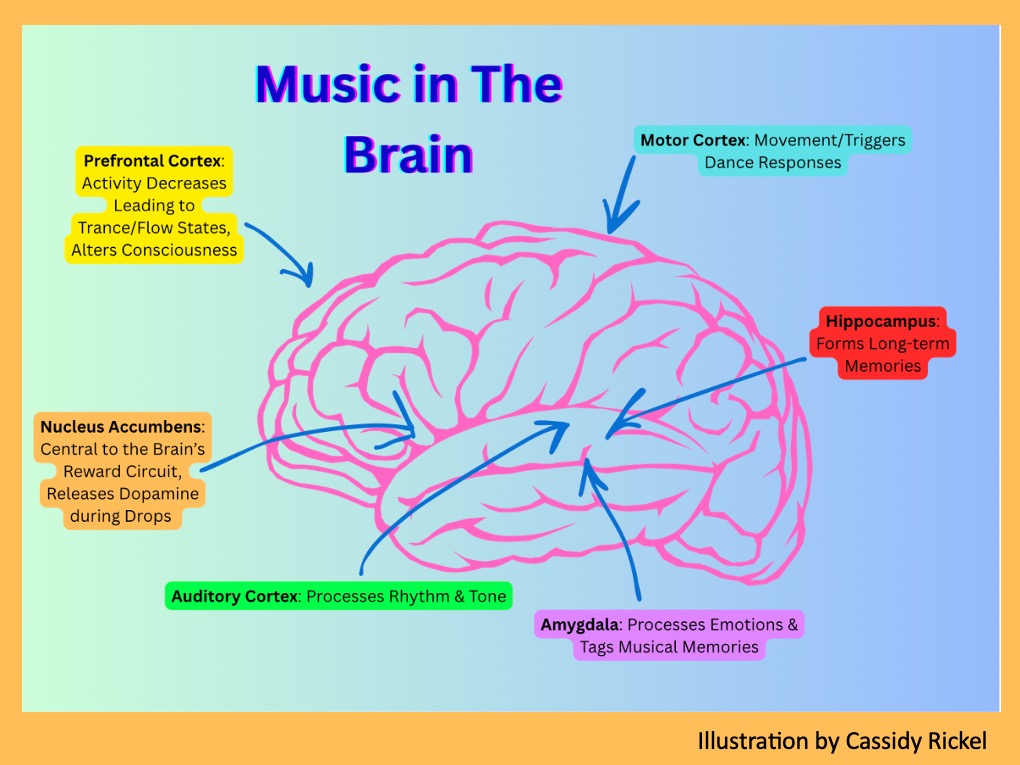
Here’s a breakdown of the key brain regions I discussed and their EDM responses:
The drug factor: Neurochemistry on overdrive
Music and dancing together produce some extraordinary impacts on the brain.
But many ravegoers try to enhance their experience with substances like MDMA/ecstasy, which floods the brain with serotonin, dopamine, and oxytocin. But there’s a risk. Overstimulation of these systems can lead to neurochemical burnout, mood crashes, and longer-term physical and mental health impacts.
It is important to remember that drug-induced experiences are not needed to achieve the full effects of EDM, although it is a reality for some people. For those interested, harm reduction resources—like DanceSafe—offer education and tools to party smarter.
LEARN MORE: DanceSafe
LEARN MORE: Drugs and Raves, It’s More Wholesome Than You Think
LEARN MORE: SOLIDARITY AND DRUG USE IN THE ELECTRONIC DANCE MUSIC SCENE
LEARN MORE: National Substance Abuse Hotline
LEARN MORE: Rave Culture and Illicit Drug Use
EDM and young minds: A neurological gateway
Teens and young adults are especially drawn to electronic dance music because of its emotional intensity, communal energy, and the way it helps shape identity during critical developmental years. Adolescence is a period marked by heightened neuroplasticity and emotional sensitivity, and music, particularly immersive genres like EDM, can serve as both a mirror and a regulator of emotional experience. In educational settings, music becomes more than background noise—it becomes a neurological tool.
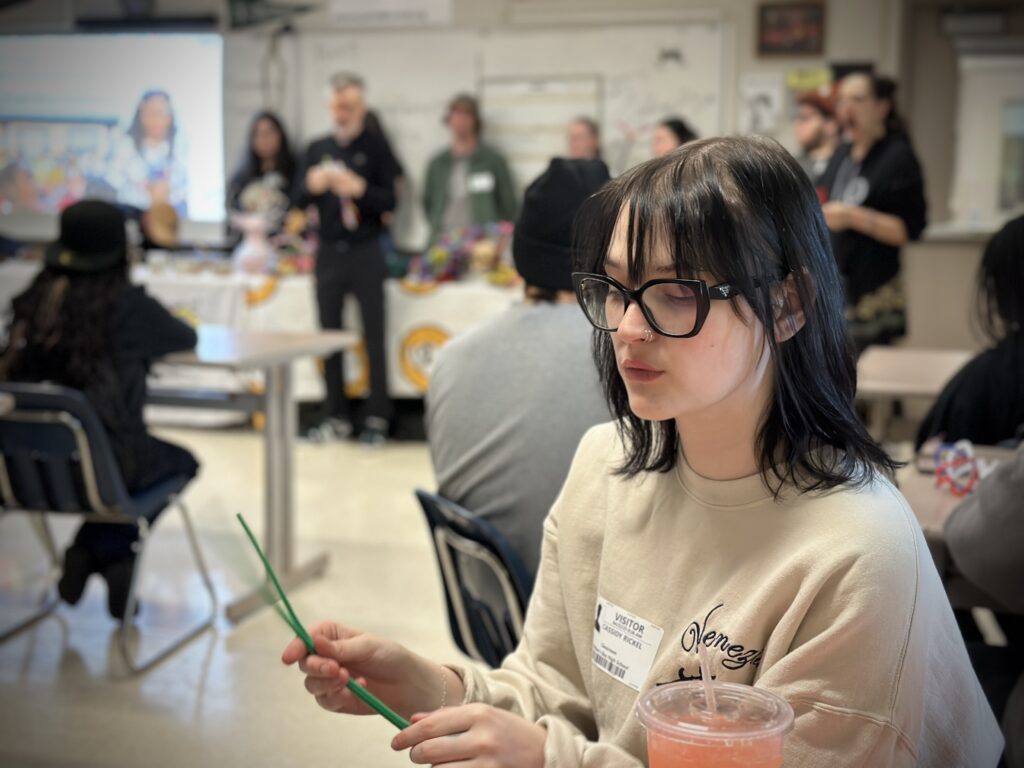
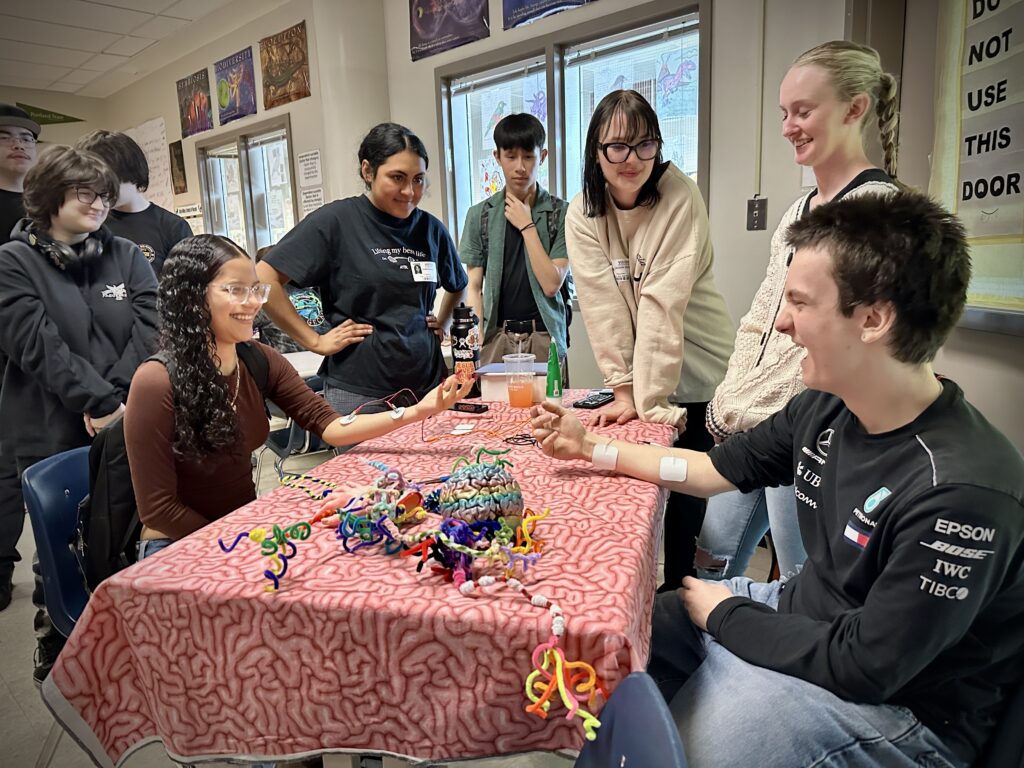
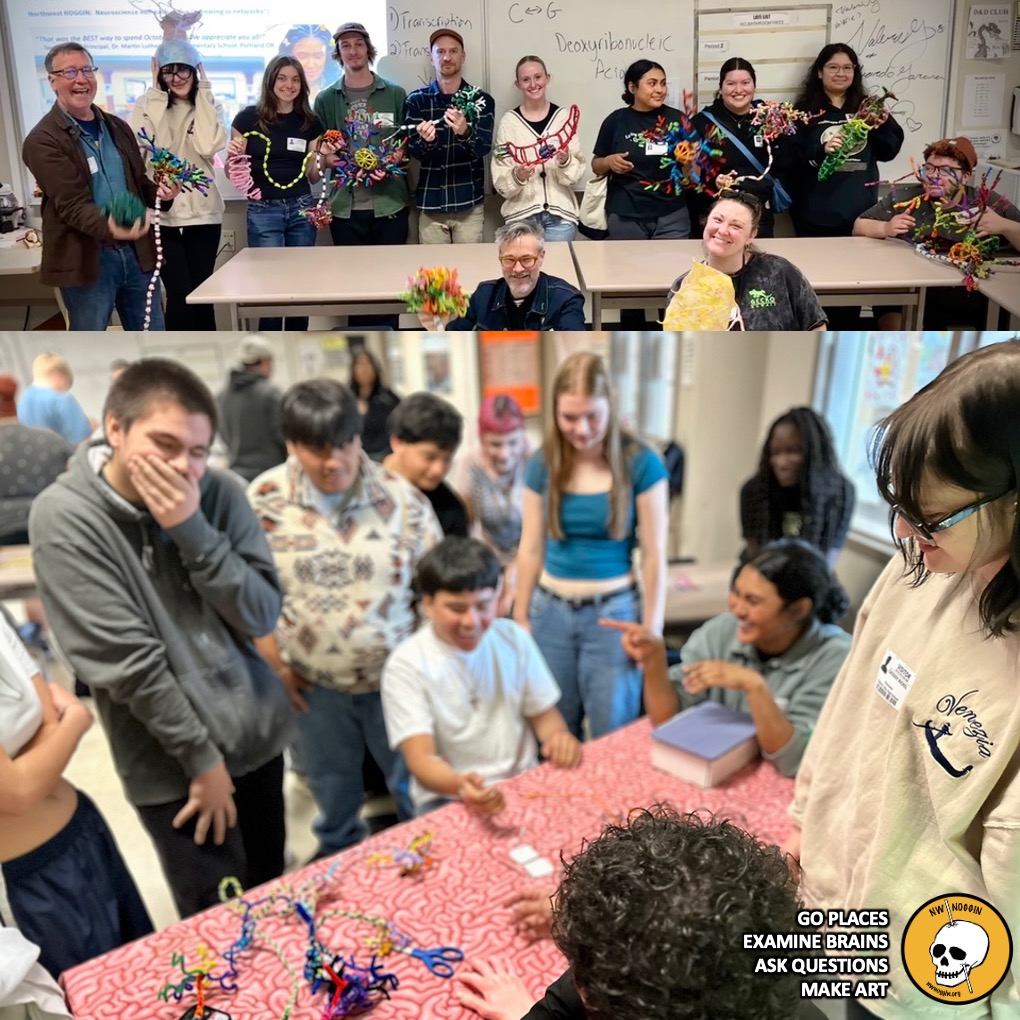
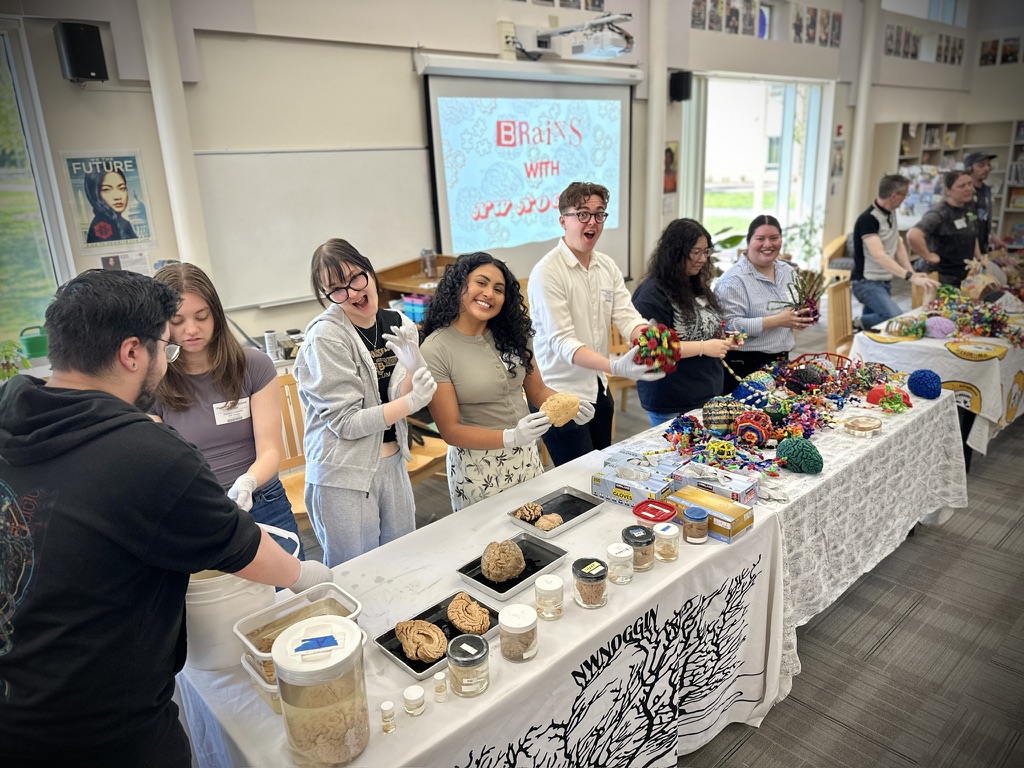
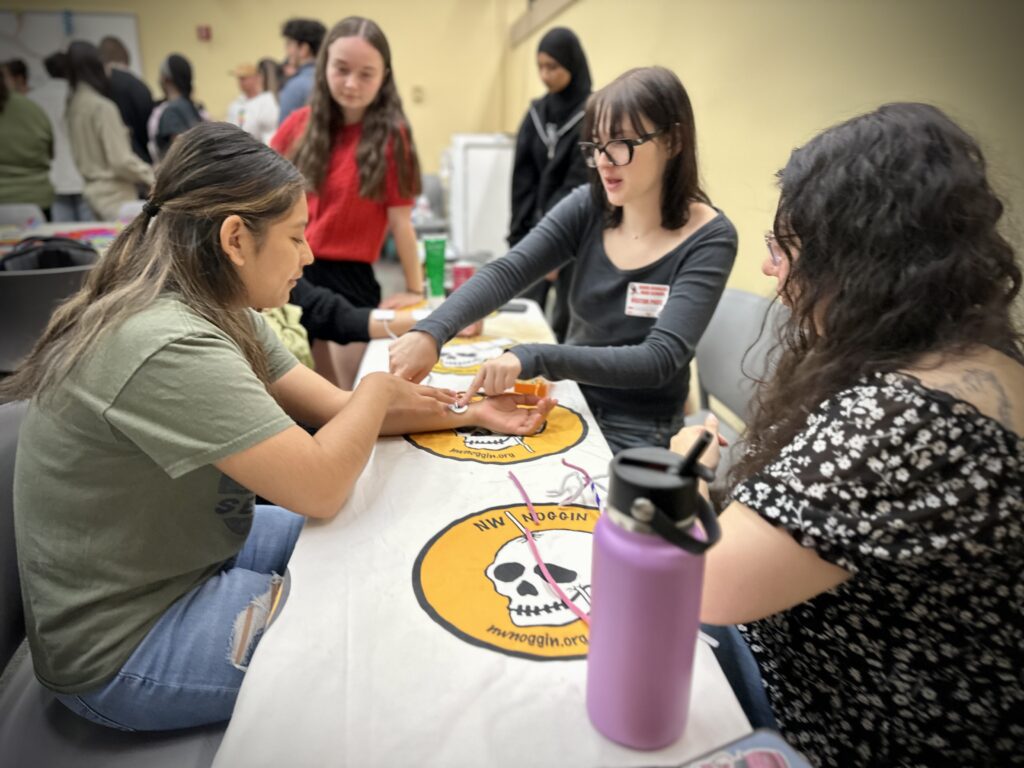
Through my volunteering with NW Noggin at Parkrose High School in Portland, I witnessed firsthand how students use music as an intentional form of cognitive support.
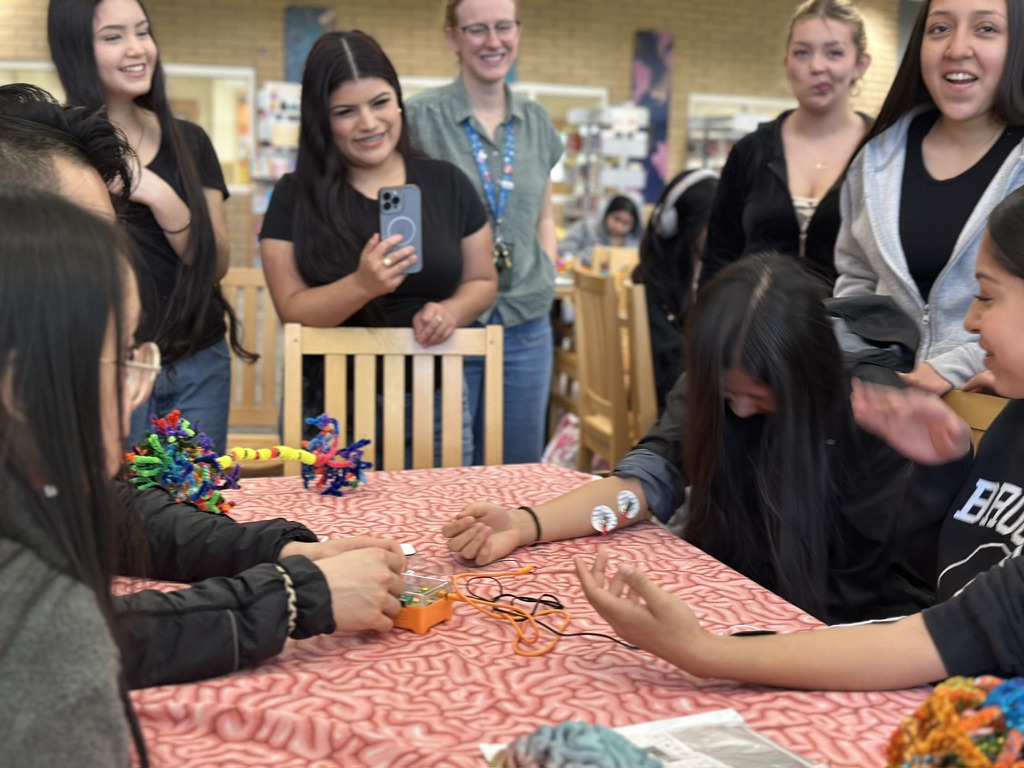
One student in particular was wearing headphones during a brain-focused outreach session. For them, this wasn’t a distraction—it was strategy. They were using music to regulate sensory input, focus attention, and stay engaged with the material.
EDM, with its emphasis on rhythm and immersion, is especially effective in helping adolescents manage energy and focus. Genres like trance and house can promote flow states, where focus sharpens and external distractions fall away. Meanwhile, bass-heavy tracks may activate the somatosensory system, helping students reconnect to their bodies in moments of overwhelm or disengagement.

Encouraging safe and conscious engagement with music—whether through headphones, dancing, or simply listening—is a valuable way to support youth in developing not just self-expression, but also emotional resilience, motivation, and curiosity. In outreach, when we meet students where they are—with the music they already love—we unlock a powerful portal to neuroscience, identity, and connection.
LEARN MORE: Influence of Music on Adolescents
LEARN MORE: Review on the Use of Music for Emotion Regulation
LEARN MORE: How Music Can Enhance Your Childs School Success
LEARN MORE: Melody for the Mind
LEARN MORE: Neuroscience for Kids
LEARN MORE: The Neuroscience of Music
LEARN MORE: The Role of Mood and Arousal in the Effect of Background Music on Attentional State and Performance
LEARN MORE: The Role of Music in the Healthy Development of Adolescents
LEARN MORE: Music is My Copium
LEARN MORE: Can music orchestrate emotional intelligence?
EDM & young minds continued: AMP @ MacLaren
Music’s power to engage young minds became even more clear during an NW Noggin outreach visit to MacLaren Youth Correctional Facility in Woodburn, Oregon. Partnering with the Artist Mentorship Program (AMP), a nonprofit that brings music and creative tools to underserved youth, we spent the day exploring how rhythm and sound affect the brain.
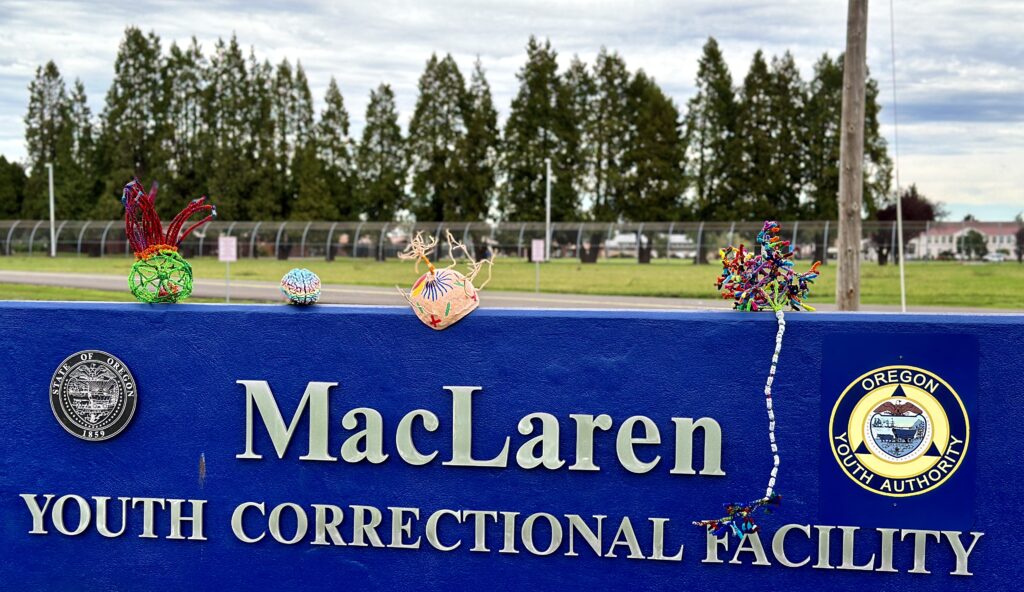
AMP brought an array of instruments—keyboards, guitars, mics—and invited the teens to experiment freely. Within minutes, the room filled with beats, melodies, and energy. The response was immediate and electric. These weren’t passive listeners—they were creators, fully immersed in building something of their own.
What we saw mirrored everything I’d been learning about EDM and the brain. The students were engaging motor circuits through rhythm, activating reward pathways through creativity, and regulating emotion through musical flow. The structure and repetition in EDM-like loops gave them a sense of control, of presence.
In a place where freedom is limited, music created a moment of agency, expression, and connection. It reminded me that music isn’t just entertainment—it’s a neural lifeline. And EDM, with its immersive rhythms and emotional peaks, offers a powerful way to reach minds that need it most.

LEARN MORE: Noggin @ MacLaren!
LEARN MORE: AMP l Portland
PLUR in the brain: Peace, Love, Unity, Respect
EDM culture is rooted in four values:
Peace, Love, Unity, and Respect—commonly known as PLUR.

These aren’t just slogans; they reflect deeply embodied social experiences that have measurable effects on the brain. In the immersive environment of a rave, surrounded by pulsing lights, synchronized rhythms, and collective movement, the brain becomes primed for prosocial behavior and emotional connection. When the beat drops and a crowd moves as one, it sparks a cascade of neurochemical bonding.
As bodies synchronize through rhythm, the brain releases oxytocin, a hormone that enhances empathy, trust, and group cohesion. Group movement has been shown to trigger oxytocin surges, making people feel emotionally closer, even if they’ve just met. This effect is amplified by the endorphins released during physical exertion and emotional highs, which are especially potent when thousands of bodies are moving in sync to the same BPM.
These bonding effects are reinforced by mirror neurons, creating a loop of shared emotional resonance. This collective state has been described as “interpersonal synchrony”, where emotional and motor rhythms align across individuals, allowing everyone to feel part of something bigger than themselves.
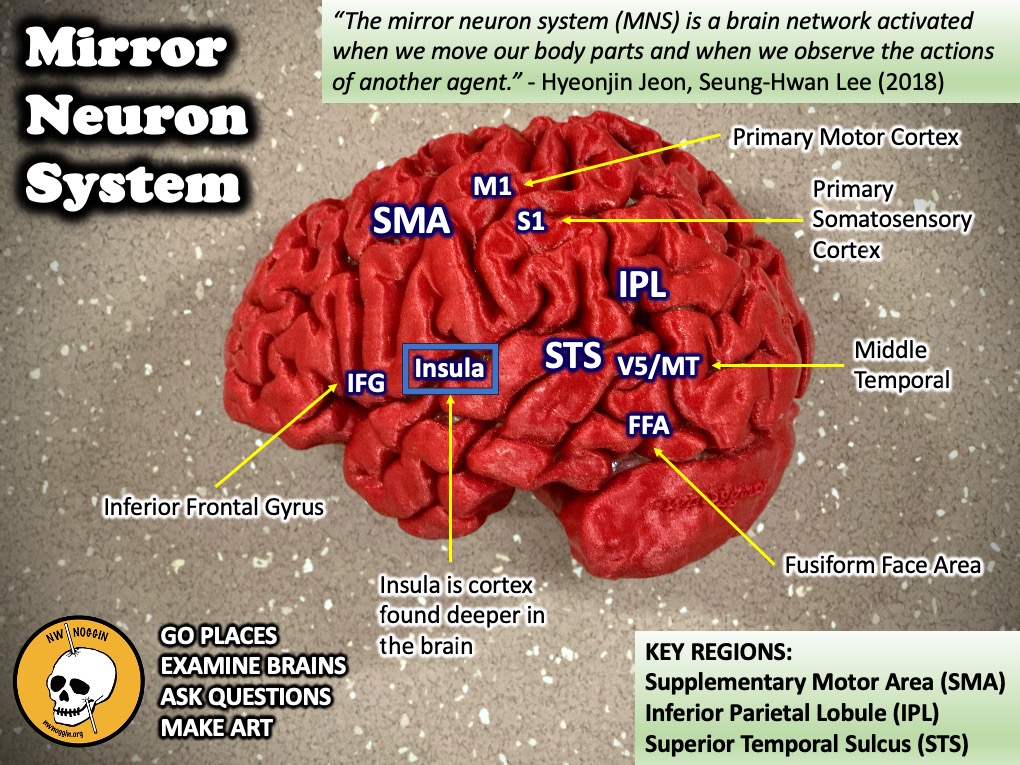
This neurochemical symphony ties directly to the values of Peace, Love, Unity, and Respect. Peace comes from parasympathetic regulation triggered by entrainment and emotional safety. Love is sustained by oxytocin and serotonin. Unity is enacted through motor and emotional synchrony. Respect emerges from the heightened social attunement and mutual recognition fostered in these altered, rhythmic states.

In high-energy environments like raves, where cultural rituals like kandi trading and physical gestures of kindness are common, these neurochemical systems are constantly reinforced. A smile, a shared drop, or a light show handshake—each small gesture cues prosocial circuits in the brain, creating a loop of emotional reciprocity. PLUR isn’t just about how we treat each other—it’s about how music and movement rewire the brain for connection.
LEARN MORE: Do Mirror Neurons Give Us Empathy?
LEARN MORE: Electronic Dance Music Events as Modern-Day Ritual
LEARN MORE: How to Trade Kandi at a Rave
LEARN MORE: Mirror Neuron Systems and Empathy
LEARN MORE: Collaborating Noggins
LEARN MORE: Music and Social Bonding: Self-Other Merging and Neurohormonal Mechanisms
LEARN MORE: Oxytocin and Social Relationships: From Attachment to Bond Disruption
LEARN MORE: The role of oxytocin in social bonding, stress regulation and mental health
LEARN MORE: Performance of Music Elevates Pain Threshold and Positive Affect
LEARN MORE: The Positive Feedback Loop of Empathy and Interpersonal Synchronization
LEARN MORE: Why PLUR is Important and What it Looks Like on the Dancefloor
Sound suggestions for peak brain engagement
Try listening to these tracks to stimulate different brain functions:
- Techno (Focus & Cognitive Arousal)
Hypnotized by Anyma & Ellie Goulding
One Mind Charlotte de Witte & Amelie Lens - House (Groove + Mood Regulation)
Glue by Bicep
Dreamin by Dom Dolla & Daya - Drum & Bass (Excitement + Motor Activation)
Go Back by John Summit, Sub Focus & Julia Church
Liars by Hedex - Trance (Flow State + Emotional Processing)
Carry Me Home by Above & Beyond
Aural Psynapse by Deamau5 - Dubstep (Intensity + Startle Response)
Black Ice by Subtronics & Rezz
Bangarang by Skrillex
Postman by Levity - Heavy Bass (Somatosensory Engagement)
Stratosphere by Subtronics
The Maze Guardian by Spaze Wizard
Final drop: Music as medicine
EDM is more than a night out — it’s a full-brain experience.
It excites our motor system, rewards us with dopamine, shifts our consciousness, and connects us to others. With awareness, neuroscience, and maybe a few kandi tradeoffs, we can harness music’s power to elevate minds and spirits. This has definitely been the case for me, and I hope my post inspires you to want to experience the same.