


Post by Elizabeth Gomez, a senior at Portland State University set to graduate this June and earn a bachelors degree in Psychology and a minor in Interdisciplinary Neuroscience. Elizabeth is starting a Clinical Psychology masters program this fall at Pacific University. She ultimately wants to earn a Ph.D. and become a neuropsychologist in order to help patients manage brain injuries.
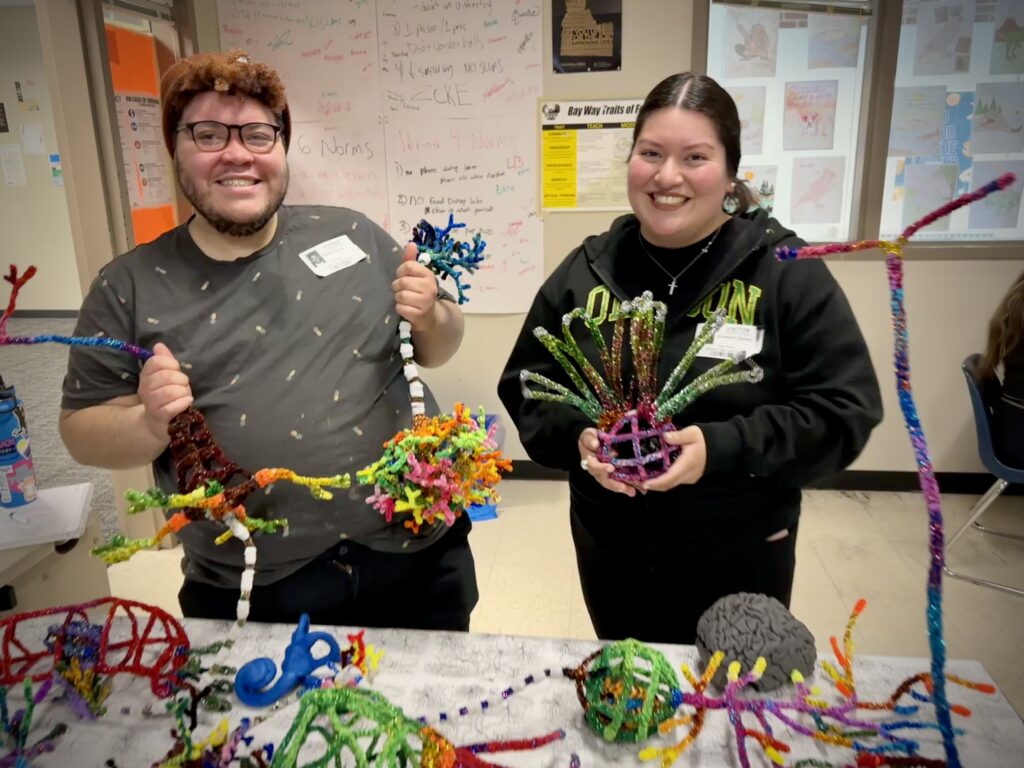
I decided to join Northwest Noggin my last term at Portland State so I could participate in outreach visits, get more involved with my community and learn more about the brain and its structures through the eyes of other brilliant minds!

LEARN MORE: NW Noggin
LEARN MORE: What is Outreach Like?
Wrinkly noggins
During many school visits I heard students ask why our brain is wrinkly and I’ve often wondered about this question myself. I thought it was an interesting topic to explore and it has an intriguing answer. It has to do with a very important part of the brain that makes up the outer surface, called the cortex. I wanted to understand why our cortex is so wrinkly, and not smooth.

What in the cortex is going on?!
Cortex is Latin for “bark,” and like the bark of a tree, it’s a crinkled outer coating on the cerebrum. The cerebral cortex is such a fascinating structure because it’s the first thing you notice whenever you are in the presence of a real brain, with its wrinkled up, almost raisin-like appearance.

But there’s more to this intriguing structure than you think!

From smooth to wrinkly
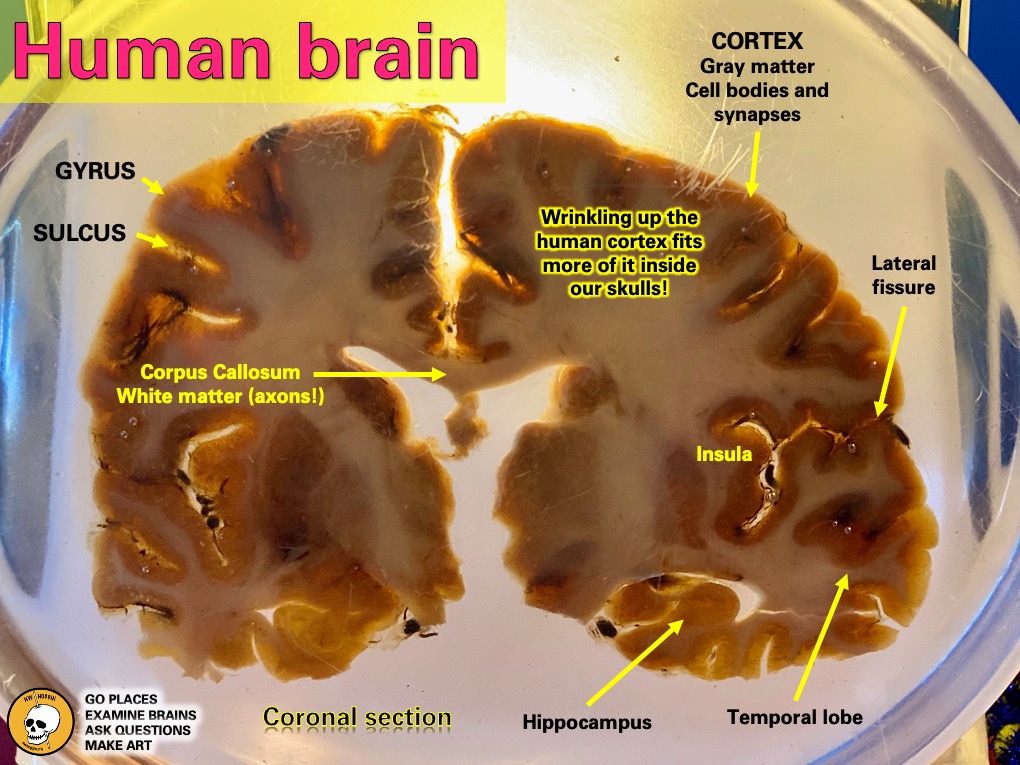
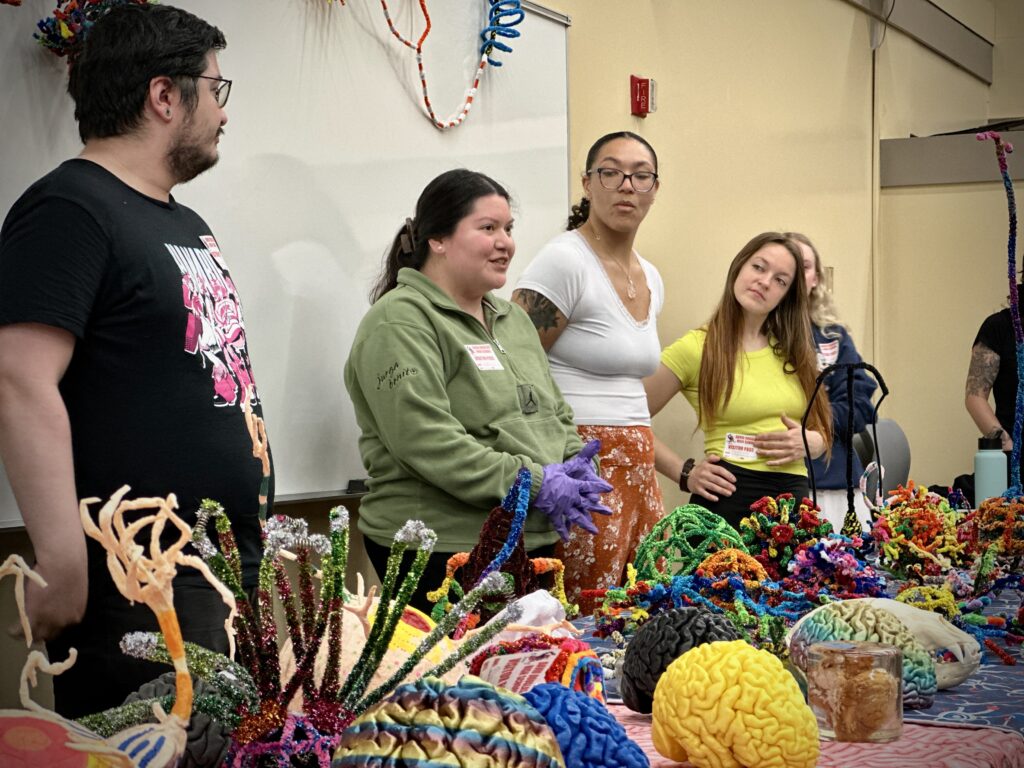
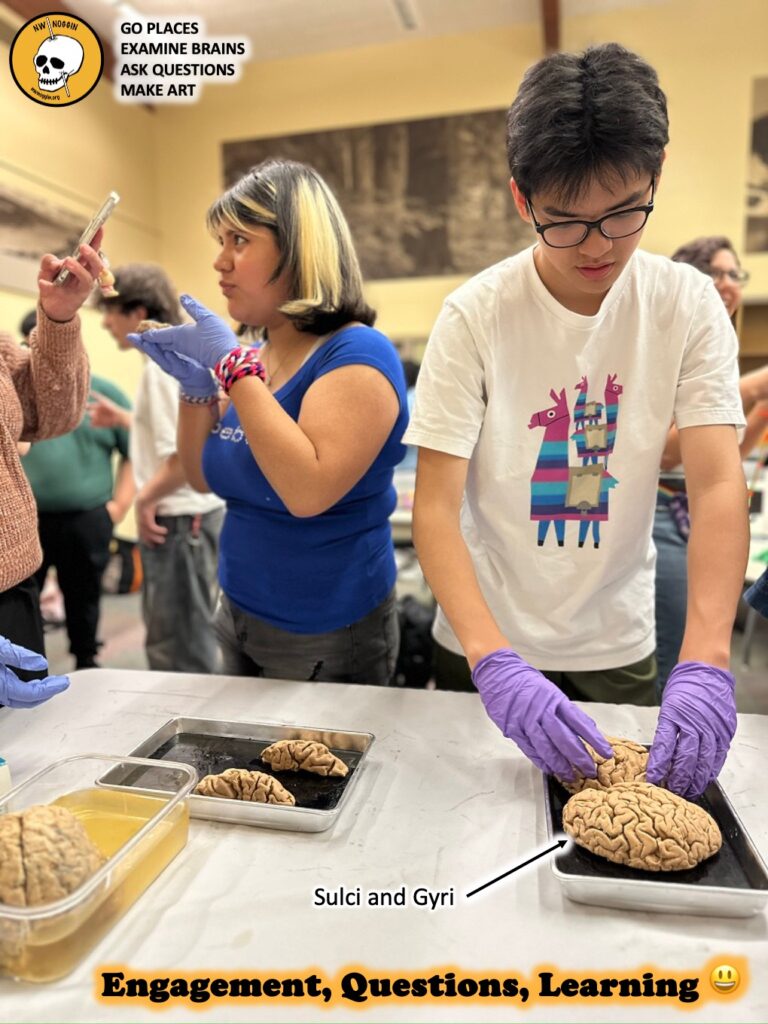
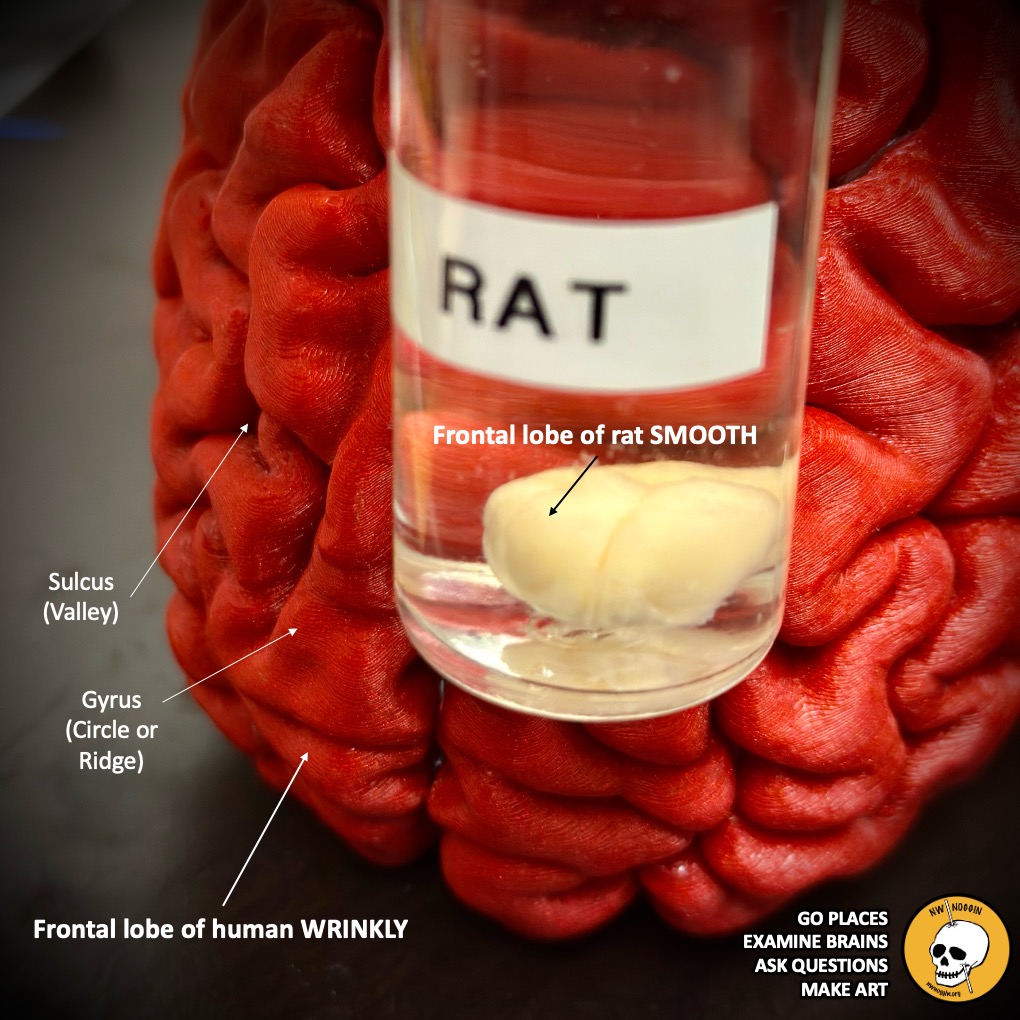
The cerebral cortex gets wrinkly in order to fit more of it inside our cranium as it grows during prenatal development. This results in “cortical folding” into the distinctive grooves and ridges, which are known as sulci (Latin for valleys) and gyri (the surface rings, or circles).
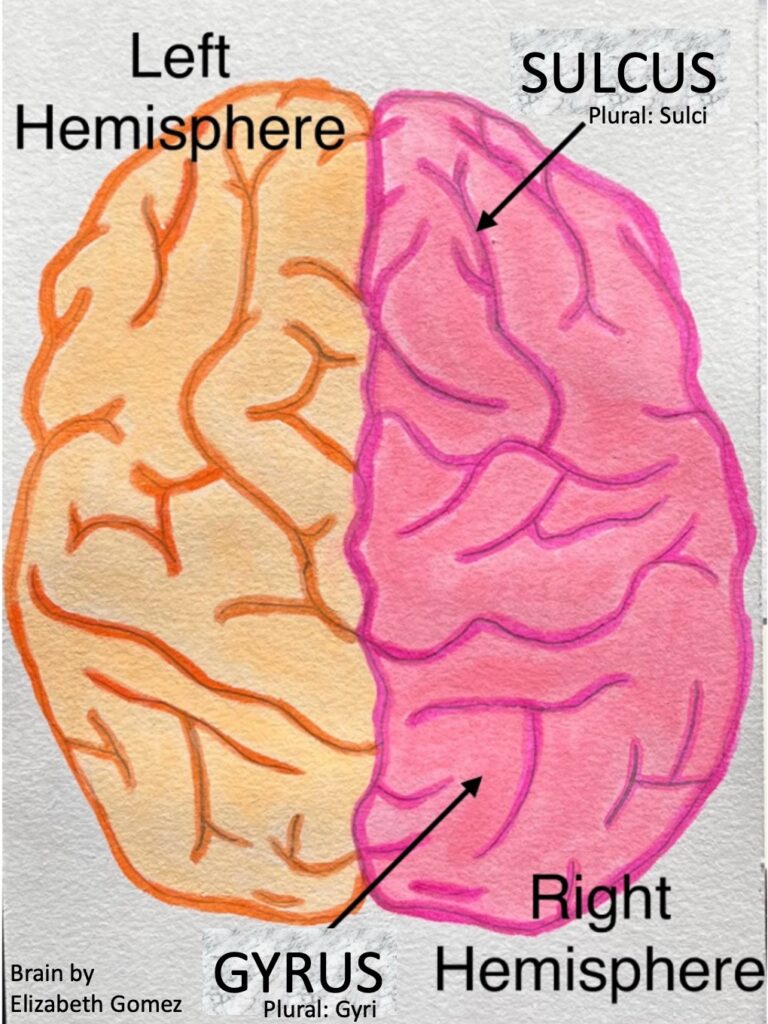
This funky structure looks to me like a wrinkled up sausage, but it holds 14 – 16 billion nicely stuffed neurons out of an estimated 86 billion neurons in the adult human brain!

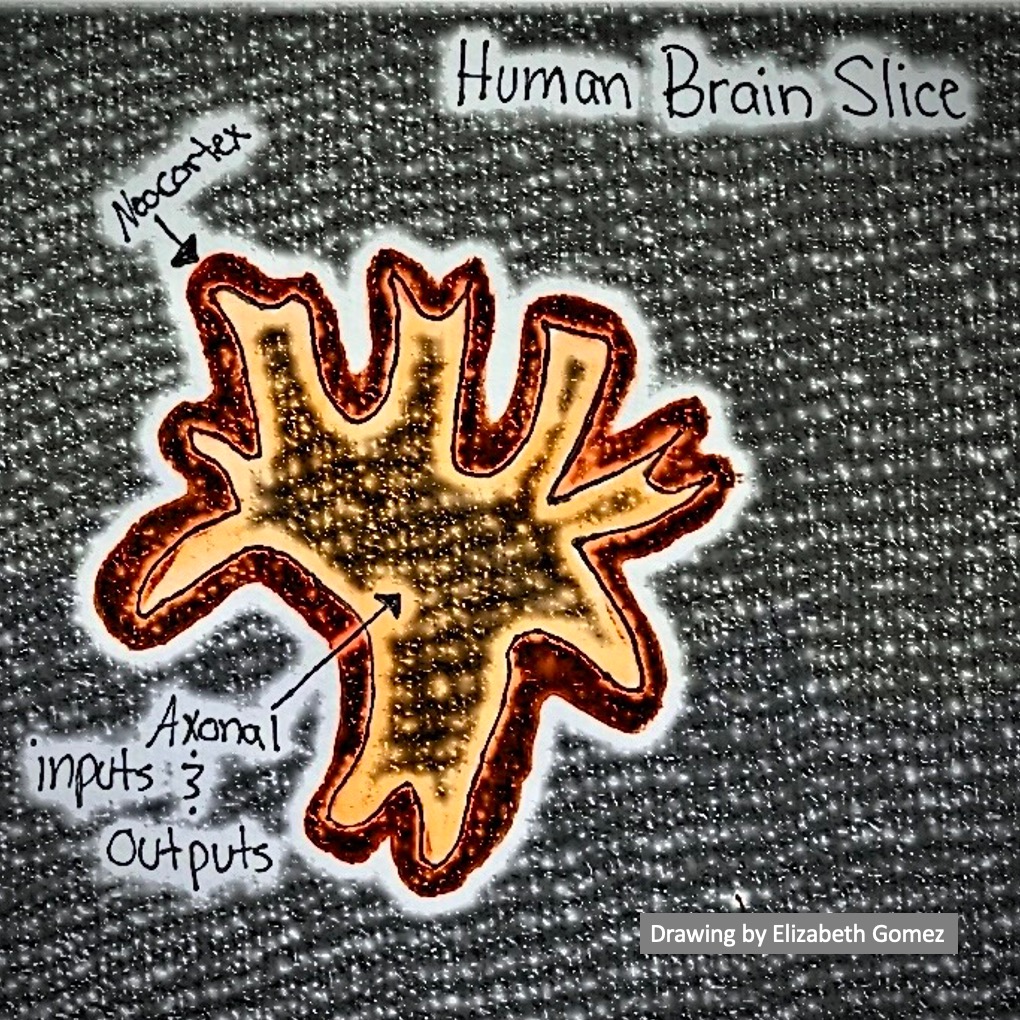
These distinctive cortical folds are examples of gray matter, brain tissue made up of nerve cell bodies (or soma), branch-like dendrites, and axon terminals. White matter, we’ll discover, is made up of longer-range axons that link different regions of gray matter together into neural networks. White matter axons are often wrapped in glial cell membranes known as myelin (or a myelin sheath).
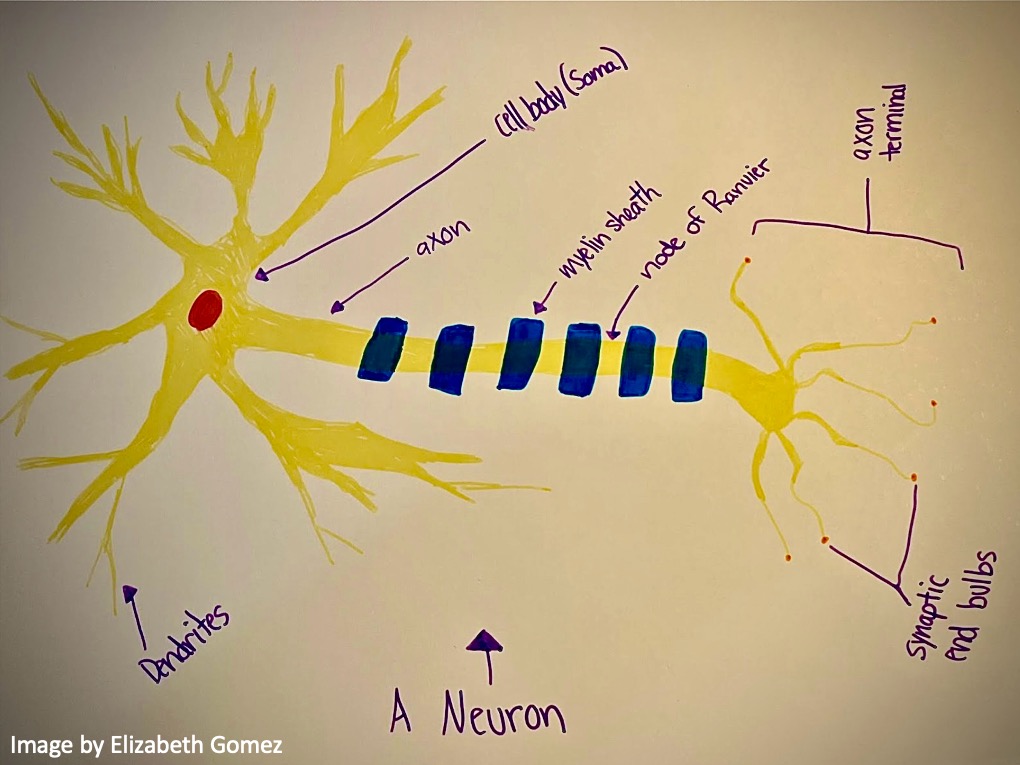
Again, the sulci and gyri that make our cortex wrinkly form during fetal development.
Glial cells known as radial glia are responsible for initially guiding neurons to their correct location. Radial glial cells provide structural “guide wires” for neurons to follow to the developing cortex. Our brains begin smooth, and the gyri and sulci form after the migration of neurons along these long, wire-like radial glial cells that allow for cortical development in the womb.
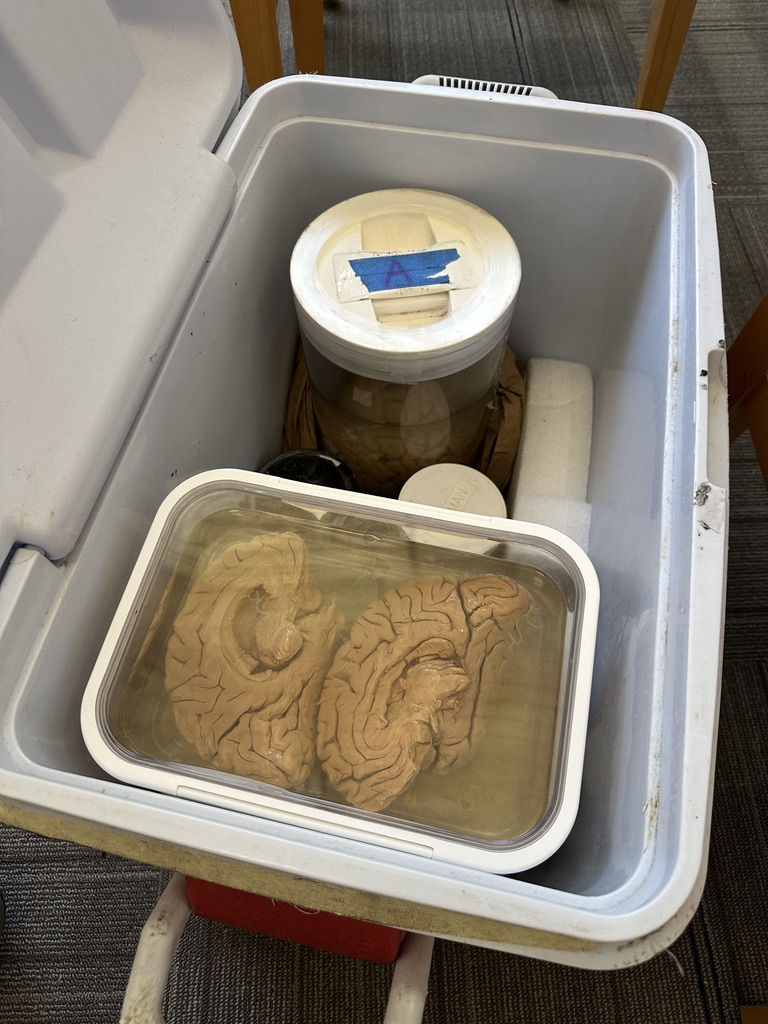
The human cerebral cortex starts forming at around eight weeks of gestation, and as more nerve cells and connections accumulate, sulci and gyri appear. The majority of wrinkling (or “gyrification”) occurs in the third trimester of pregnancy. The growth of white matter (again, the wires of brains – those myelinating axons) also impacts the continued wrinkling of our developing cortex.
LEARN MORE: How Cells Fold the Cerebral Cortex
LEARN MORE: The Development of Gyrification in Childhood and Adolescence
LEARN MORE: Development and Arealization of the Cerebral Cortex
LEARN MORE: TIL: Why Your Brain is Wrinkly
A smooth human brain is possible, though thankfully it’s very uncommon.
There is a rare genetic condition known as lissencephaly, which causes severe intellectual and physical disabilities. Because of problems in cerebral cortical development, no gyri or sulci form in these individuals, so their brains remain unwrinkled and smooth.
LEARN MORE: Dynamic mapping of human cortical development during childhood through early adulthood
LEARN MORE: The Concurrence of Cortical Surface Area Expansion and White Matter Myelination in Human Brain Development
LEARN MORE: Lissencephaly
LEARN MORE: Lissencephaly: expanded imaging and clinical classification
LEARN MORE: Shaping the brain: The emergence of cortical structure and folding
LEARN MORE: Mechanical hierarchy in the formation and modulation of cortical folding patterns
The cortex has (mini)columns
Our wrinkly neocortex is a very organized structure!
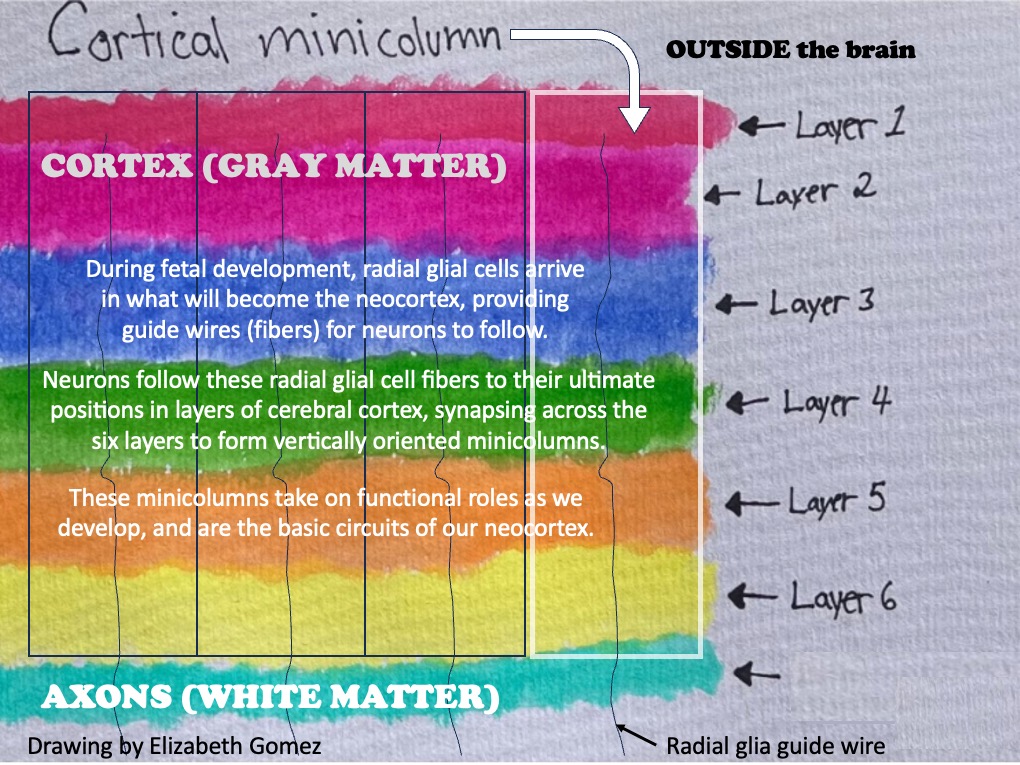
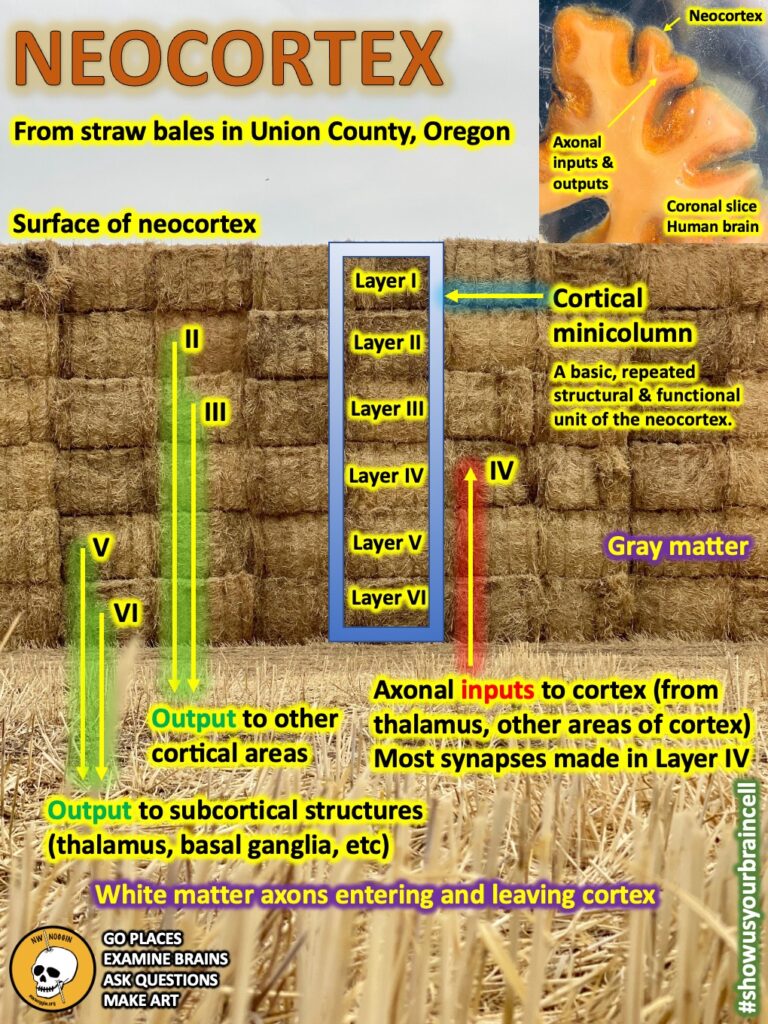
Because developing neurons follow the radial glial fibers to their ends, they ultimately form multiple layers of cells. The neocortex (“new” cortex, in terms of evolution) has SIX layers of cells, numbered one through six (or I through VI in Roman numerals) from the outside of the brain in. The neurons that arrived along each radial glial fiber (or guide wire) then synapse with each other vertically across the six layers, forming the basic structural and functional unit of neocortex, the minicolumn.
So your neocortex is (remarkably) a set of repetitive circuits, known as minicolumns!
LEARN MORE: The minicolumn hypothesis in neuroscience
LEARN MORE: Minicolumn size and human cortex
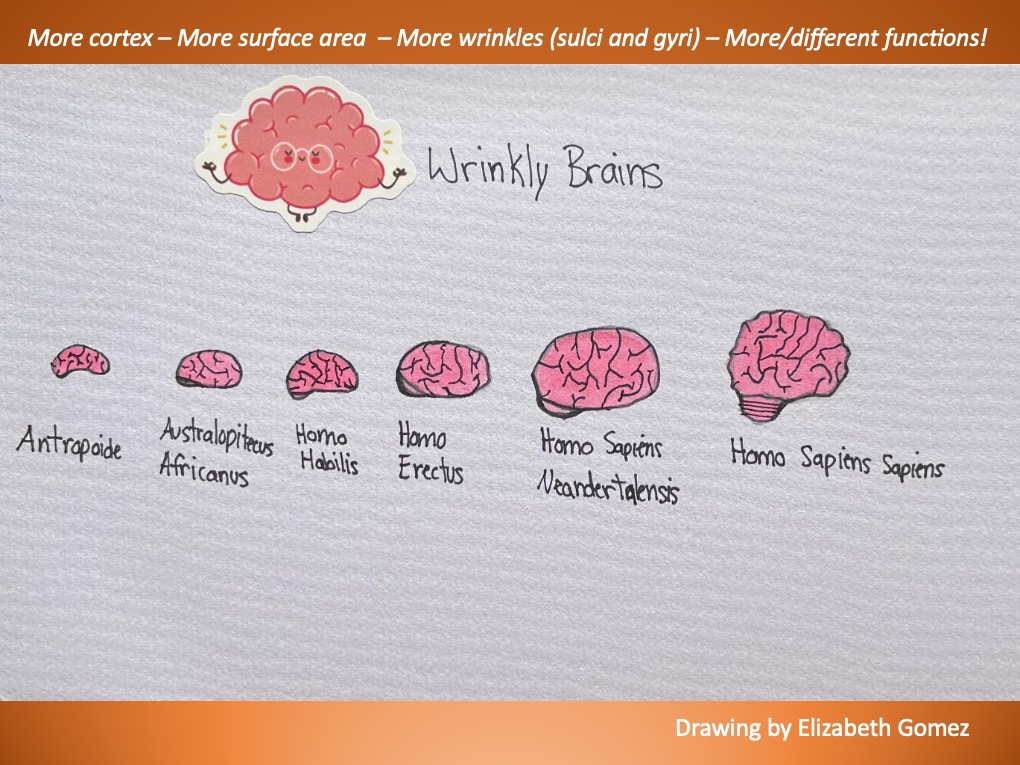
There have been changes across evolution regarding cortical surface area and a significant progression from smooth to wrinklier brains. The more cortex there is, the more it wrinkles to fit inside skulls. Also, the more cortex you get, the more minicolumns you get, allowing for more extensive cortical processing and analysis of information!
LEARN MORE: Phase transitions of brain evolution that produced human language and beyond
LEARN MORE: The Evolution of the Human Brain
Lobes, lobes, lobes!
Our wrinkly thinking caps can be divided into five big chunks of cortex called lobes, with each lobe contributing to specific functions.
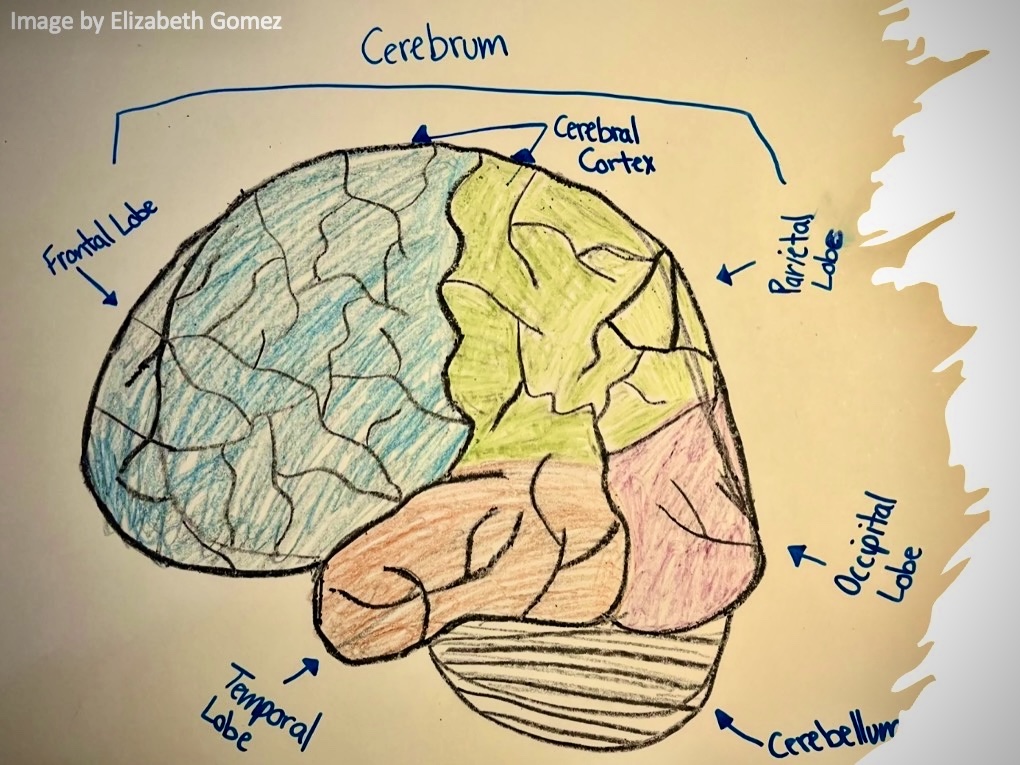
The frontal lobe behind your forehead is important for voluntary movement and expression (including speech and sign language), and for making social decisions. Animals with larger frontal lobes tend to exhibit more complex social interaction.
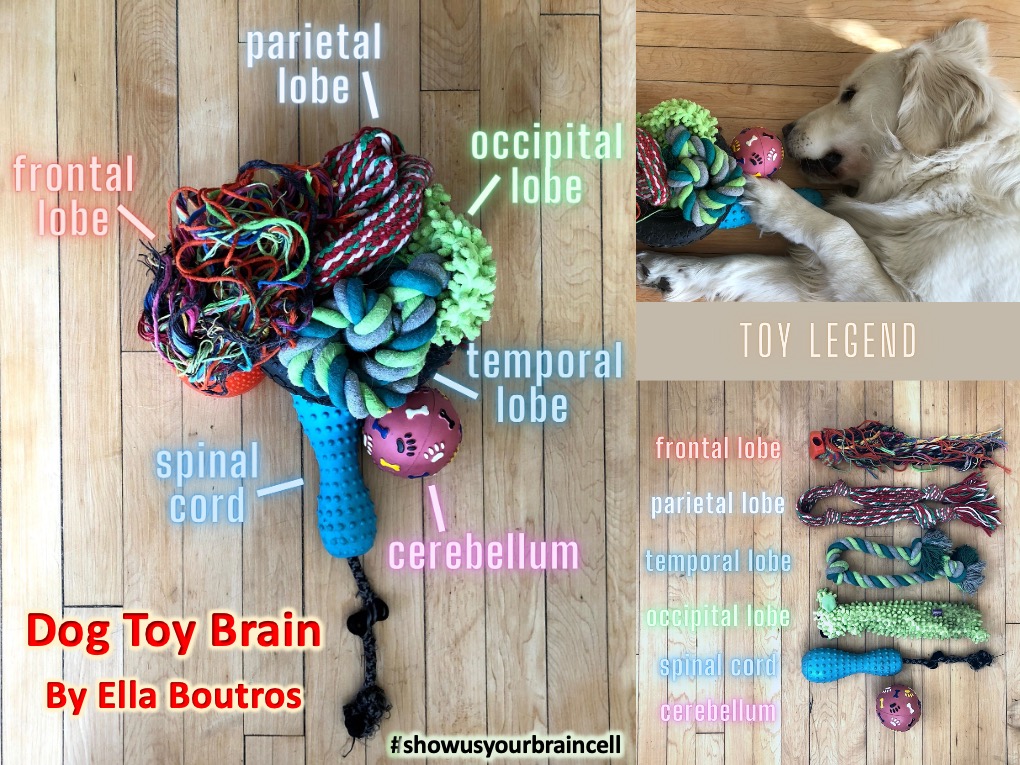
The occipital lobe at the back of your brain first receives visual information from your eyes, but as we’re visually driven primates, that information gets shared with other lobes. The temporal lobe is important for recognizing objects (what is that?), and also for memory, processing what you hear, and understanding language. The parietal lobe spatially maps your body in your environment, incorporating aspects of touch, position, vision, acceleration and balance so you actually know where you stand!
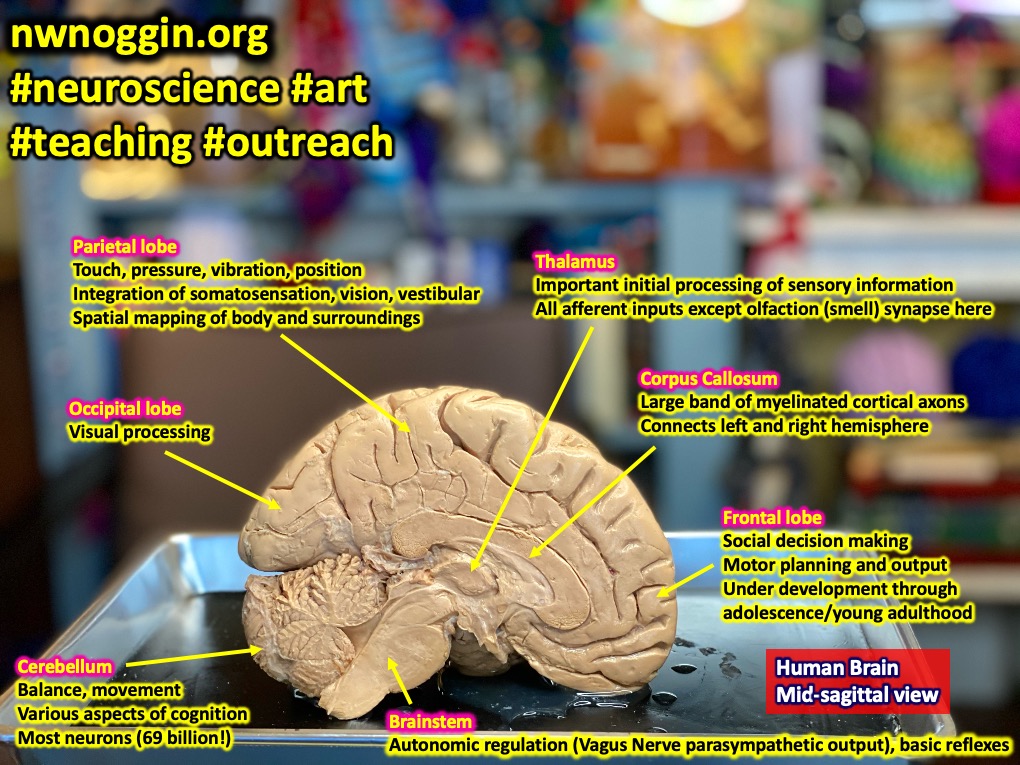
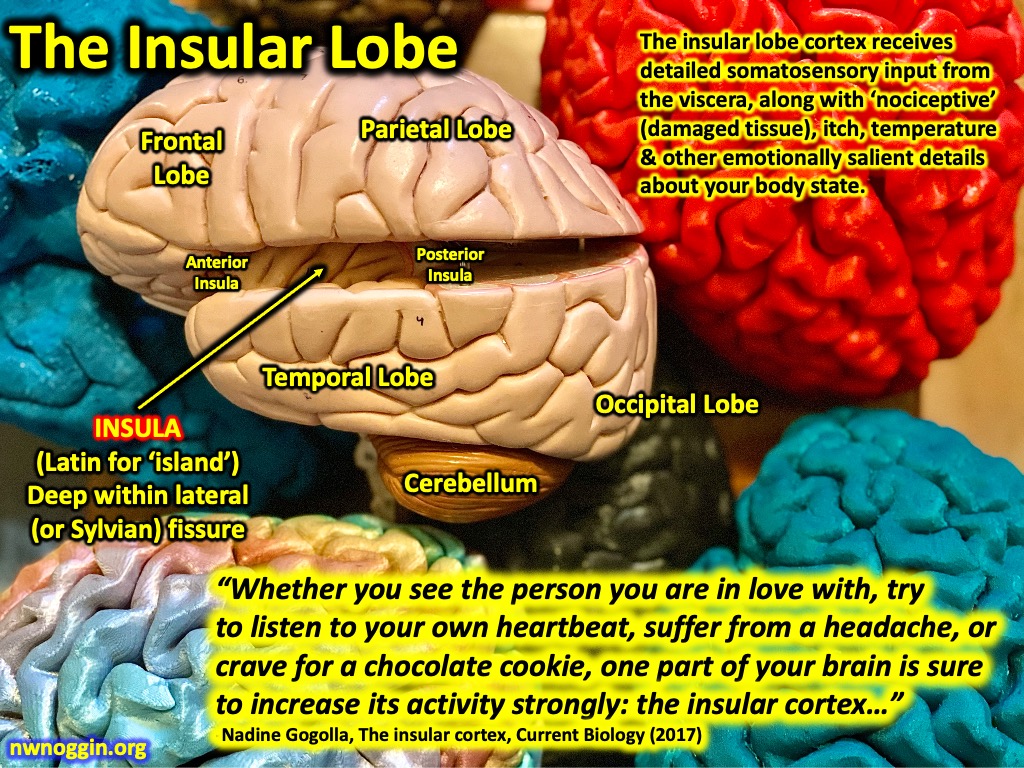
The insula (or insular cortex) is found deep inside that long lateral fissure separating the frontal/parietal lobes from the temporal lobe. It receives emotionally important sensory information like when you’re hungry, feel any kind of temporary pain related to a headache, or crave a drug.
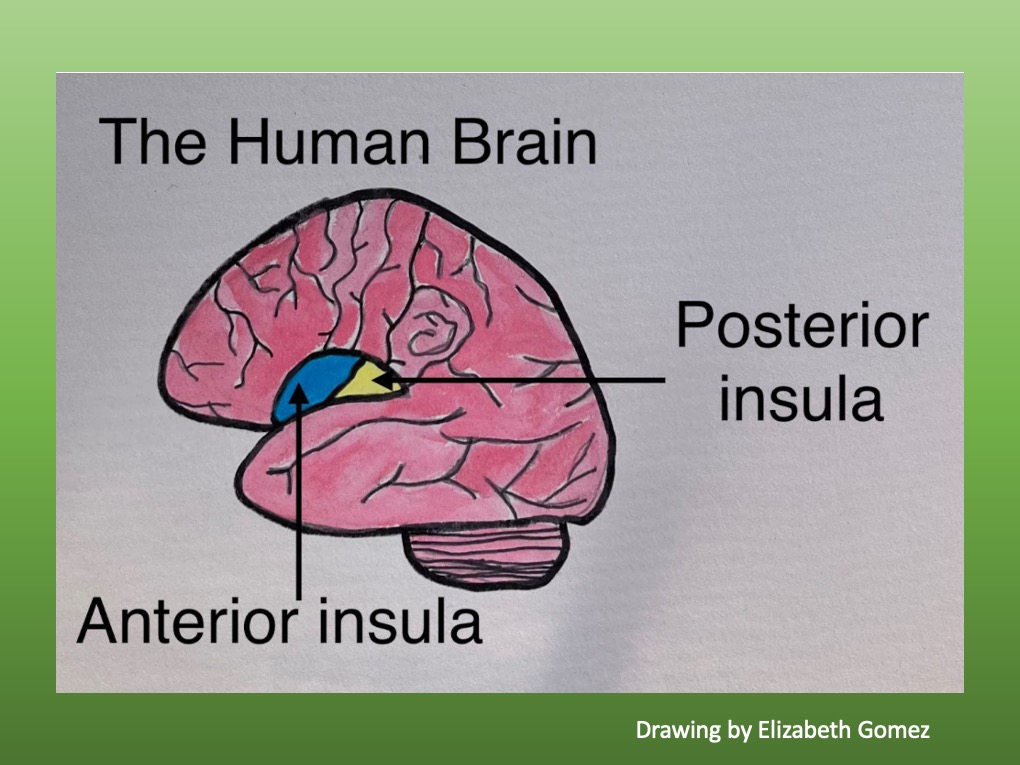
Because the insula is hidden within the lateral (or Sylvian) fissure , it’s easy to forget it exists! The insula also works with the frontal parts of the brain responsible for social decision making to help you feel – and predict how you’d feel – if you’ve done or were to do certain things.
LEARN MORE: Neuroanatomy, Cerebral Cortex
LEARN MORE: Structure and function of the human insula
LEARN MORE: Heterogeneous growth of the insula shapes the human brain
LEARN MORE: The Insular Cortex
What is the cortex made of?

Again, the neocortex (which makes up most of our brain’s wrinkly bark) is GRAY (or grey!) MATTER.
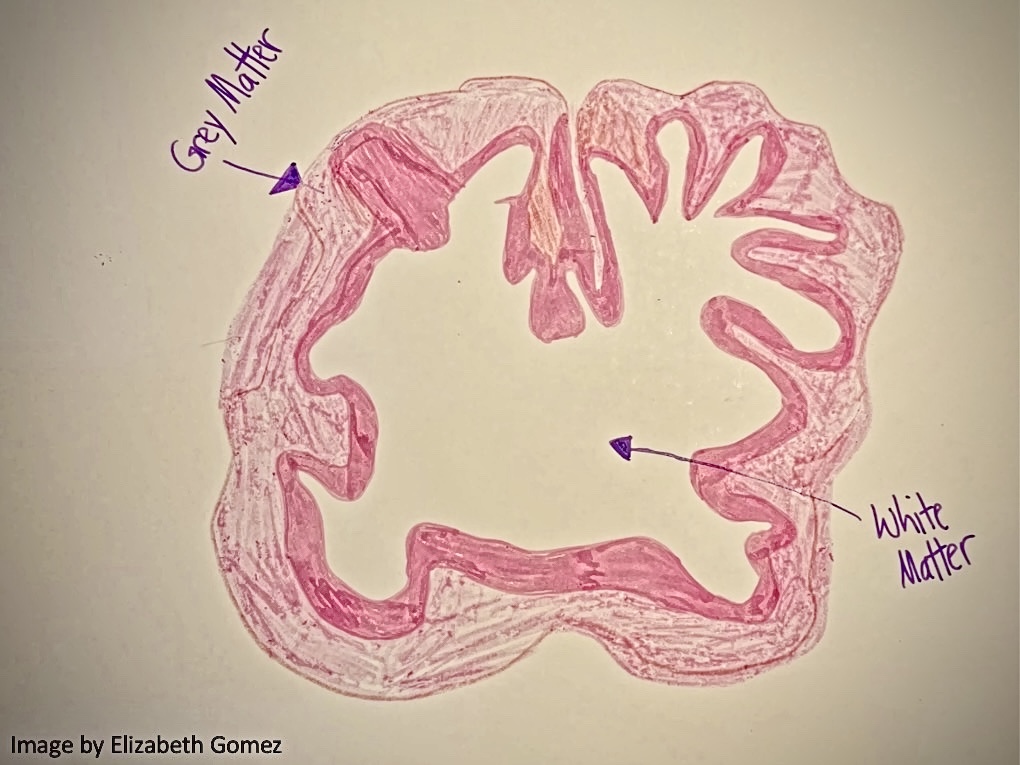
Neocortex has six layers of neurons containing cell bodies, dendrites and axon terminals (synapses!). Remember that these neurons synapse with each other forming vertically interconnected circuits known as cortical minicolumns.
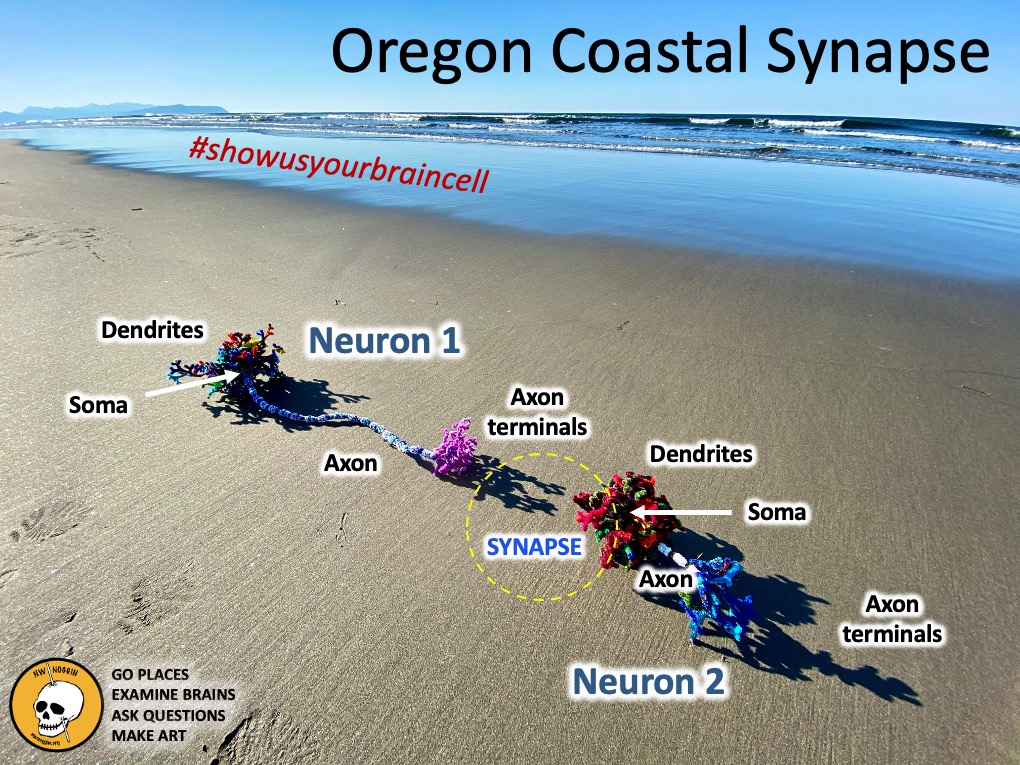
I think the neocortex look like a tiramisu cake when you cut out a slice!
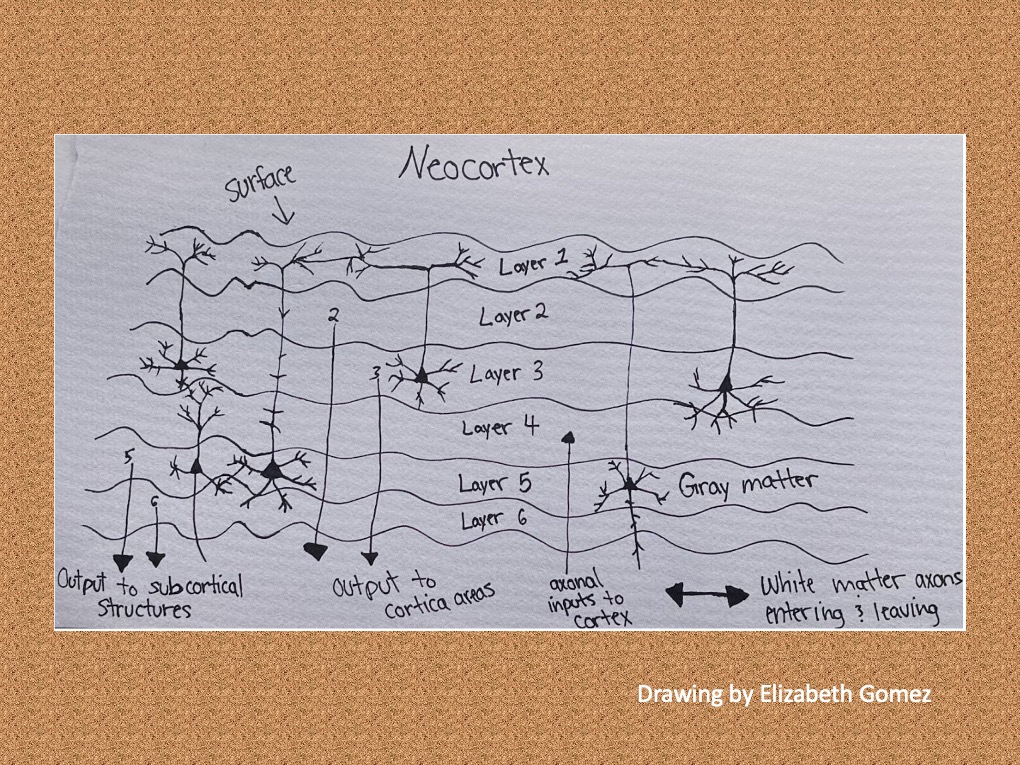
Again, the layered neocortex consists of cortical minicolumns full of neuron cell bodies, dendrites, and synapses. The white matter axons that enter and leave the cortex are found beneath it. Cortical folding of the cortex helps reduce the length of this white matter wiring, allowing for faster processing of information from neuron to neuron across the cortex.
LEARN MORE: Grey Matter
LEARN MORE: Up close with a human brain – BBC News
LEARN MORE: Evolution of cortical geometry and its link to function, behaviour and ecology
LEARN MORE: Brain Anatomy and How the Brain Works
What about gray matter DENSITY?
The overall size of a brain doesn’t tell you everything.

Lots of students asked me if bigger brains were “smarter,” but sometimes smaller brains have more cells!

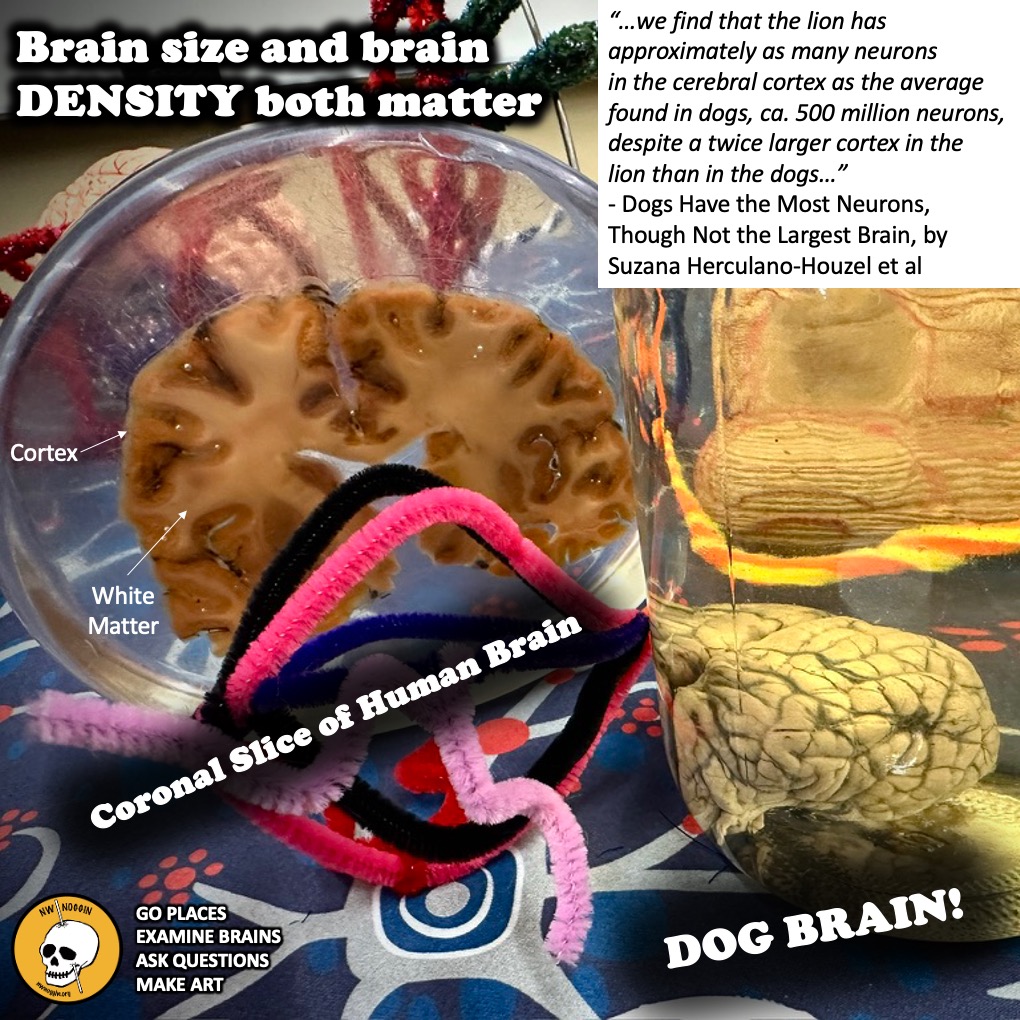
The density of gray matter refers to how many cells and synapses are actually in those wrinkly folds. Human brains, along with the brains of other primates, are especially dense, with lots of packed cortical circuits and cells. Rodent brains, in contrast, are far less dense, with fewer cells per unit area.

However, crows and ravens, because they need to fly, have exceptionally dense and lightweight brains. A crow has about as many neurons as a macaque monkey, but in a much smaller space!

YOU CAN OWN THIS ART: Sienna Art Studios
LEARN MORE: Birds have primate-like numbers of neurons in the forebrain
LEARN MORE: Why big brains? Models for both primate and carnivore brain size evolution
LEARN MORE: Soup for Brains!
Here’s a remarkable line from a research paper: “…we find that the golden retriever dog has more cortical neurons than the striped hyena, African lion and even brown bear, even though the latter species have up to three times larger cortices than dogs…”
“…we also find that raccoons have dog-like numbers of neurons in their cat-sized brain, which makes them comparable to primates in neuronal density….”
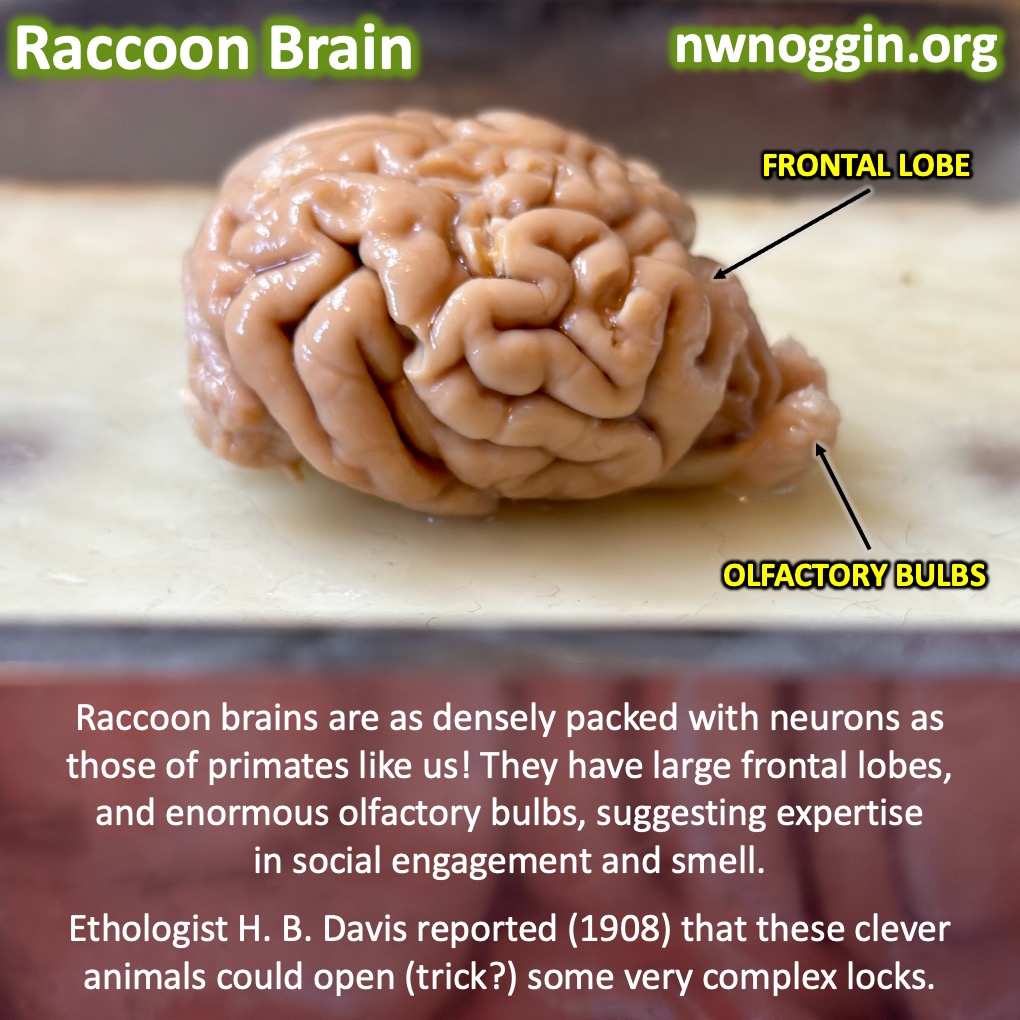
My takeaway: the overall size of a brain isn’t the only thing determining how many cells it has, or how smart it might be. An animal brain may be small, but when the neuronal density is taken into account, you might discover a LOT more neurons and minicolumns than expected!
LEARN MORE: Cytoarchitectural characteristics associated with cognitive flexibility in raccoons
LEARN MORE: Raccoons show surprising problem-solving abilities in urban backyards
LEARN MORE: The brain of the raccoon (Procyon lotor)
What about white matter?
We can’t leave out our precious white matter. It also plays a critical role in what makes up the brain!

White matter is just as important as gray matter because it connects our different cortical areas (and subcortical areas) together into functional networks that let us perceive, think, remember and behave.
The more we practice skills requiring coordination and collaboration amongst brain regions, like playing an instrument or socializing with friends, the more effectively these white matter networks develop. The activities we do and the experiences we have during childhood and adolescence are also extremely important for myelinating (insulating) these axons, which speeds up how fast signals travel.
We truly need more accessible learning opportunities for children and adolescents in order to effectively connect their cortical gray matter through white matter connections, and enhance their cognitive abilities and coordination through learning new skills.
LEARN MORE: White Matter Matters
LEARN MORE: The Development of Brain White Matter Microstructure
LEARN MORE: White Matter Development During Childhood and Adolescence
Why is the cerebral cortex important?
The cerebral cortex is important because it holds so many precious neurons packed together within its gray matter and is essential for higher level processes like thinking, reasoning, and memory.
It is about half the brain’s total mass. It is soaking up all of the information we take in during our daily lives and we don’t have to do anything for it to work, it just happens automatically when we see something or do something or even feel something.

LEARN MORE: How Do You Wire a Brain?
LEARN MORE: Cerebral Cortex
LEARN MORE: Is the Human Brain Unique?
LEARN MORE: What Makes the Human Brain Different?
LEARN MORE: Elements of a ‘nervous system’ in sponges
LEARN MORE: Sponge Cells Hint at Origins of Nervous System
LEARN MORE: MR imaging of brain morphology, vascularisation and encephalization in the koala
LEARN MORE: Bizarre Brains of the Animal Kingdom
LEARN MORE: Sculpting the Brain
LEARN MORE: Mapping the Structural Core of Human Cerebral Cortex
LEARN MORE: A brief sketch across multiscale and comparative neuroanatomical features
LEARN MORE: The Small World of the Cerebral Cortex
Yes it’s wrinkly, so what?
As researchers continue to study the brain, we can deepen our understanding on why it’s wrinkly and even uncover why it looks like hills in a park or like bike trails. Exploring the importance of the cerebral cortex helps us understand an essential part of the brain and how it works.
We must protect our wrinkly companion at all costs!