


Post and images by Oscar Moreno, undergraduate in Biology and Interdisciplinary Neuroscience at Portland State University. Oscar is an intern in Dr. Rebekah Huber’s MIND Lab at Oregon Health & Science University.
Exploring Sleep, Cognition, and Youth Well-Being
Mind Lab logo Created by Lab Member Jaqueline Dwyer
In the beginning
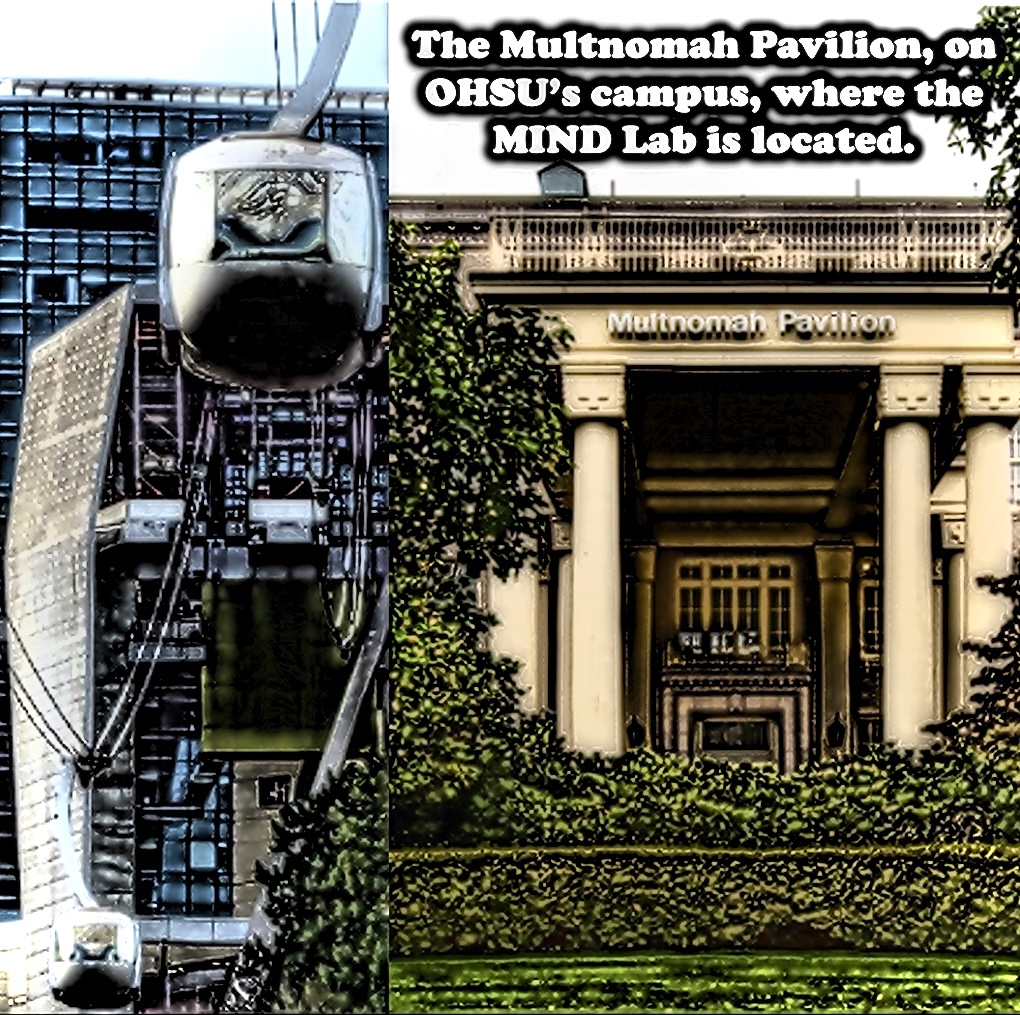
When I joined the Mood Disorder Investigations throughout NeuroDevelopment (MIND) Lab in the Psychiatry Department at OHSU, I was coming from a completely different corner of science. Through the FORWARD Program at PSU — which connects undergraduates to real research experiences — I found myself in a Psychology lab focused on suicide risk in youth with bipolar disorder.
LEARN MORE: Bipolar Disorder
LEARN MORE: Suicide Risk in Bipolar Disorder: A Brief Review
LEARN MORE: Detailed assessment of suicidal ideation in youth with bipolar disorder versus major depressive disorder
LEARN MORE: Neural mechanisms underlying suicide behavior in youth with bipolar disorder
LEARN MORE: Sleep Disturbance Trajectories During Childhood and Early Adolescence Associated With Increased Suicide Risk
I came in feeling lost and unprepared.
My background and interests leaned toward molecular and cell biology — the kind of wet-lab science you’d expect to see in Jurassic Park or Alien. Stepping into a psychology research setting felt unfamiliar. But from my first day, when I met Dr. Rebekah Huber and she introduced me to our goal of understanding how sleep and cognition connect to suicide risk, I felt growing curiosity and awe.
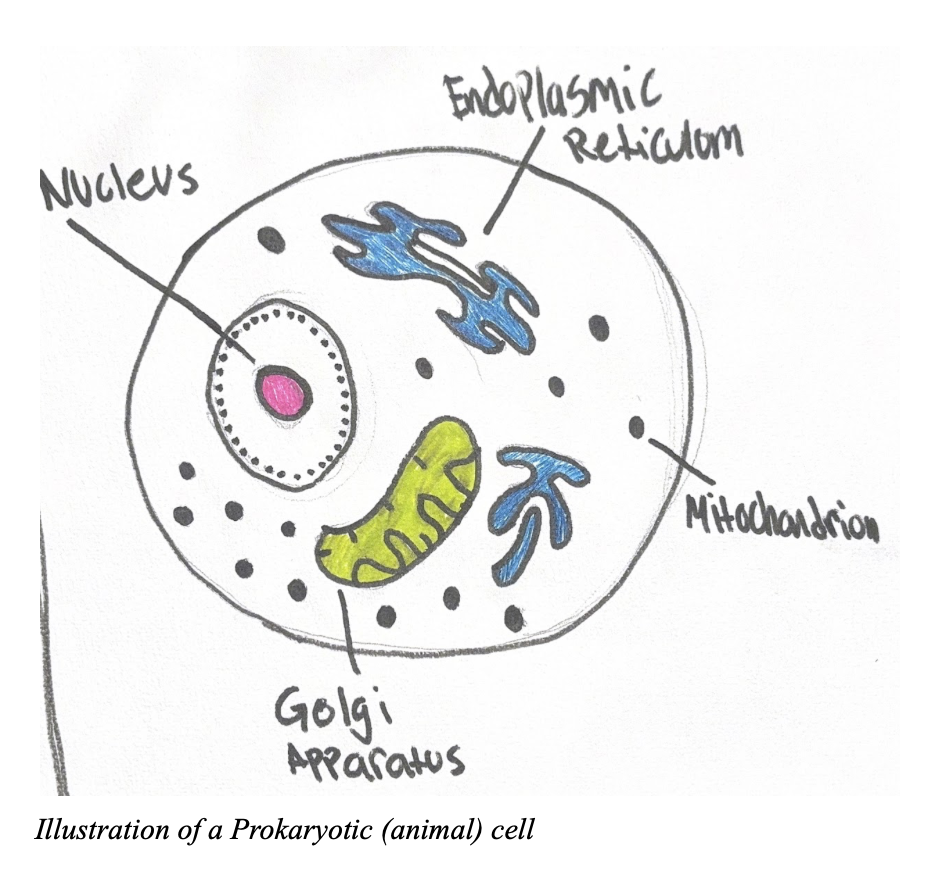
LEARN MORE: The Cell as Matter: Connecting Molecular Biology to Cellular Functions
My first few weeks were spent learning what the MIND Lab prioritizes, including diversity, integrity, discovery, and mentoring. I was also introduced to everyone during our weekly lab meetings, which helped me understand the rhythm of the lab and who each person is. Through these interactions, I learned how passionate everyone is about their work and how much care they bring to both the research and the people behind it.
To me, the environment of this lab feels like family.
I’m Mexican, so I’m used to gathering around, talking, and sharing stories. That’s exactly what the lab feels like — except instead of talking about life, we talk about science: bipolar disorder research, weekly updates, and our “rose, bud, thorn” routine where we check in on how everyone’s feeling.
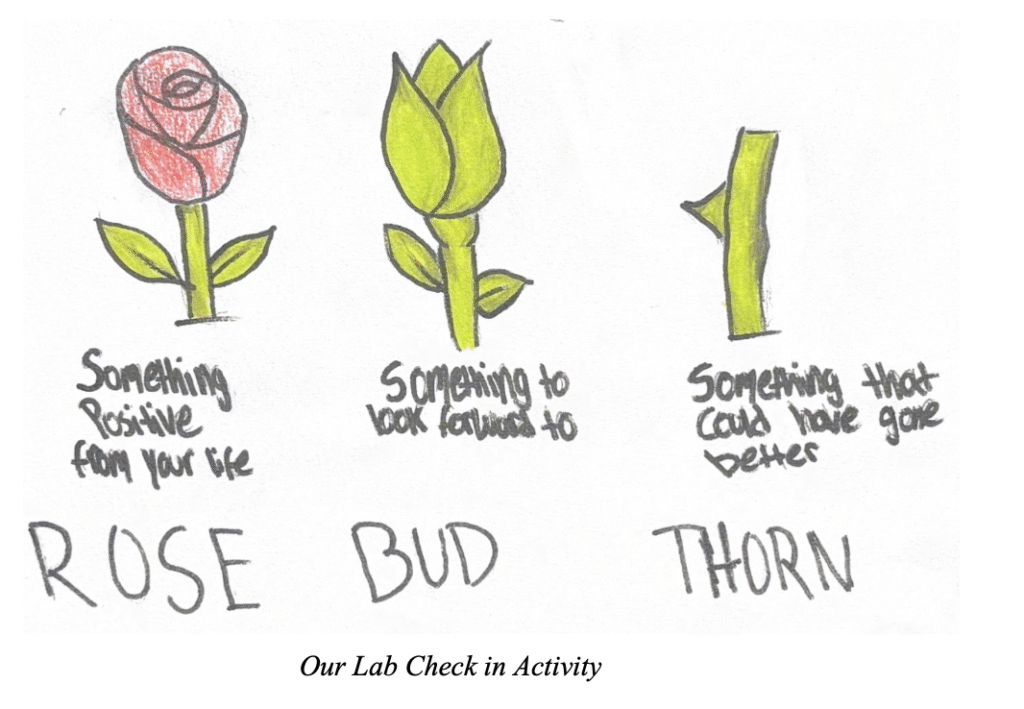
Everyone supports one another, whether it’s reviewing a project or sharing feedback.
Learning the lay of the land
During my first couple of weeks, I learned about confidentiality, data security, and participant safety. Soon after, I observed Dr. Huber conduct consent sessions and diagnostic interviews. Watching her balance empathy with professionalism was eye-opening. These were long, emotional conversations about mood, sleep, and suicidal thoughts, yet she navigated them with calm precision.
LEARN MORE: Principles and Best Practices for Protecting Participant Privacy
LEARN MORE: Required Security and Operational Standards for NIH Controlled-Access Data Repositories
LEARN MORE: NIH Safety, Regulation & Guidance
I also got to practice consenting scenarios with the lab’s senior research associate, Anthony Hill, which helped me appreciate the level of care and preparation that goes into ensuring that all lab members are ready to appropriately participate with people who visit our lab.
LEARN MORE: How to obtain informed consent for research
LEARN MORE: Consent Forms and Processes – What Investigators Need to Know
By the end of my first month, I realized how much unseen skill goes into this kind of science — not just running statistics, but connecting with people and listening.
Inside the MIND Lab
Our lab’s mission is to identify risk factors for suicide in youth with bipolar disorder by studying how real-time changes in sleep and cognitive control relate to suicidal thoughts and behaviors.
We study how changes in sleep — for example, shorter duration or disrupted nights — relate to attention, emotional regulation, and self-control.
Participants, ages 14–21, take part in long diagnostic interviews with Dr. Huber (usually around 3.5 hours), complete questionnaires about their mood and sleep experiences in their second visit, and perform cognitive tasks such as the Stroop, Go/No-Go, and Stop Signal Task.
These cognitive tasks help us understand how sleep affects attention and self-control.
In the Stroop Task, participants are asked to name the ink color of words that don’t match, which reveals how well they can ignore distractions. The Go/No-Go Task tests impulse control by asking participants to press a button for most images but hold back for a few, helping measure impulse control.
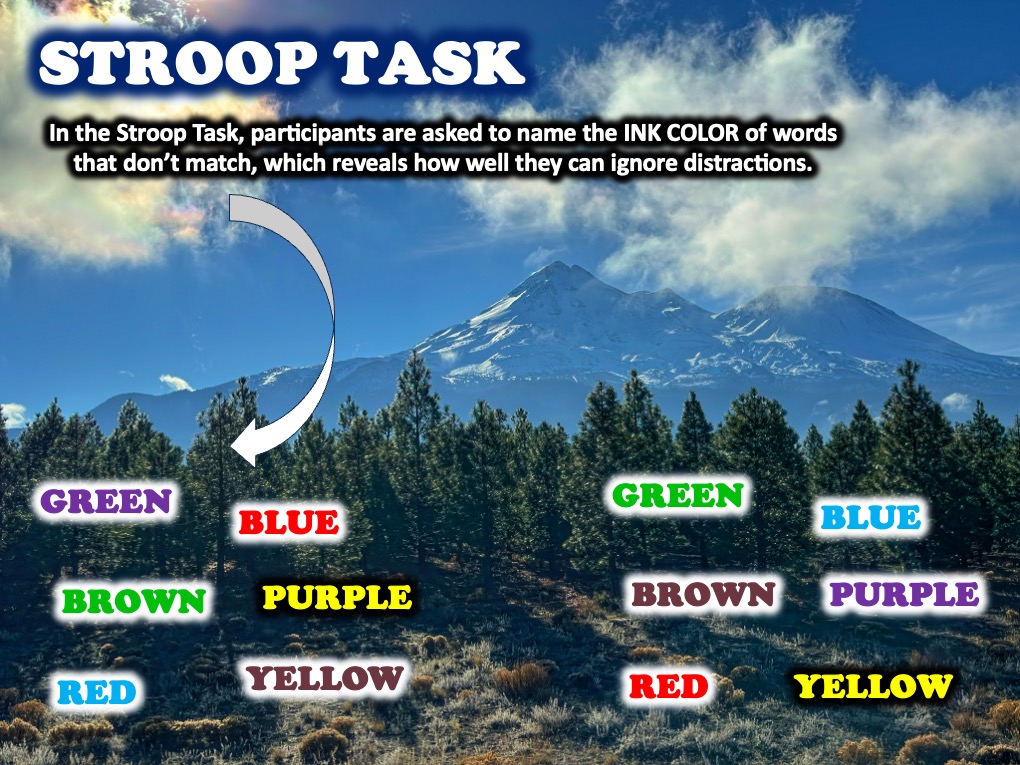
The Stop Signal Task goes a step further, measuring how quickly someone can stop an action already in motion. Together, these tasks give us a clearer picture of how disrupted sleep shapes focus, inhibition, and decision-making in youth with bipolar disorder.
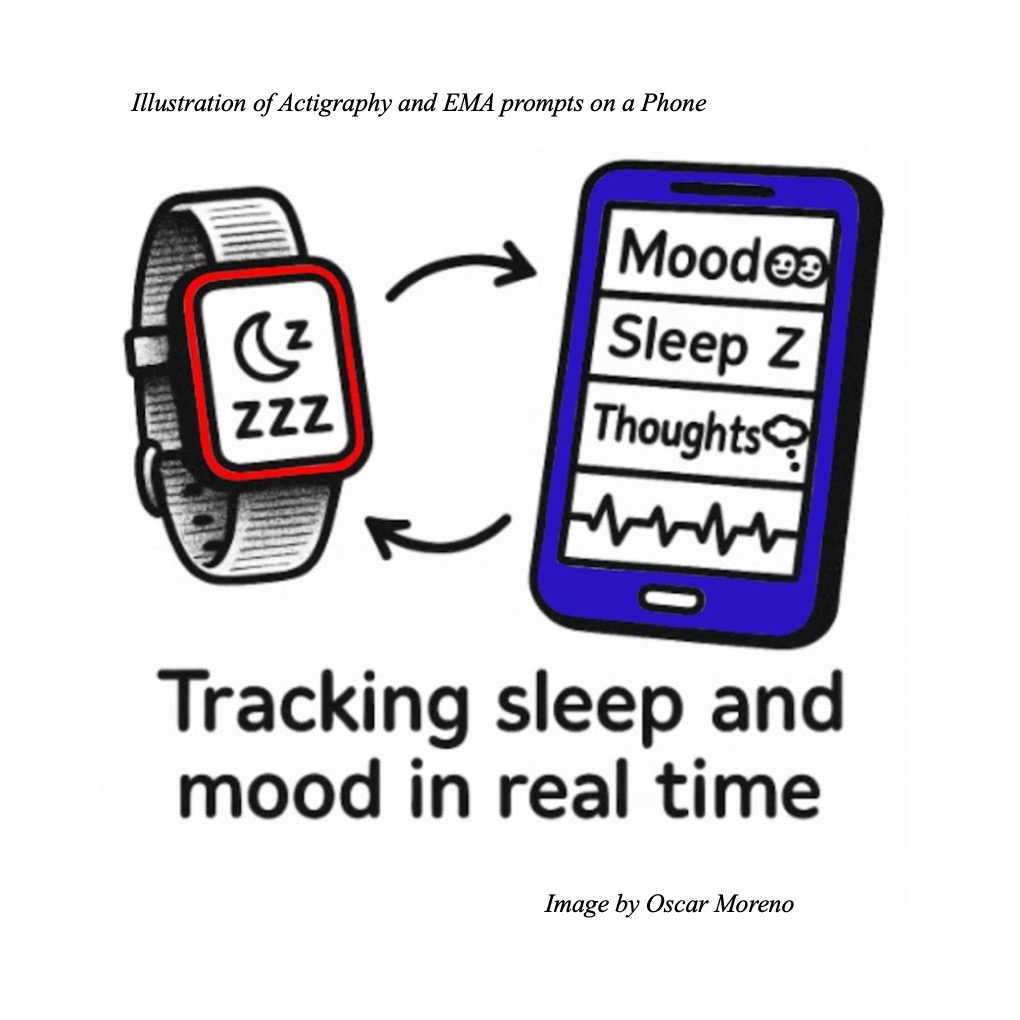
Participants also wear actigraphy wristbands to track sleep and use a mobile app that sends daily prompts about their mood, rest, and suicidal thoughts. This real-time method of tracking is called Ecological Momentary Assessment (EMA).
LEARN MORE: Actigraphy (Actigraph)
LEARN MORE: The Pittsburgh Sleep Quality Index (PSQI)
LEARN MORE: Ecological Momentary Assessment: A Systematic Review of Validity Research
LEARN MORE: What Stroop tasks can tell us about selective attention from childhood to adulthood
LEARN MORE: Do all inhibitions act alike? A study of go/no-go and stop-signal paradigms
During visits, I mostly observe quietly.
I watch how Dr. Huber conducts the consenting protocol, the diagnostic interviews, and sometimes safety planning. The sessions are long, require deep attention, and include difficult questions that can feel uncomfortable. Each visit reminds me that this work isn’t just about data points; it’s about people trusting us with their stories so we can use them responsibly to improve science.
Recently, I’ve also begun doing data entry, which showed me how important it is to handle personal information with care. One wrong number could impact someone’s research later, so we make sure every entry is checked and accurate.
From Data to Discovery
Once I understood how each visit worked, I began to see how the pieces fit together — from observation to data collection and recording to discovery.
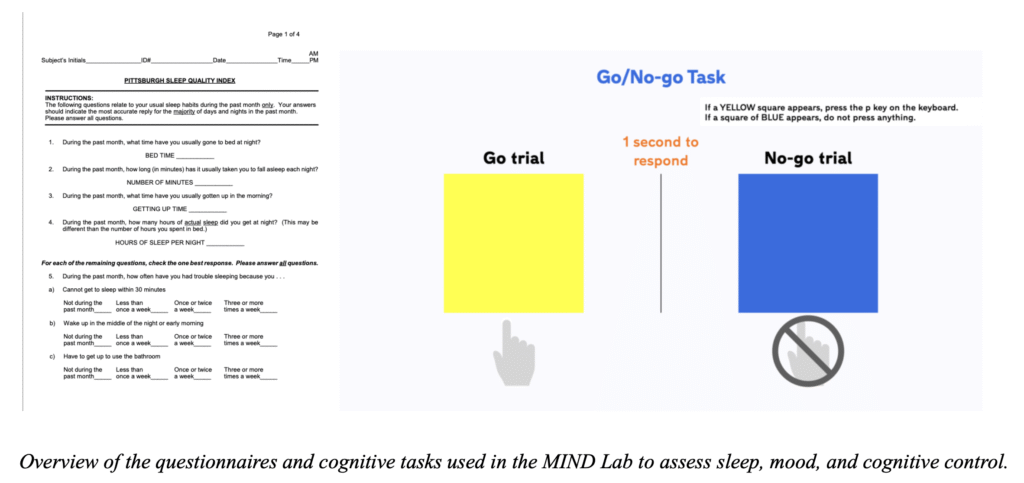
From various assessment questionnaires such as the PSQI, ASWS, and PIRS-20, we gather both quantitative and qualitative information on mood, sleep, and suicidality. The cognitive tasks, such as the Stroop, Go/No-Go, and SST, provide measurable behavioral performance data. The actigraphy watch uses tiny accelerometers to record movement (more movement indicates wakefulness, less indicates sleep), and it even measures how much light the participant is exposed to. EMA captures thoughts and feelings in real time, offering a window into how sleep and cognition shift moment to moment.
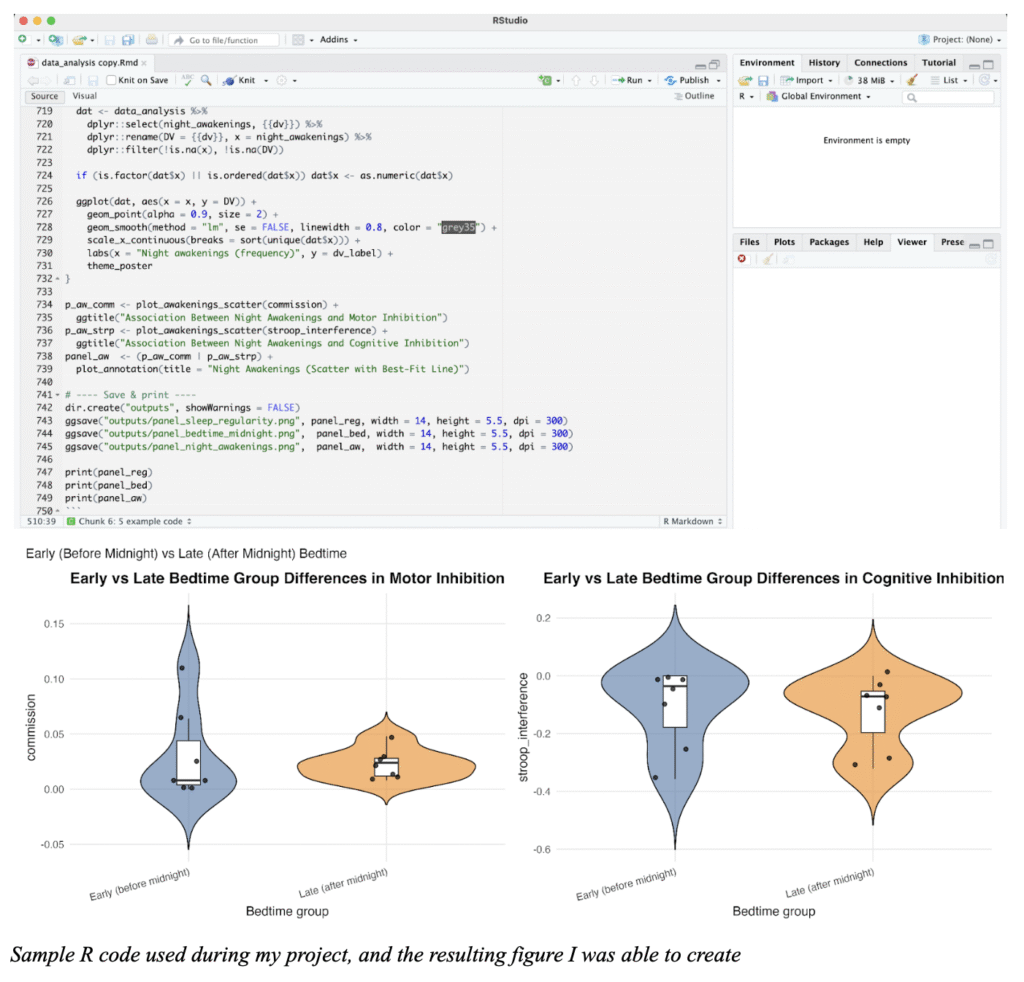
My summer project brought all these tools together. Under the mentorship of Dr. Huber and clinical psychology PhD student Sam Sievertsen, I analyzed data that observed sleep fragmentation and inhibitory control in adolescents with bipolar disorder. Sam taught me R programming — building scripts, cleaning messy data, and debugging endlessly.
LEARN MORE: What is R?
It was frustrating at first, but also thrilling.
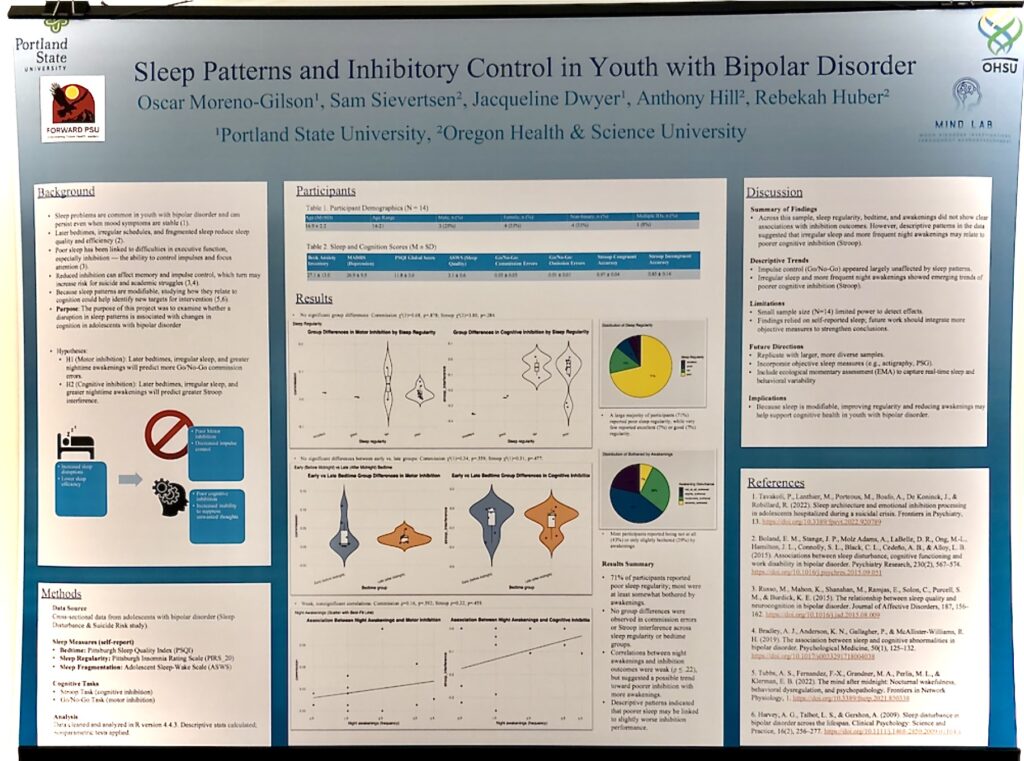
Every figure I generated made the invisible patterns of the brain and behavior suddenly visible. By the end of summer, I had created a poster titled “Sleep Patterns and Inhibitory Control in Adolescents with Bipolar Disorder.” Presenting it felt like watching all those late-night coding sessions pay off.
Most importantly, I could finally see how all the participant visits, cognitive testing, and sleep tracking translate into data that can be visualized, understood, and shared with the public — bridging the gap between people and research.
Lessons and Impact
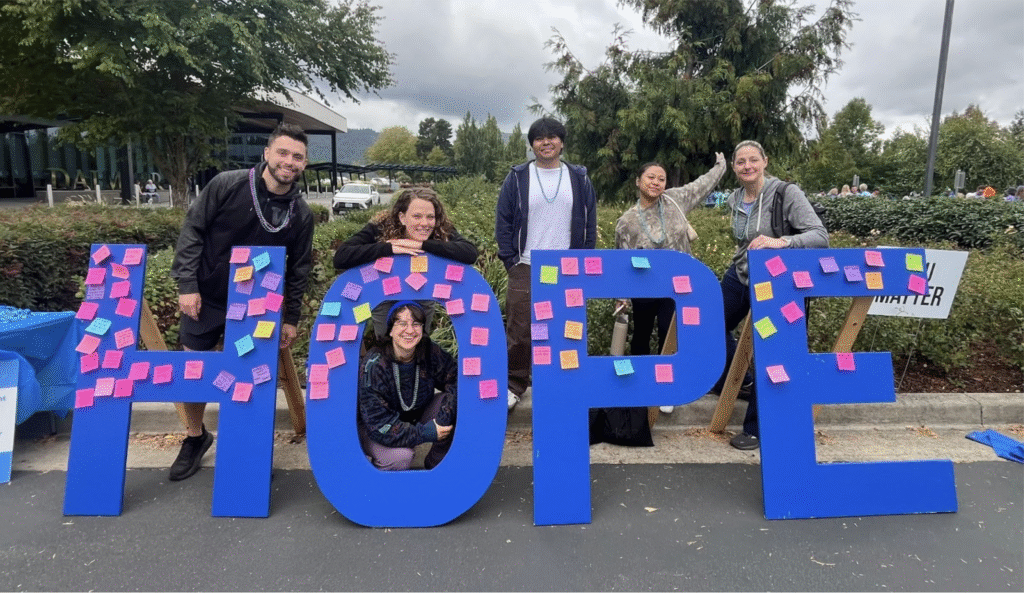
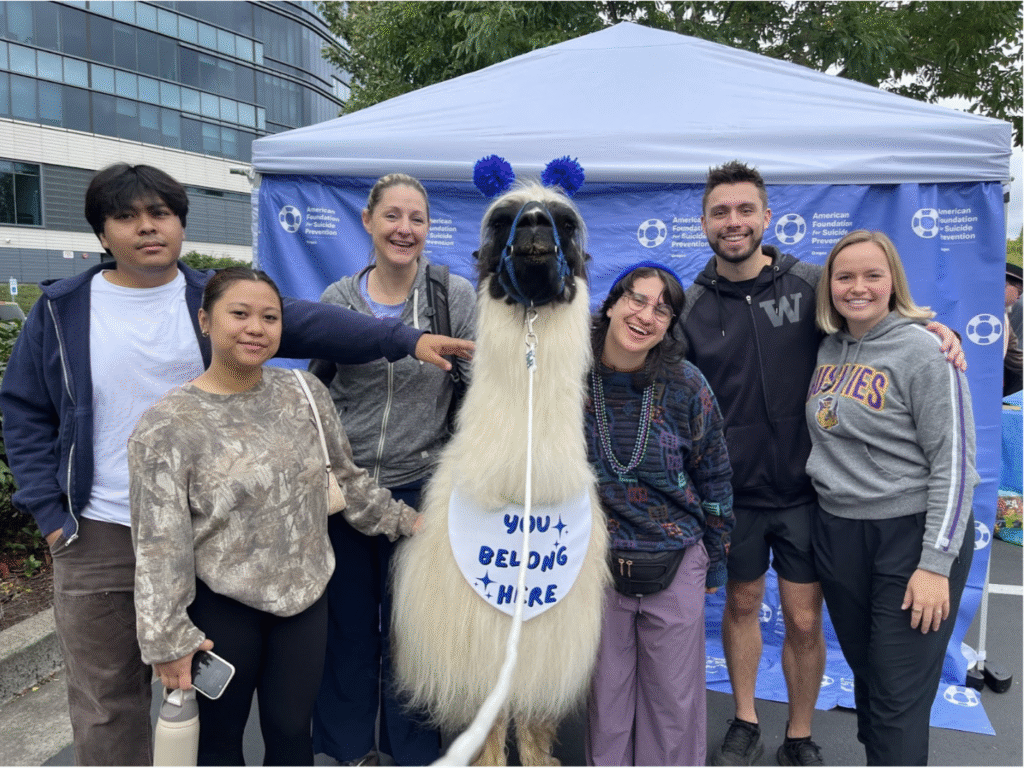
The MIND Lab team at the Out of the Darkness Walk supporting suicide prevention.
If this lab taught me anything, it’s that rigor and empathy can coexist in science. I learned how much precision goes into collecting reliable data — but also how much compassion it takes to work with vulnerable participants.
Even small shifts in sleep can ripple through cognition and emotion, affecting how young people think and feel. The work done in the lab may inform ways to identify warning signs before crisis points occur.
On a personal level, this experience reshaped how I see myself as a scientist.
As a Latino researcher, I often wondered where I fit in STEM. But through this lab, I found my place in science. Every hour spent studying protocol, practicing consent, reading research articles, debugging R code, and designing my poster reminded me: I belong here.
The people I work with — Dr. Huber, Sam, Anthony, and all my lab peers have pushed me forward with patience and kindness. They’ve shown me that good science is built not just on data, but on community.
LEARN MORE: NeuroLATAM
LEARN MORE: Equity, diversity, and inclusion in developmental neuroscience
LEARN MORE: Racial and ethnic diversity in global neuroscience clinical trials
LEARN MORE: 2025 Oregon Out of the Darkness Walks: Join us this fall!