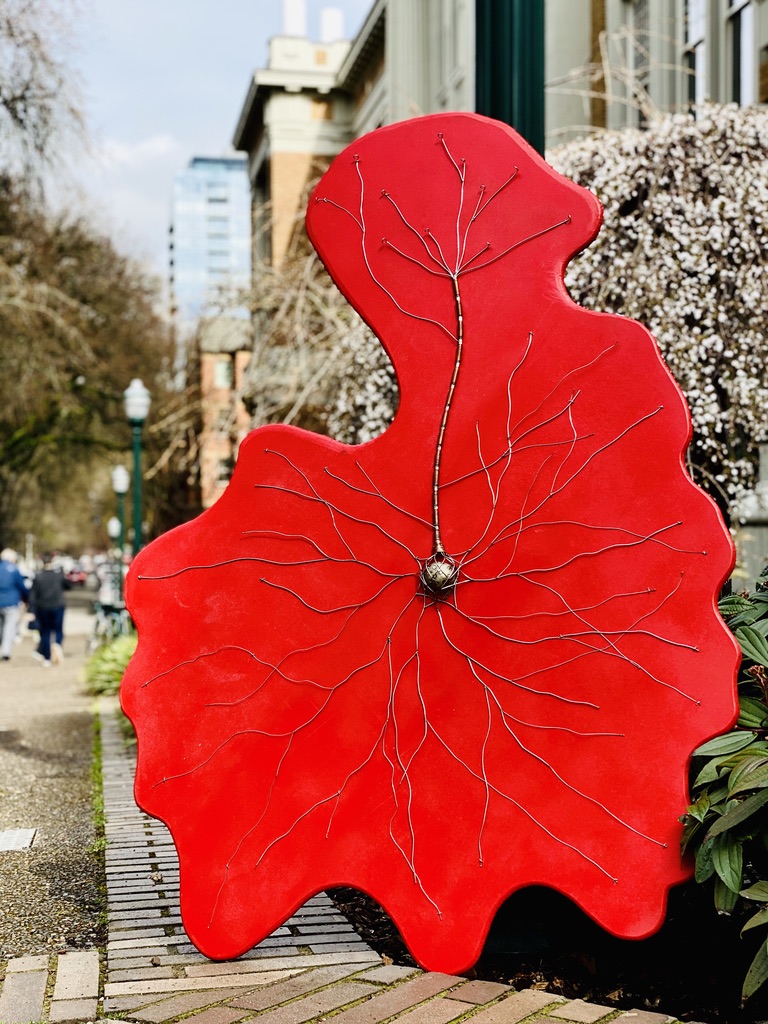
How did you get to work or school today?
Do you always travel the same route? Do you walk, bike or drive along consistent roadways, taking familiar turns by well-known landmarks? Is your path so regular and dependable that you barely register the details as you make your way in?
Your hippocampus knows the place
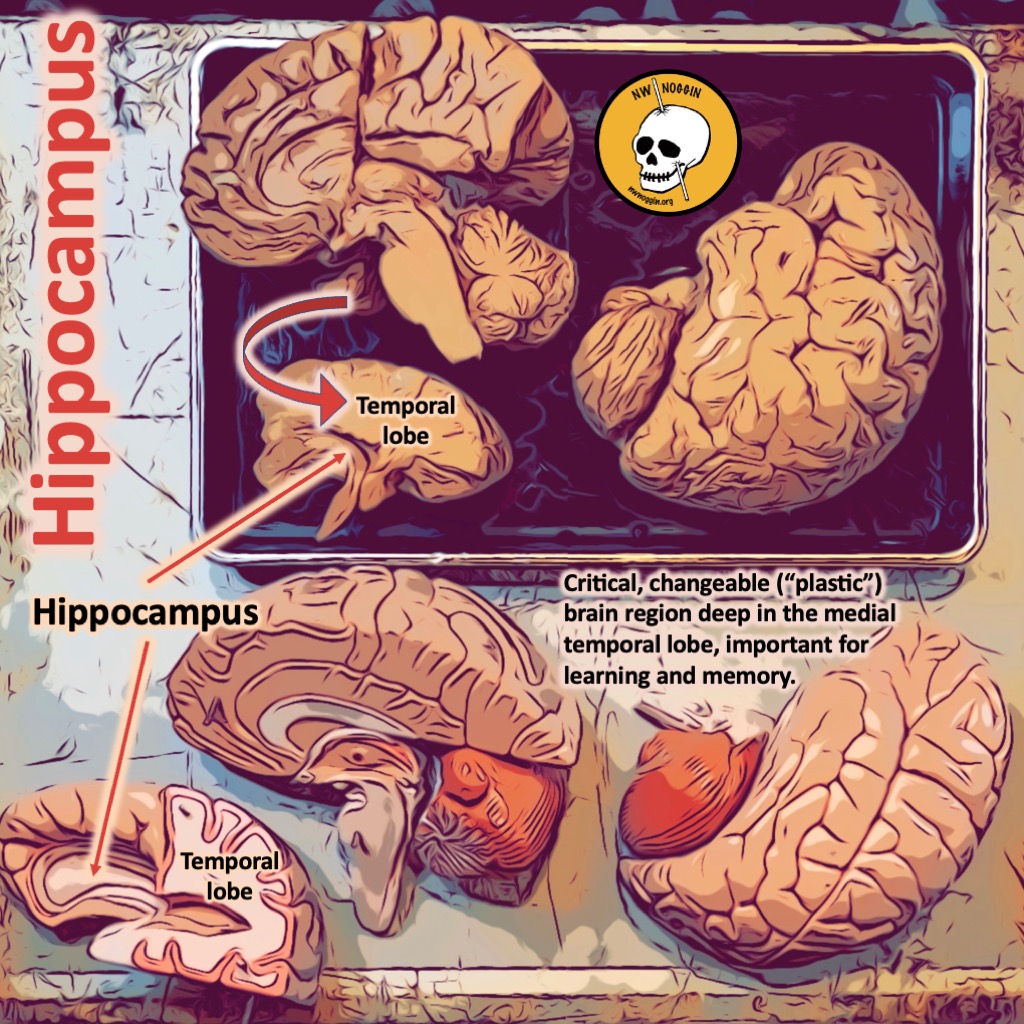
The hippocampus is a critical part of your brain that allows for the formation of new memories, including memories of place. It’s an extraordinarily important set of cells and circuits located deep in your brain, stretching across the inner, medial aspect of each temporal lobe.
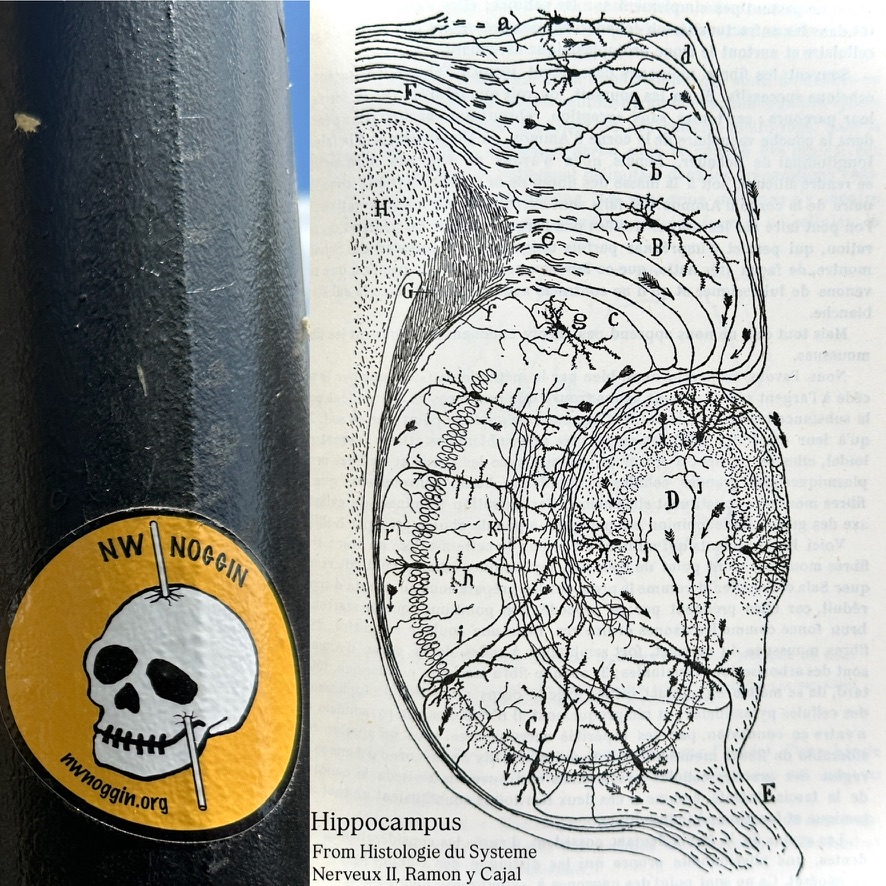
Early anatomists, including Santiago Ramón y Cajal, thought it resembled a seahorse, which is where the Latin name of this structure derives.
LEARN MORE: Navigating the Circuitry of the Brain’s GPS System
LEARN MORE: How the Hippocampal Cognitive Map Supports Flexible Navigation
LEARN MORE: Viewpoints: how the hippocampus contributes to memory, navigation and cognition
LEARN MORE: The Brain Navigates New Spaces By ‘Flickering’ Between Reality and Old Mental Maps
LEARN MORE: Uncovering Hippocampal Mechanisms of Spatial Learning and Flexible Navigation
Ride your seahorse!
If you like to explore, and enjoy trying new routes and trajectories, you will train your seahorse, allowing it to simultaneously represent new locations overlaid with related maps and memories from your past. In fact, there is even research evidence for neurogenesis – the growth of new neurons – following exploration, that can increase the number of cells and circuits in your hippocampus!
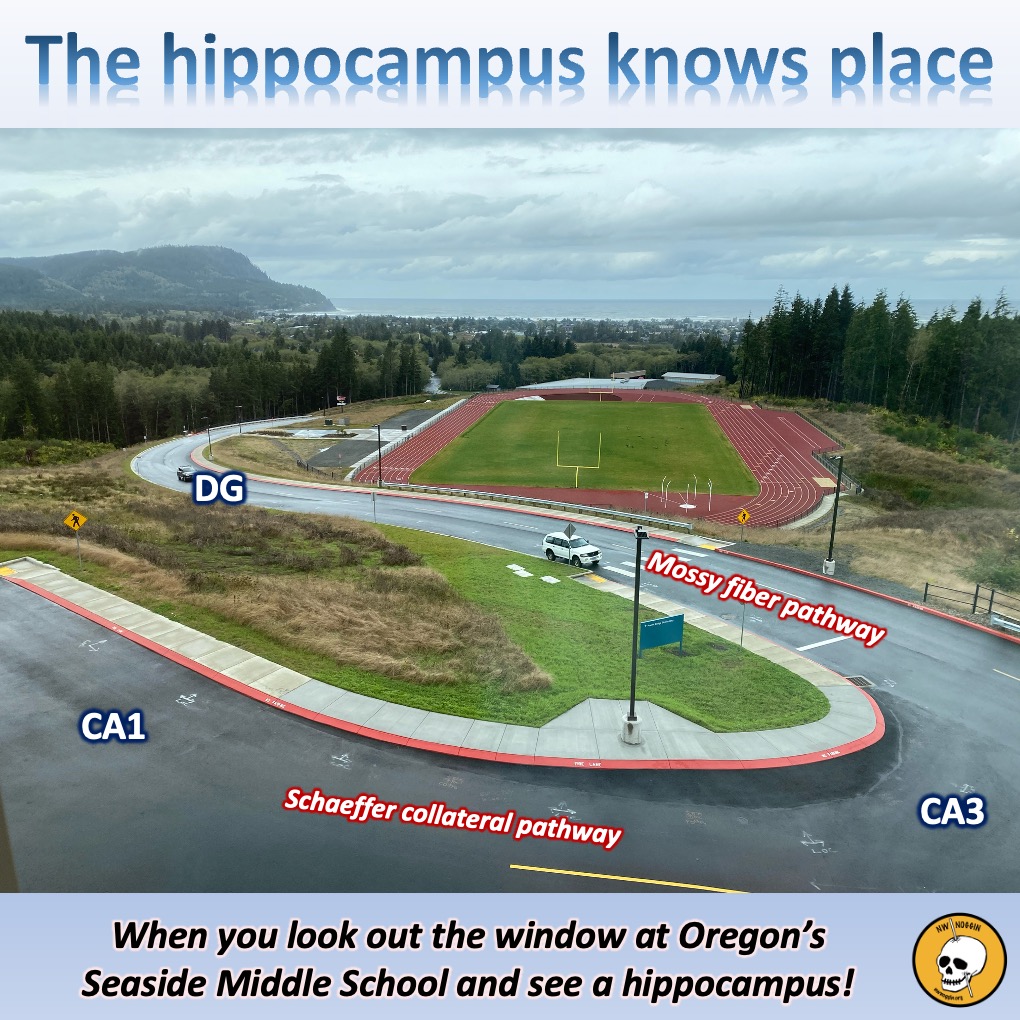
“The interior landscape responds to the character and subtlety of the exterior landscape; the shape of the individual mind is affected by the land as it is by genes.” –Barry Lopez
LEARN MORE: Spatial Relational Memory Requires Hippocampal Adult Neurogenesis
LEARN MORE: Adult neurogenesis improves spatial information encoding in the mouse hippocampus
LEARN MORE: Born this way: Hippocampal neurogenesis across the lifespan
Use your own brain
REMEMBER THIS: your brain learns what your brain does.
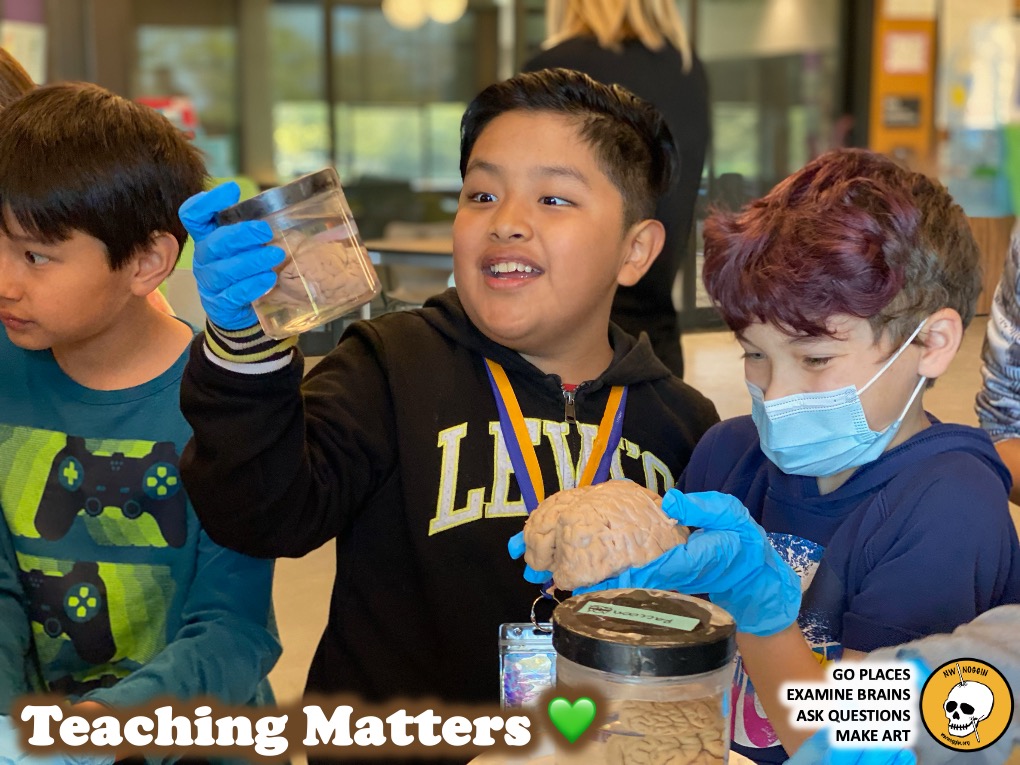
So if you always take the same route, or offload responsibility for navigation from your hippocampus to Google maps, this essential memory structure may start to wither!
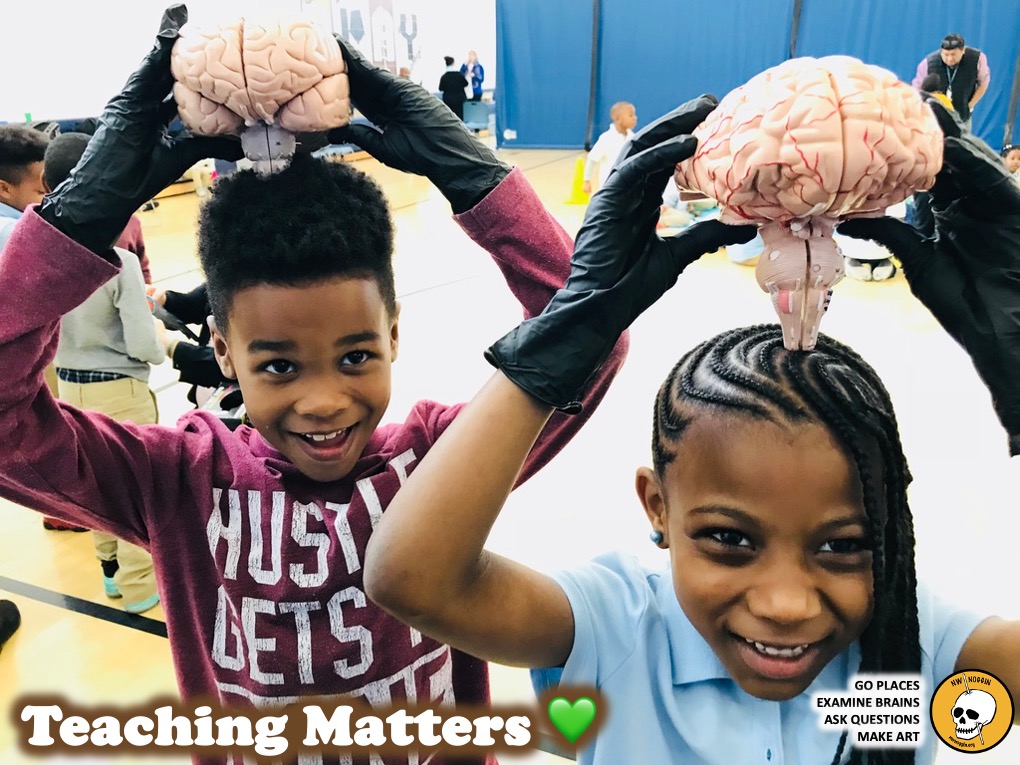
“When the image is new, the world is new.” –Gaston Bachelard
In other words, if you DON’T explore new places, or rely too heavily on GPS or ChatGPT, your ability to deepen connections with where you are, and how this place connects with other times and places through memory, begins to weaken and fade.
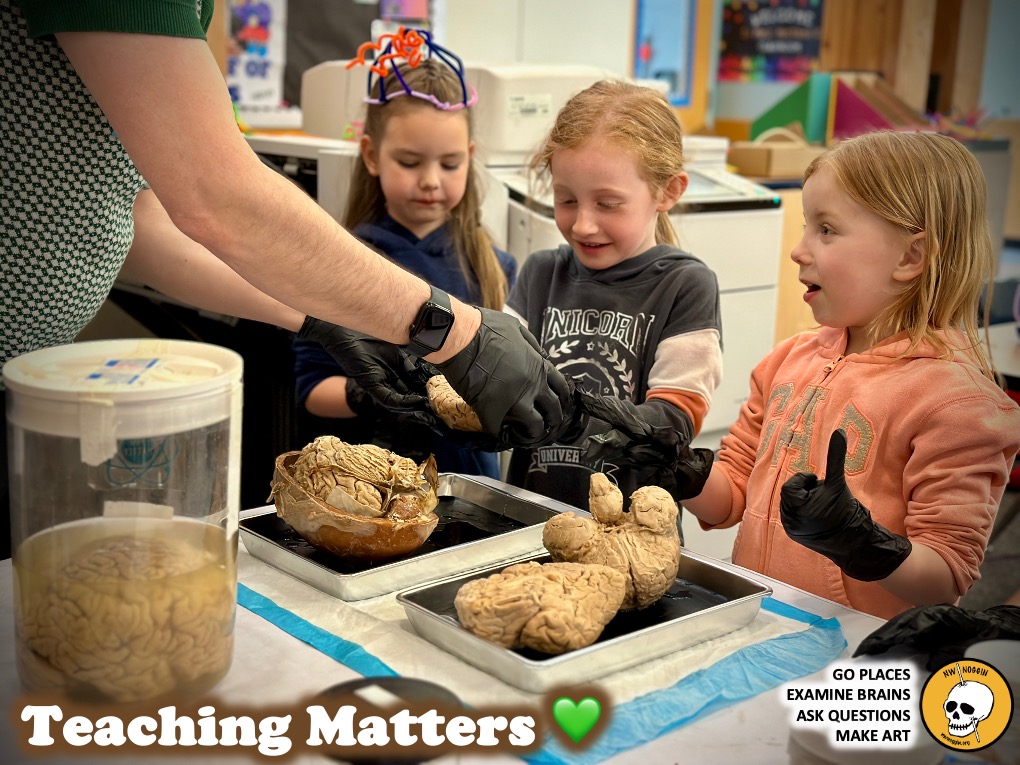
In fact, taxi drivers and ambulance drivers who take many different routes (and are required to learn about them without GPS) have lower rates of Alzheimer’s disease!
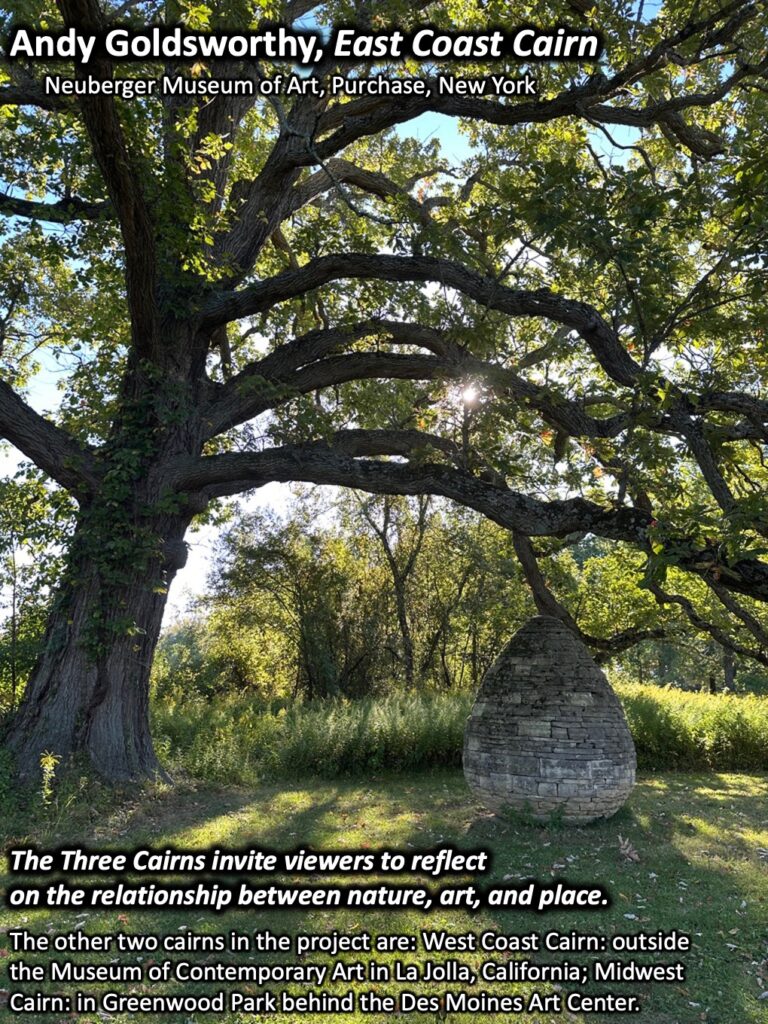
LEARN MORE: Andy Goldsworthy, East Coast Cairn, 2001
LEARN MORE: Habitual use of GPS negatively impacts spatial memory during self-guided navigation
LEARN MORE: Alzheimer’s disease mortality among taxi and ambulance drivers: population based cross sectional study
LEARN MORE: GPS is changing your brain (and it’s not good)
LEARN MORE: MIT Study Finds Artificial Intelligence Use Reprograms the Brain, Leading to Cognitive Decline
LEARN MORE: Potential cognitive risks of generative transformer-based AI chatbots on higher order executive functions
Placemaking at PSU!
This spring we were thrilled to discover a new “placemaking” program at Portland State University (are they the hippocampus for PSU?). We were approached by the Planning and Sustainability Office, which had heard about the placemaking that students and faculty in Interdisciplinary Neuroscience had already done on the third floor of Cramer Hall.
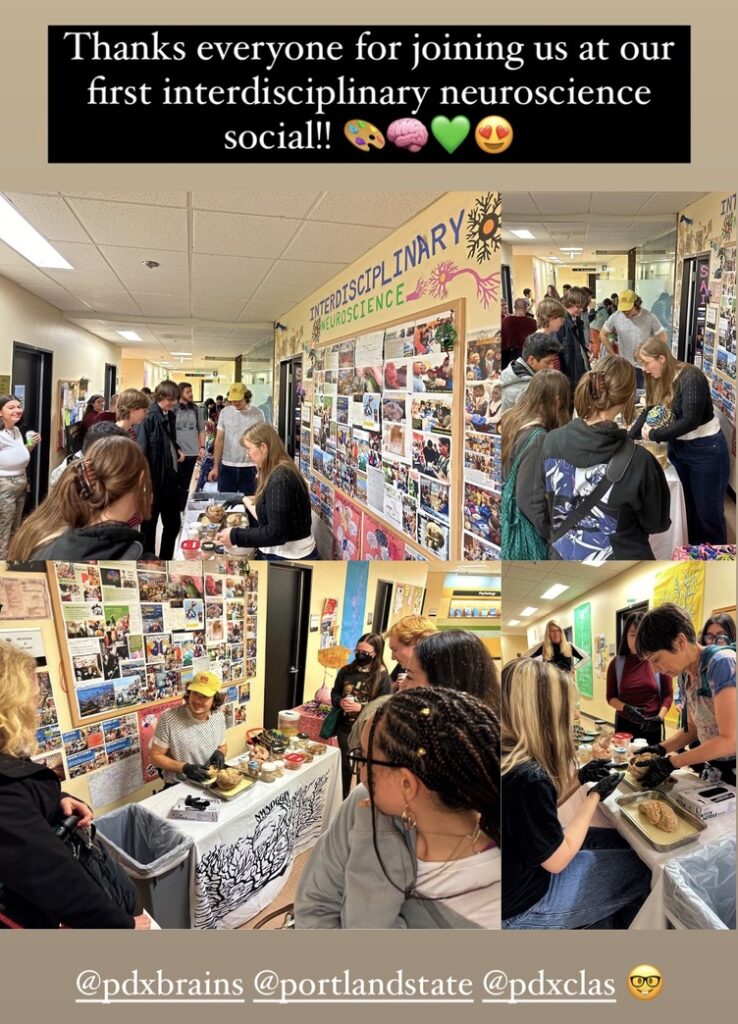
When an offer from the former Dean’s office to move our offices to a fancy renovated building was abruptly rescinded last year (!), we decided to update our own space, and set to work with scissors, tape and construction paper, covering hallways with art and images from the extensive community outreach we regularly do as volunteers.
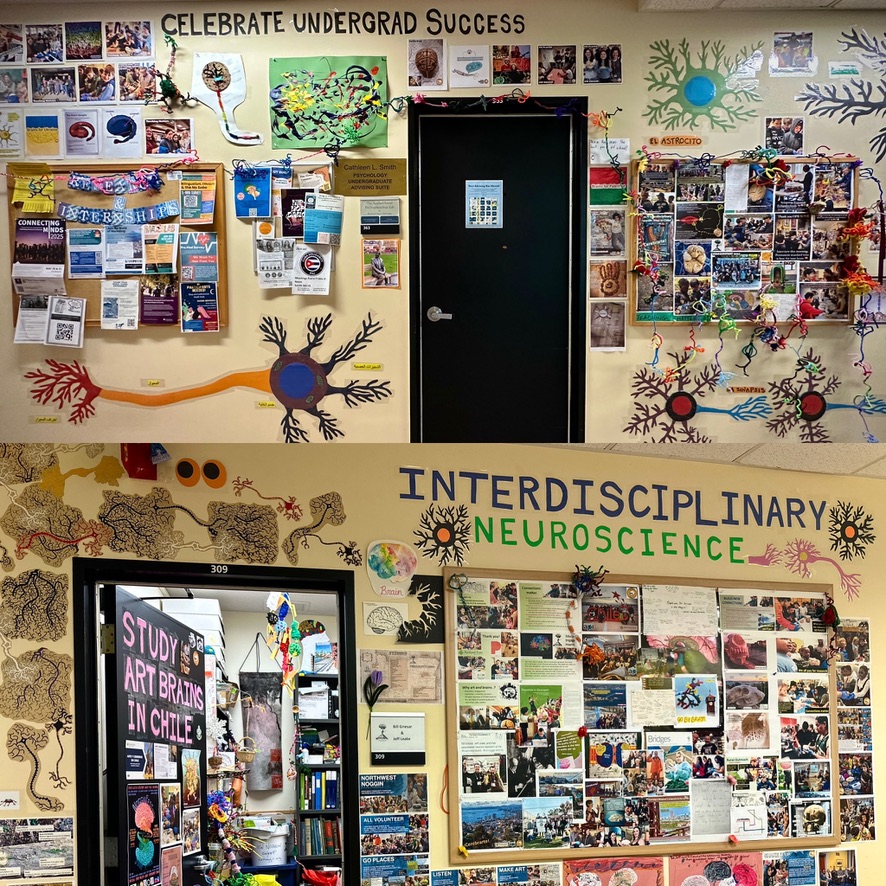
With enthusiasm from the PSU Interdisciplinary Neuroscience Association, and supplies donated by teaching faculty and nonprofit Northwest Noggin, our Cramer hallway became powerfully and meaningfully transformed. We’re glad we stayed put!
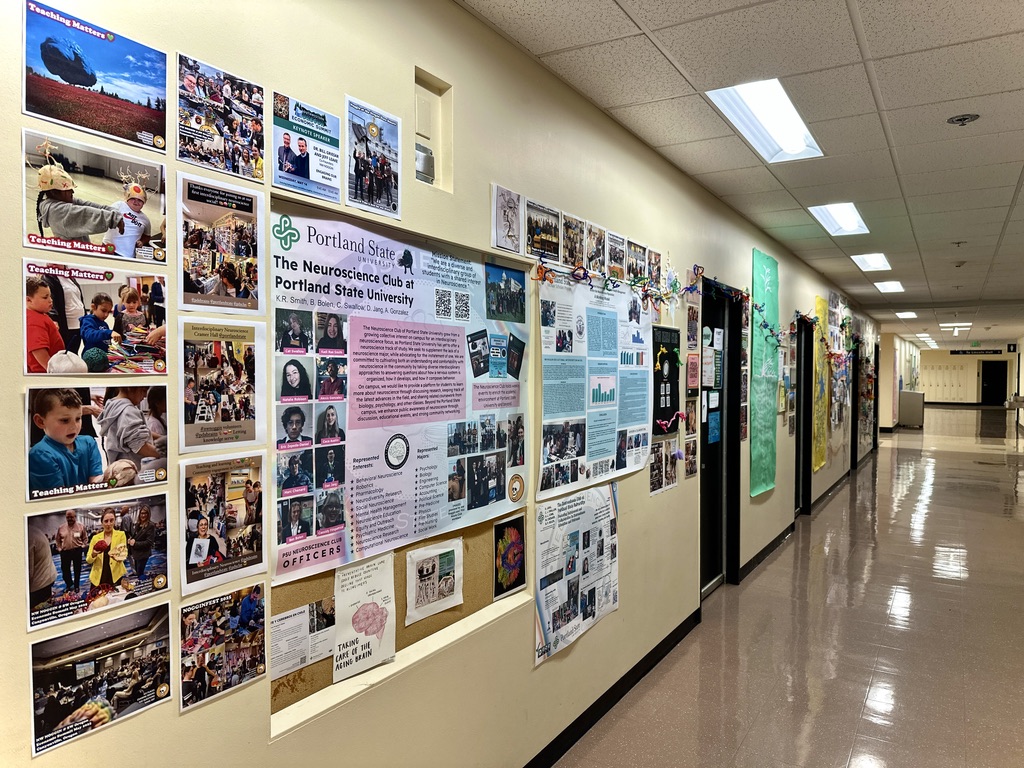
We’re happy to have our own place to change and travel through in new ways, perhaps encouraging healthy neurogenesis in the brains of those who stop by to check it out!
A hippocampus for PSU
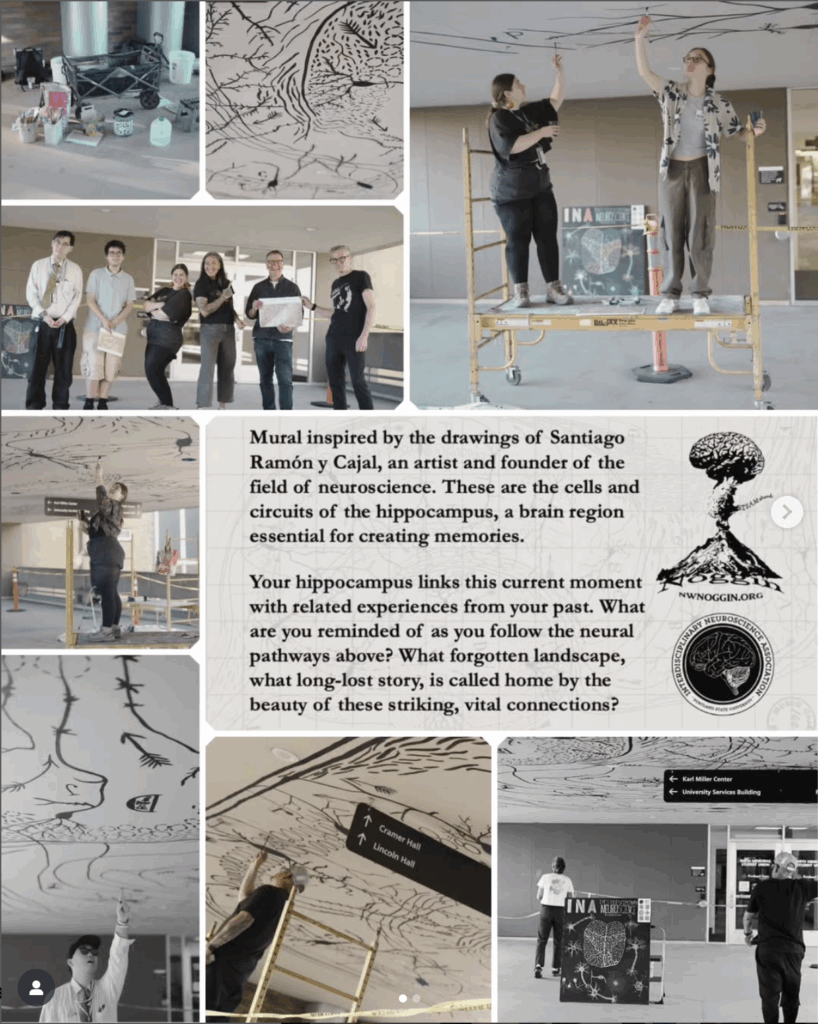
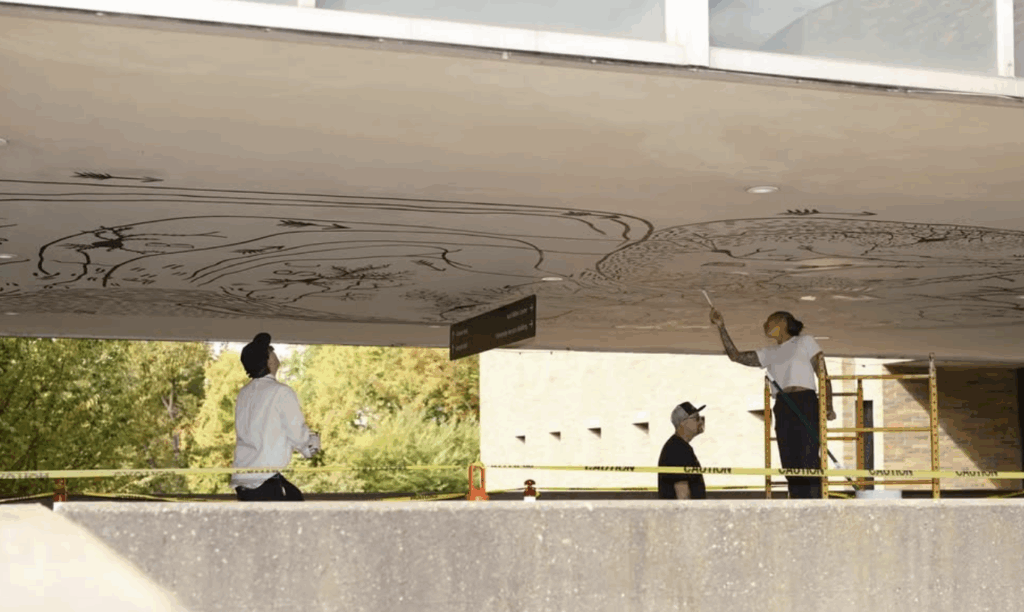
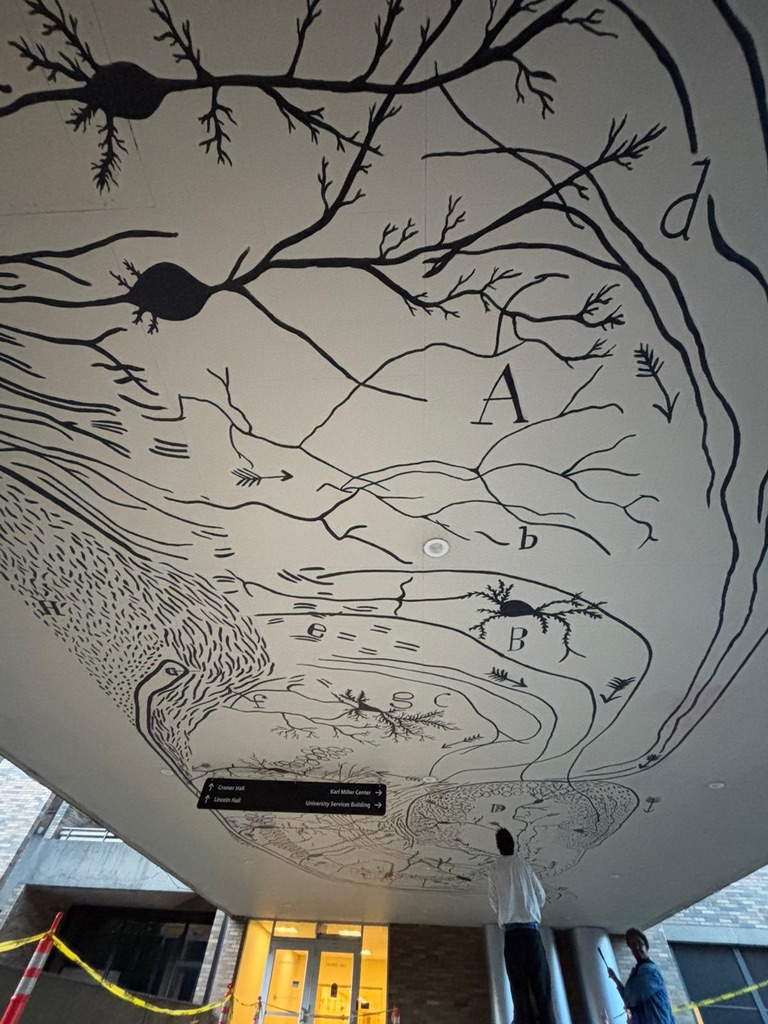
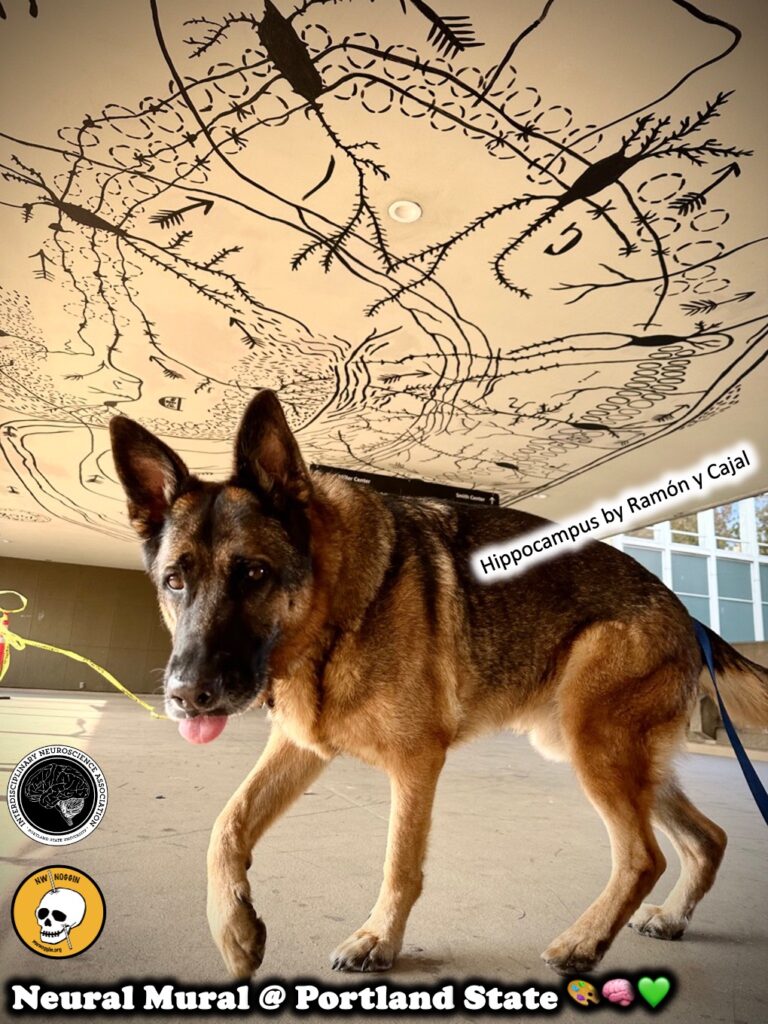
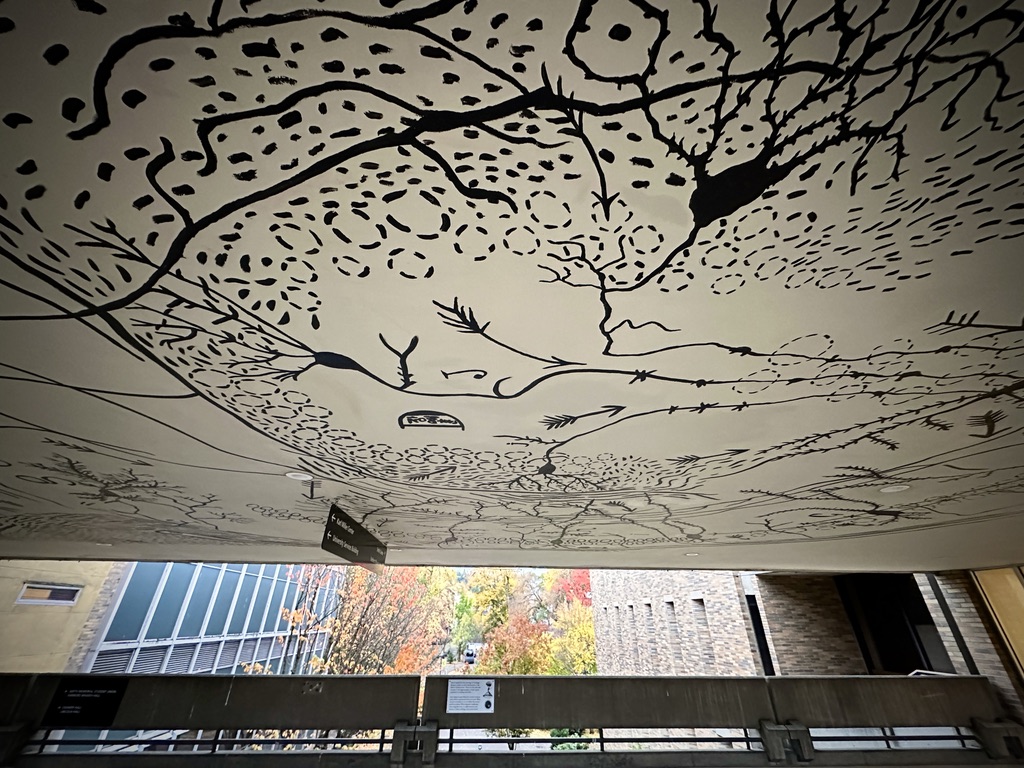
With new support promised from Placemaking at PSU, we set out to install a mural of an actual hippocampus on the empty ceiling of the third floor skybridge connecting our art-covered offices in Cramer to the Smith Memorial Student Union!
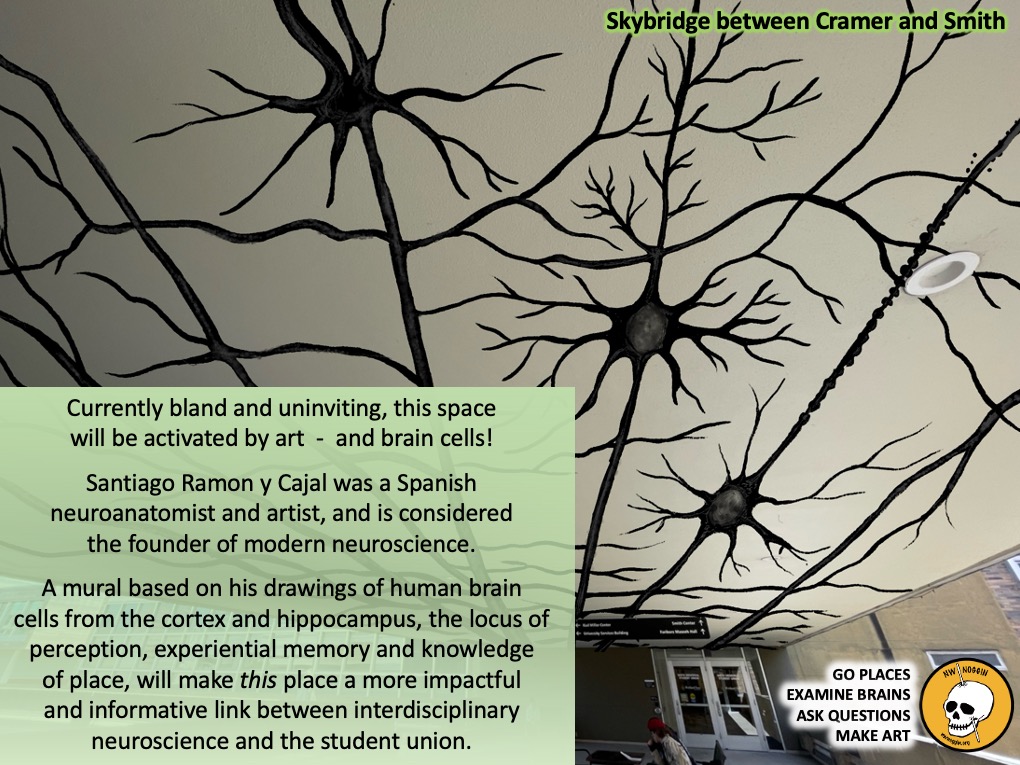
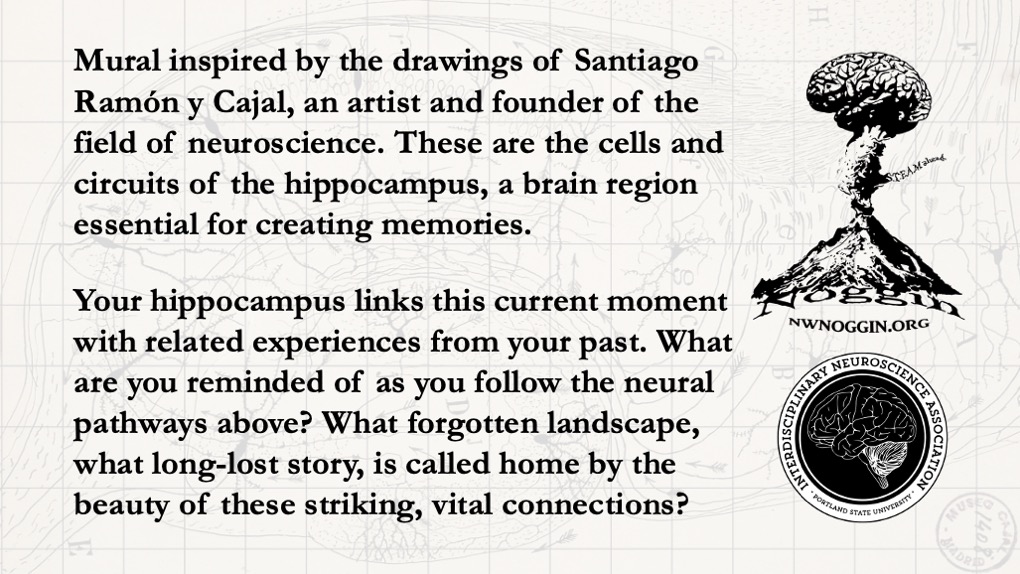
We chose to draw upon the artwork of Santiago Ramón y Cajal, a Spanish artist and neuroanatomist and winner of the Nobel Prize in Physiology or Medicine in 1906, who is widely credited as the founder of the field of neuroscience.
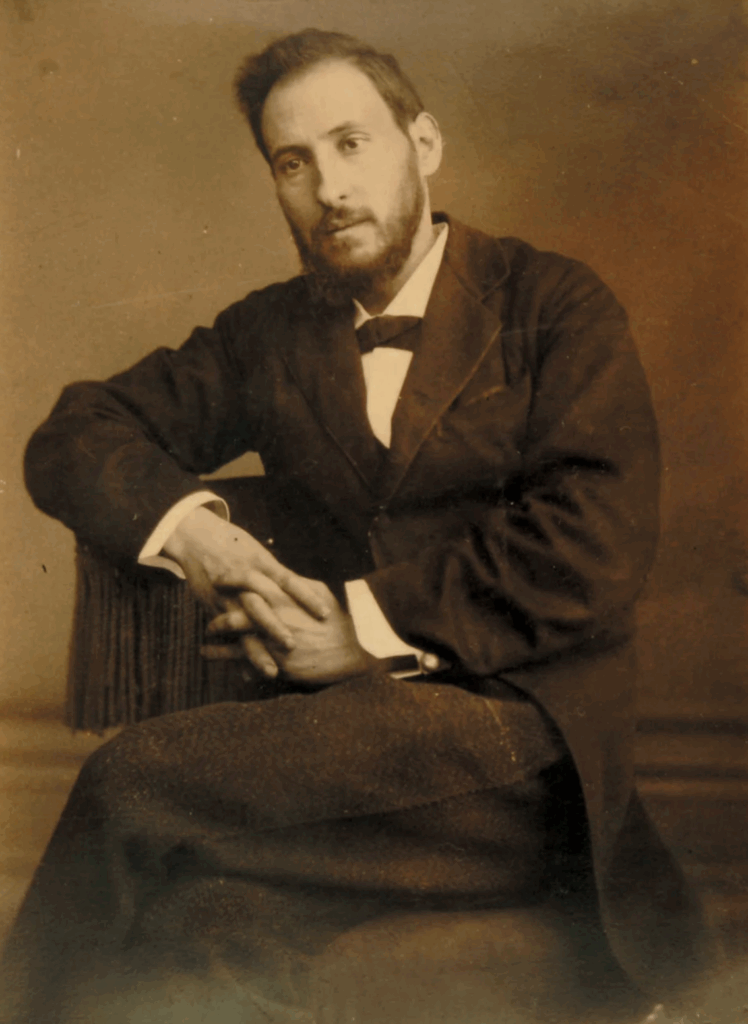
Santiago Ramón y Cajal: Image from the Cajal Institute, Madrid, Spain
We LOVE the core interdisciplinary character of Cajal’s approach to exploring the brain.
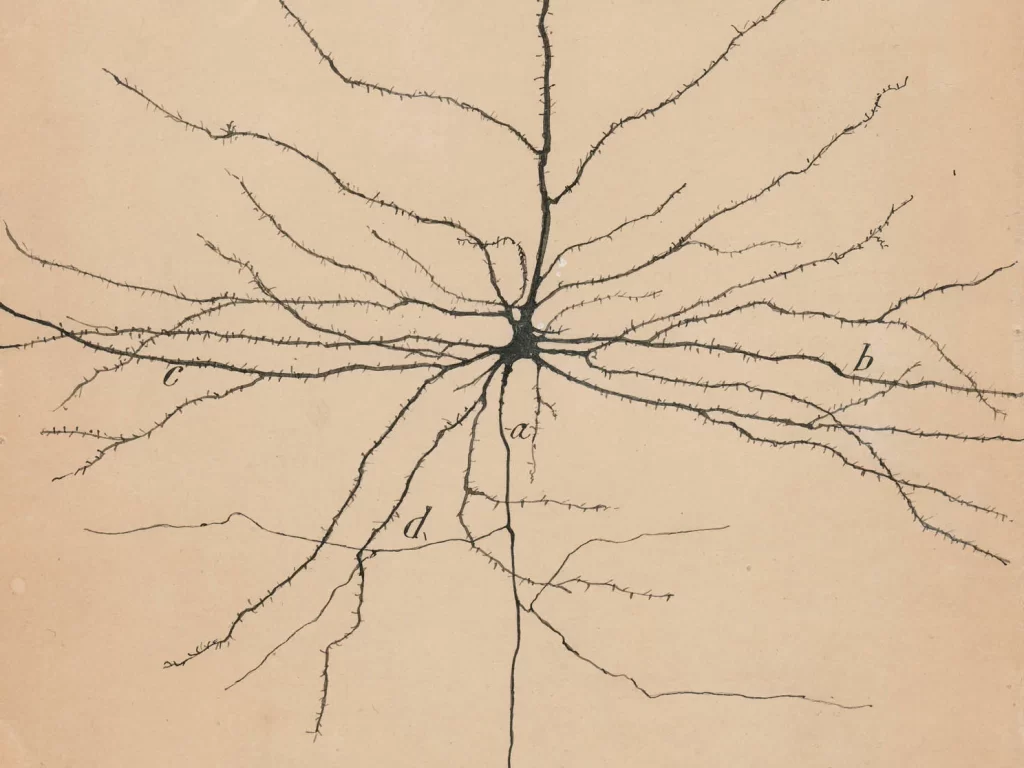
Pyramidal cell, drawing by Santiago Ramón y Cajal
His drawings of human brain cells, filled with black Golgi stain, are both legendary and inspiring, and made what he called the “butterflies of the soul” palpable to viewers.
“Like the entomologist in search of colorful butterflies, my attention has chased in the gardens of the grey matter cells with delicate and elegant shapes, the mysterious butterflies of the soul, whose beating of wings may one day reveal to us the secrets of the mind.” -Santiago Ramon y Cajal
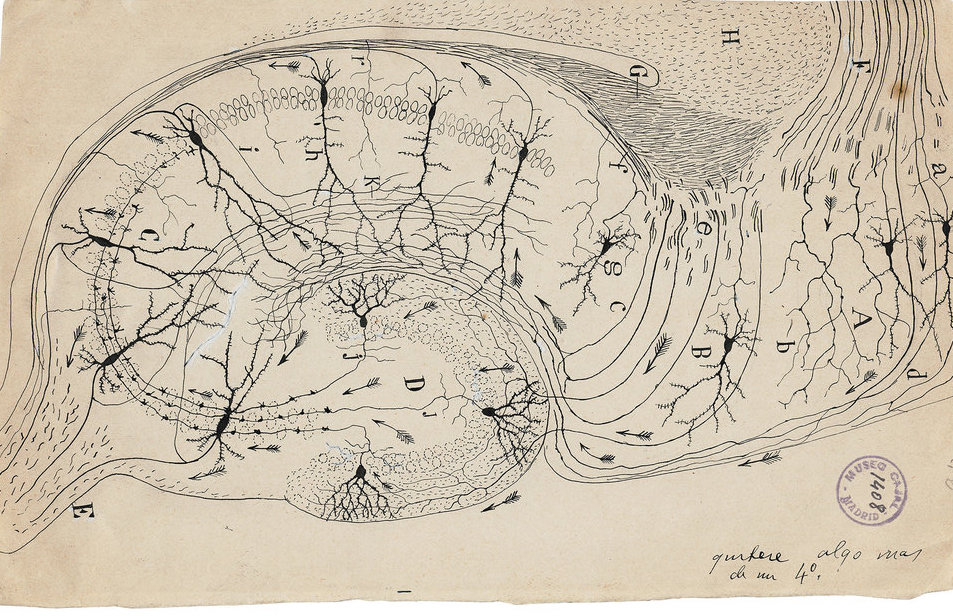
Hippocampus, drawing by Santiago Ramón y Cajal
LEARN MORE: Santiago Ramón y Cajal (Nobel Prize)
LEARN MORE: The Father of Modern Neuroscience Discovered the Basic Unit of the Nervous System
LEARN MORE: The Histological Slides and Drawings of Cajal
LEARN MORE: Santiago Ramón y Cajal: Artistic legacy in Science, 90 years later
LEARN MORE: Cajal, the neuronal theory and the idea of brain plasticity
LEARN MORE: Cajal and the Spanish Neurological School: Neuroscience Would Have Been a Different Story Without Them
LEARN MORE: Art, Intuition, and Identity in Ramón y Cajal
LEARN MORE: Revel in These Wondrous Drawings by the Father of Neuroscience
We settled upon Cajal’s image of the hippocampus (above) as potently embodying the concept of placemaking, and quickly secured the support of an accomplished mural artist, Kanani Miyamoto!
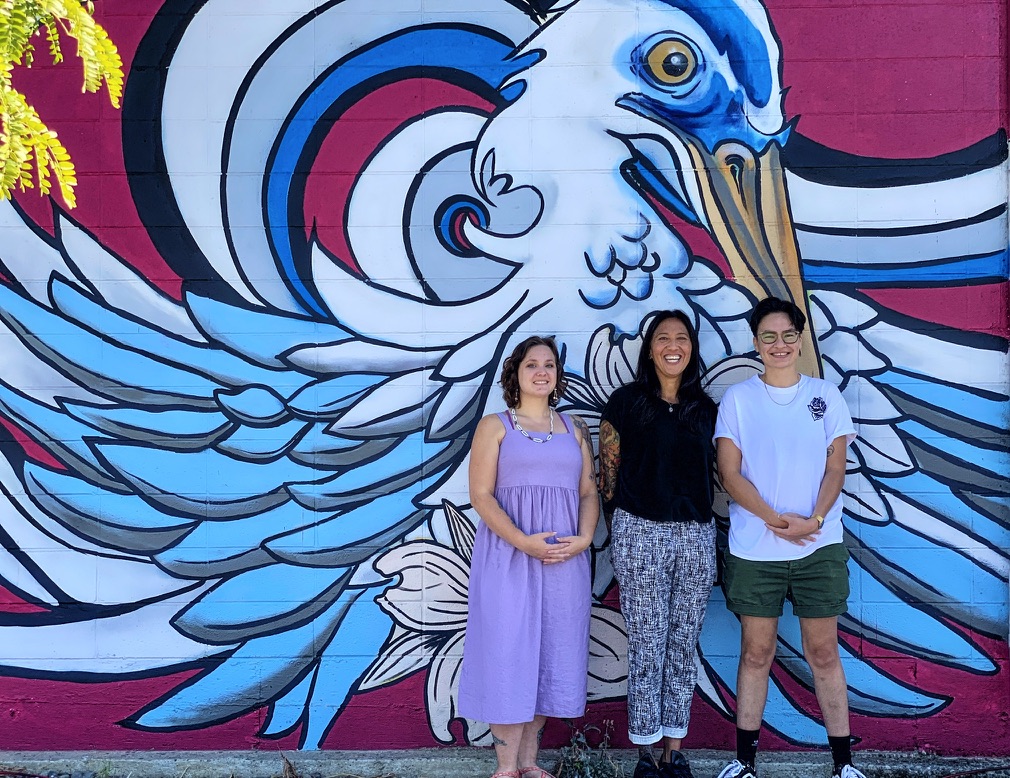
Kanani, who is the Vice President of the Brain Board for Northwest Noggin, has created public murals for the City of Milwaukie, Oregon and the Reser Center for the Performing Arts in Beaverton, among others.
LEARN MORE: Kanani Miyamoto (Instagram)
LEARN MORE: Kanani Miyamoto (Native Arts + Cultures Foundation)
LEARN MORE: Meet Kanani Miyamoto
We then embarked on a journey of many months, navigating the haphazard thicket of institutional administrative requirements, occasional weirdness, unexpected university efforts to charge us (!!), and more than a few whims before installing the mural literally right before PSU’s fall term began.
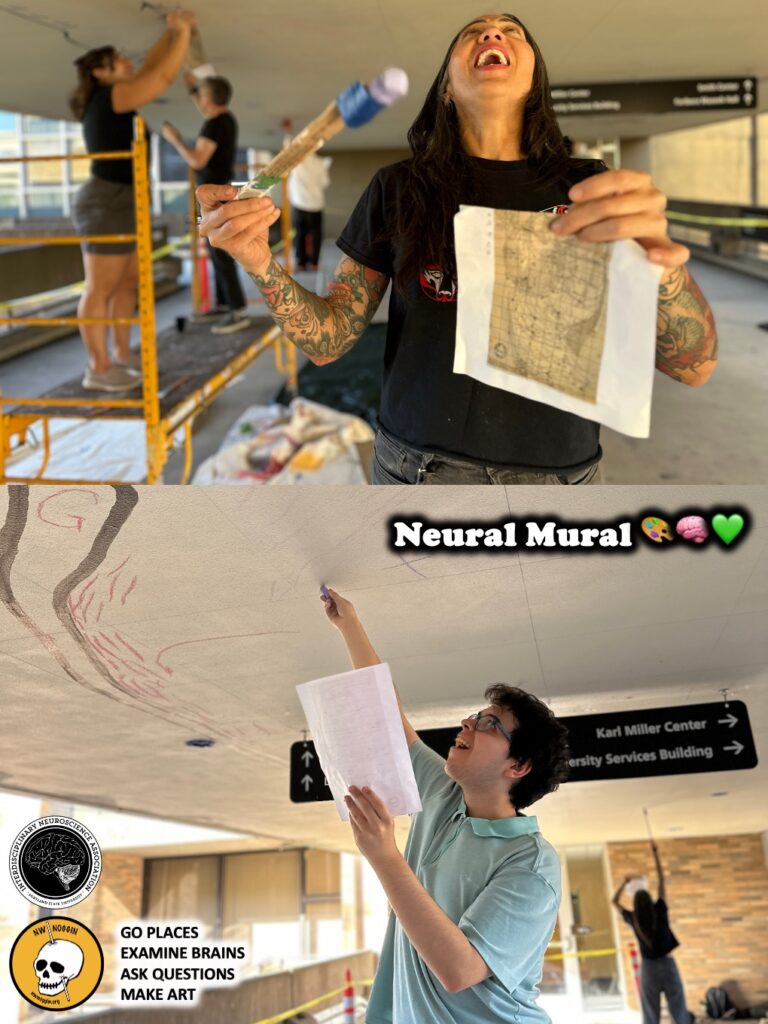
Despite a little bureaucratic scrabbling, creating the hippocampus was pure joy!
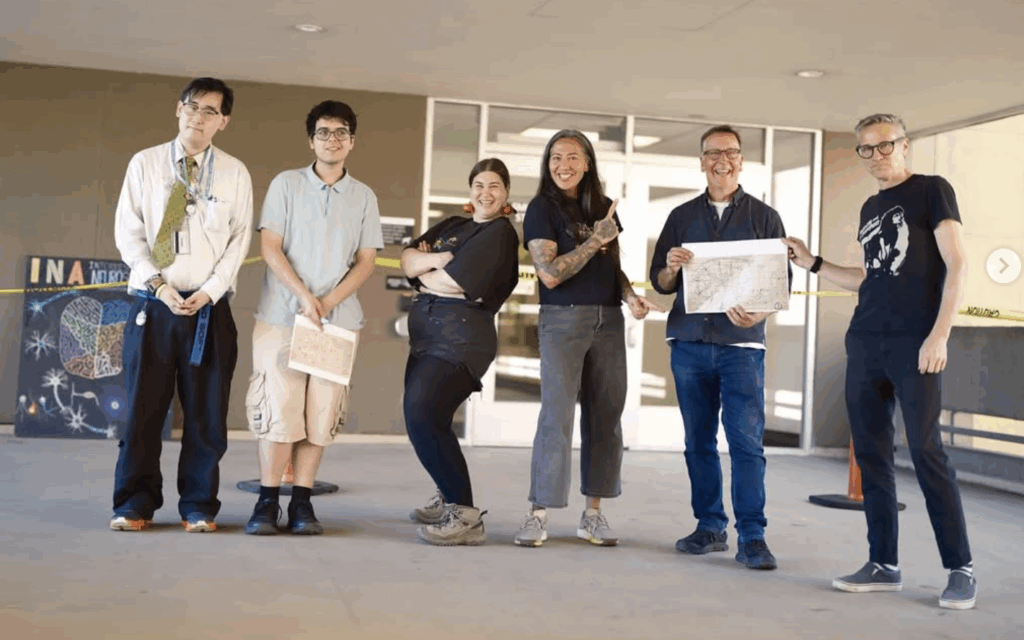
Photo by Dani Jang
“I feel art is most meaningful when it’s collaborative. My favorite projects are rooted in community and place, like this mural. The intention, care, and context behind it were pure inspiration, and I loved working with the passionate students from the neuroscience club. Everyone contributed with pride and commitment, embodying the spirit of learning and growing together. We also connected with curious students and faculty who stopped by, sparking conversations and questions. Both the process and the finished piece deepened our connection to the place and created lasting memories, perfect for activating the hippocampus.”

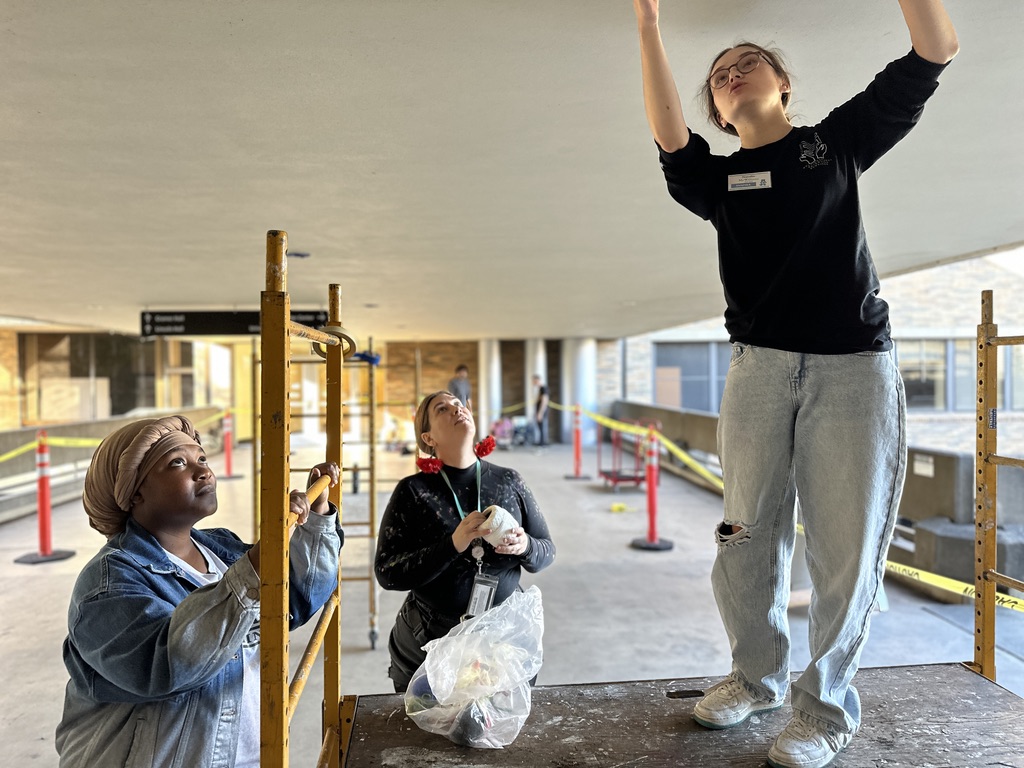
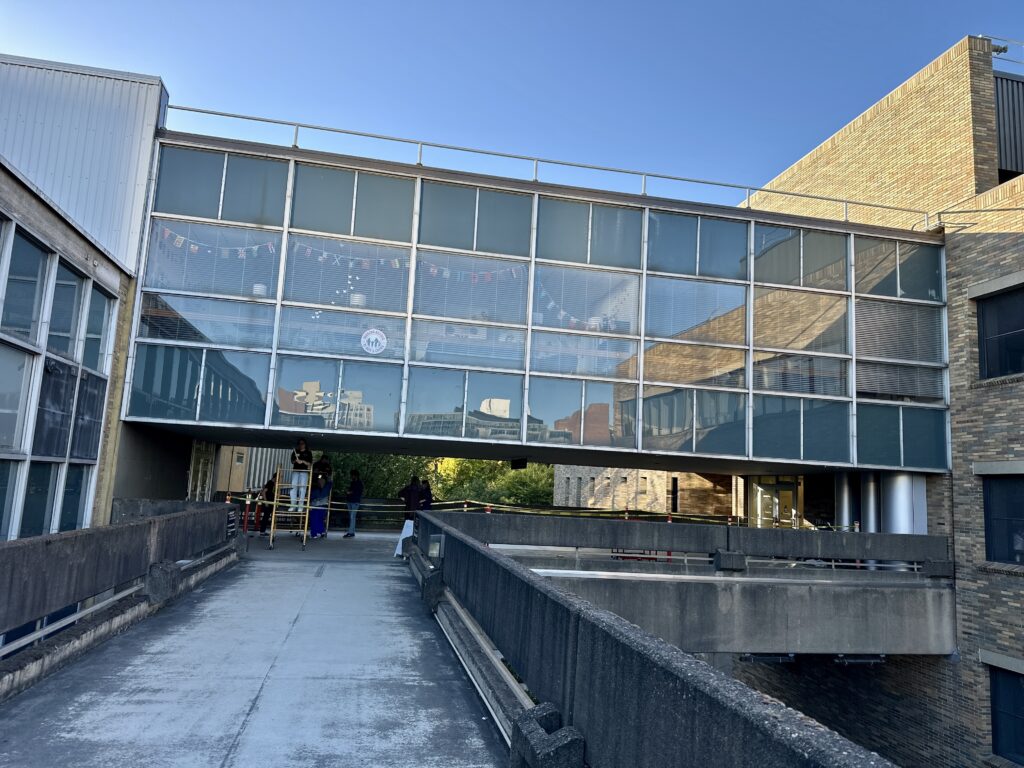
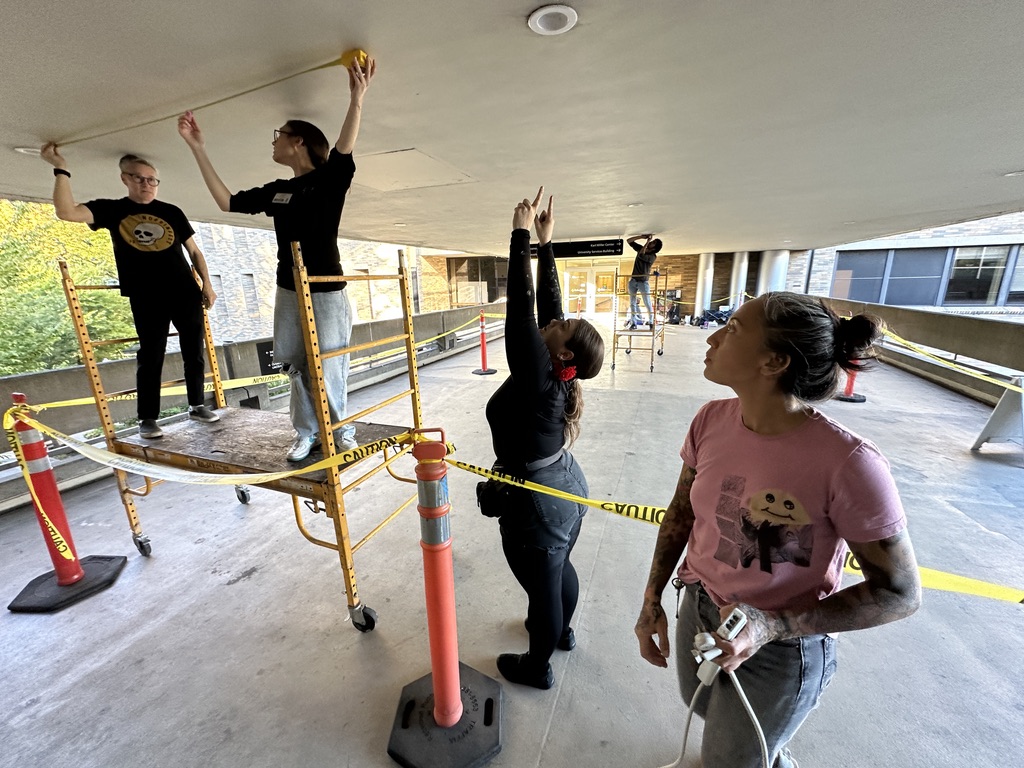
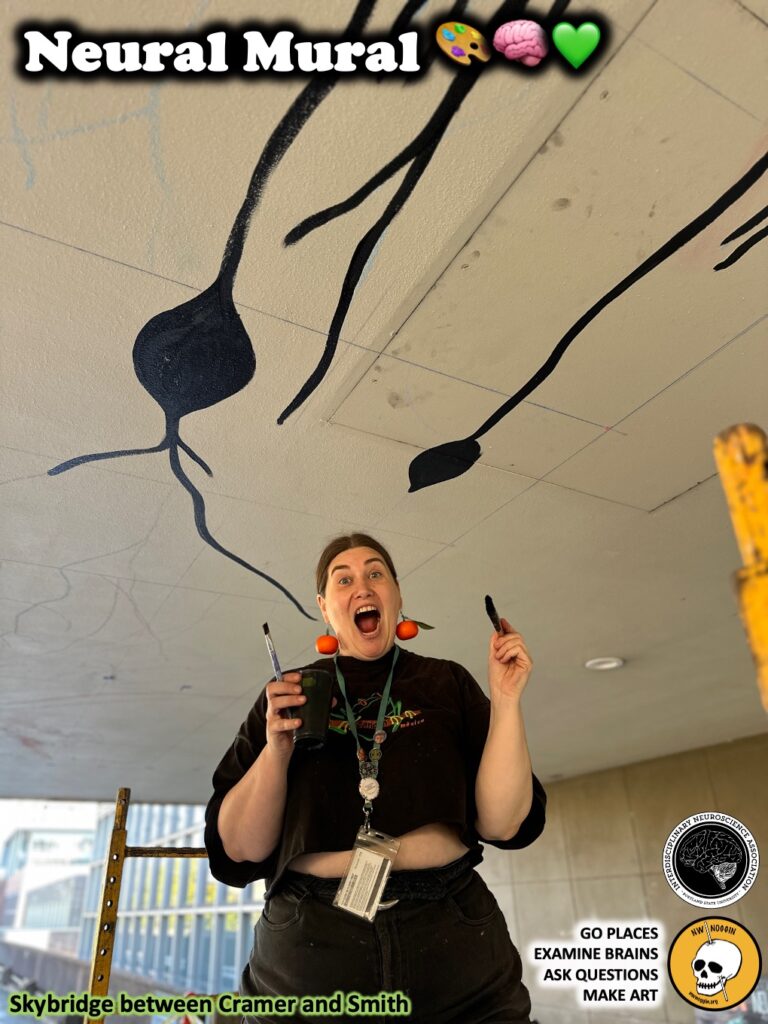
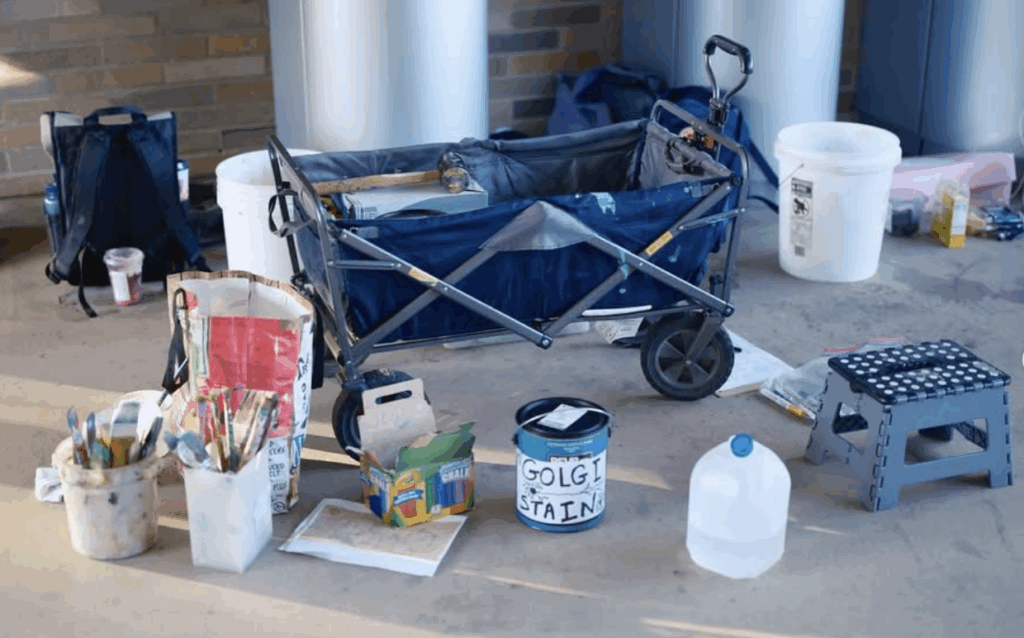
Photo by Dani Jang
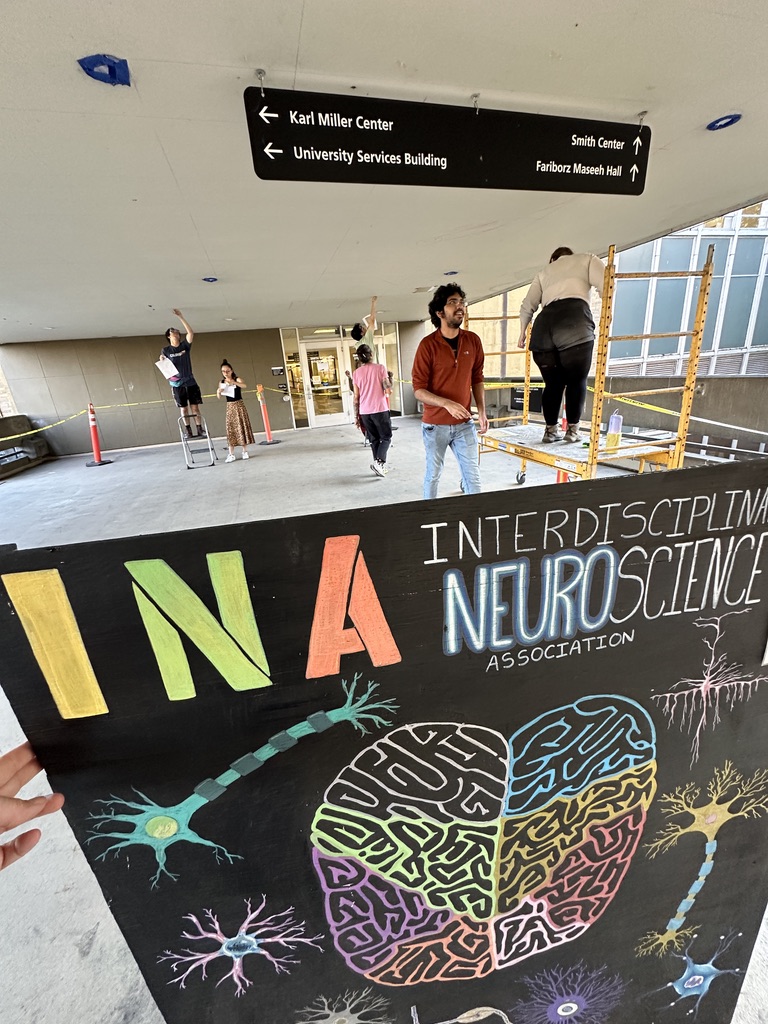
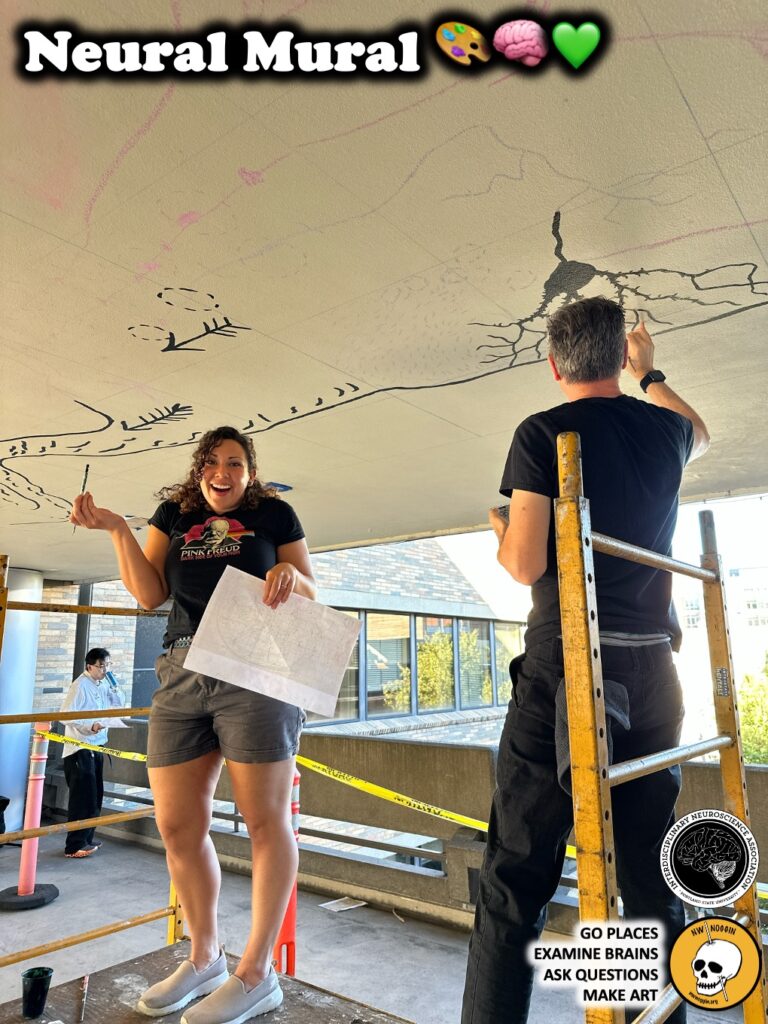
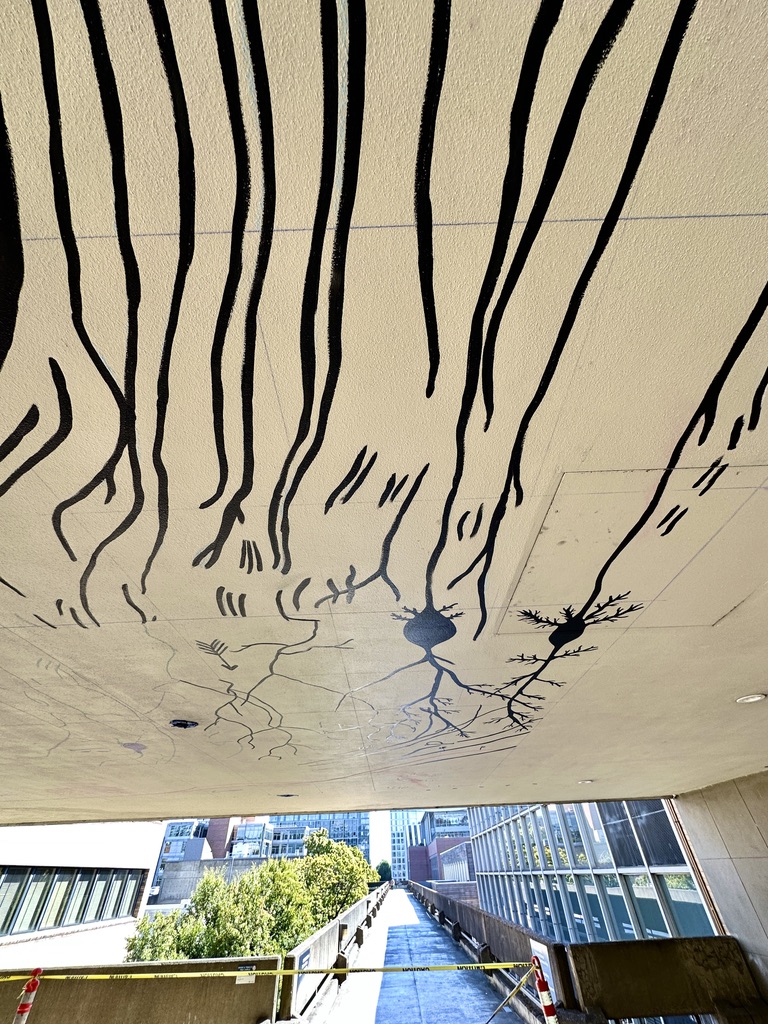
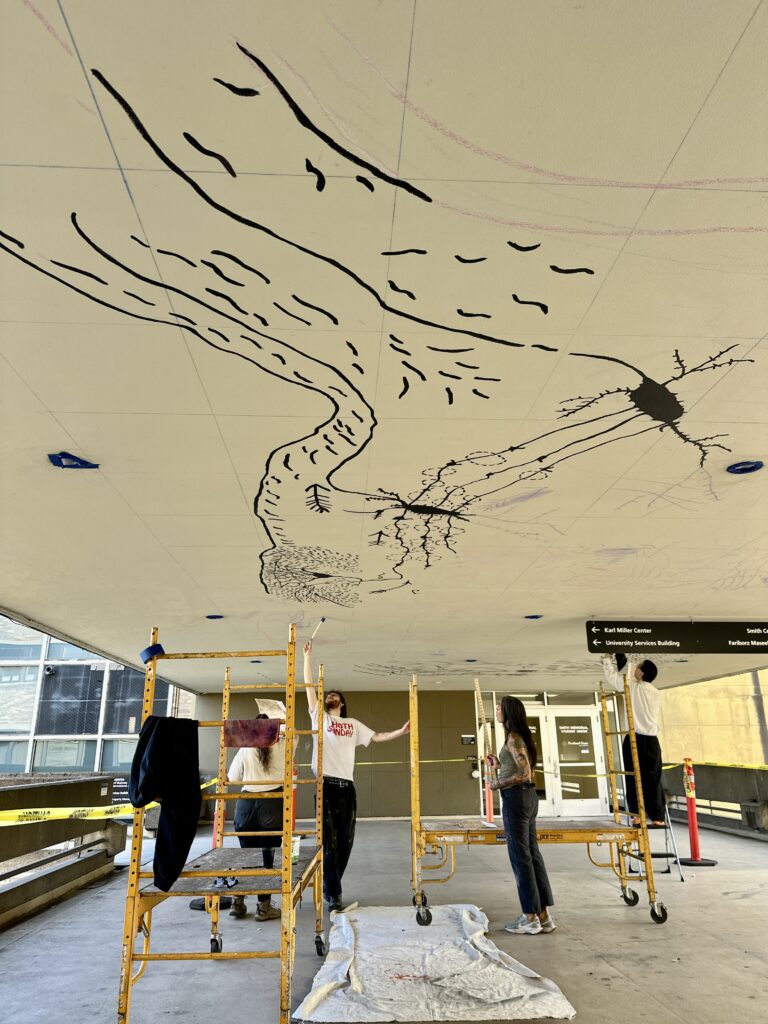
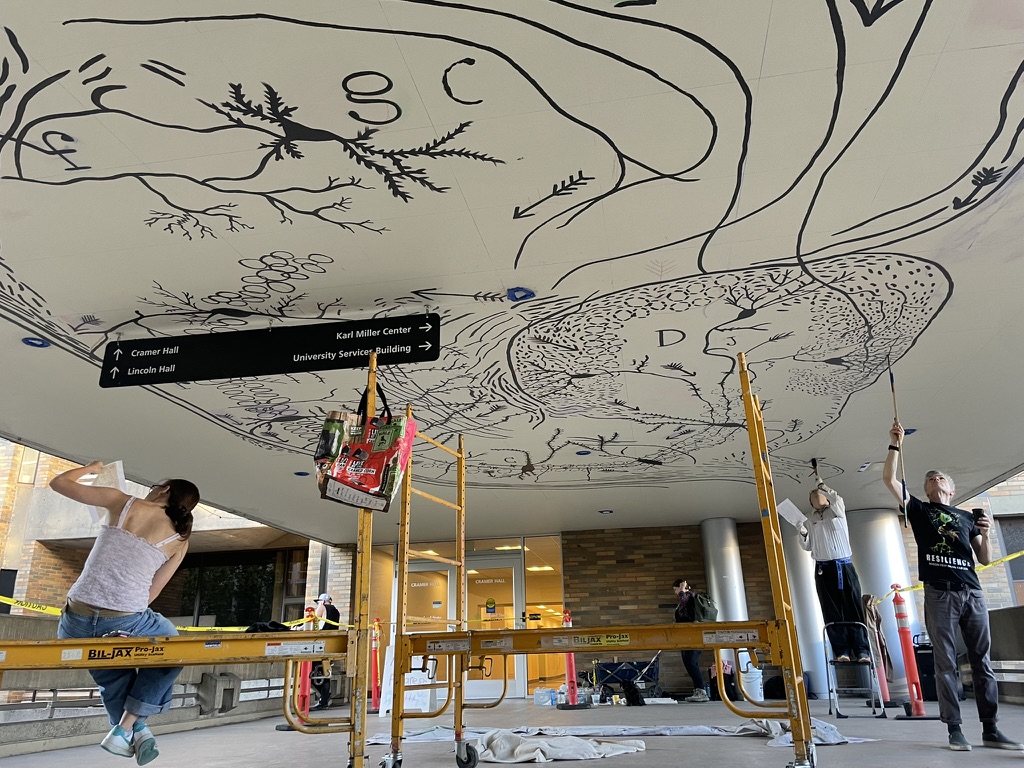
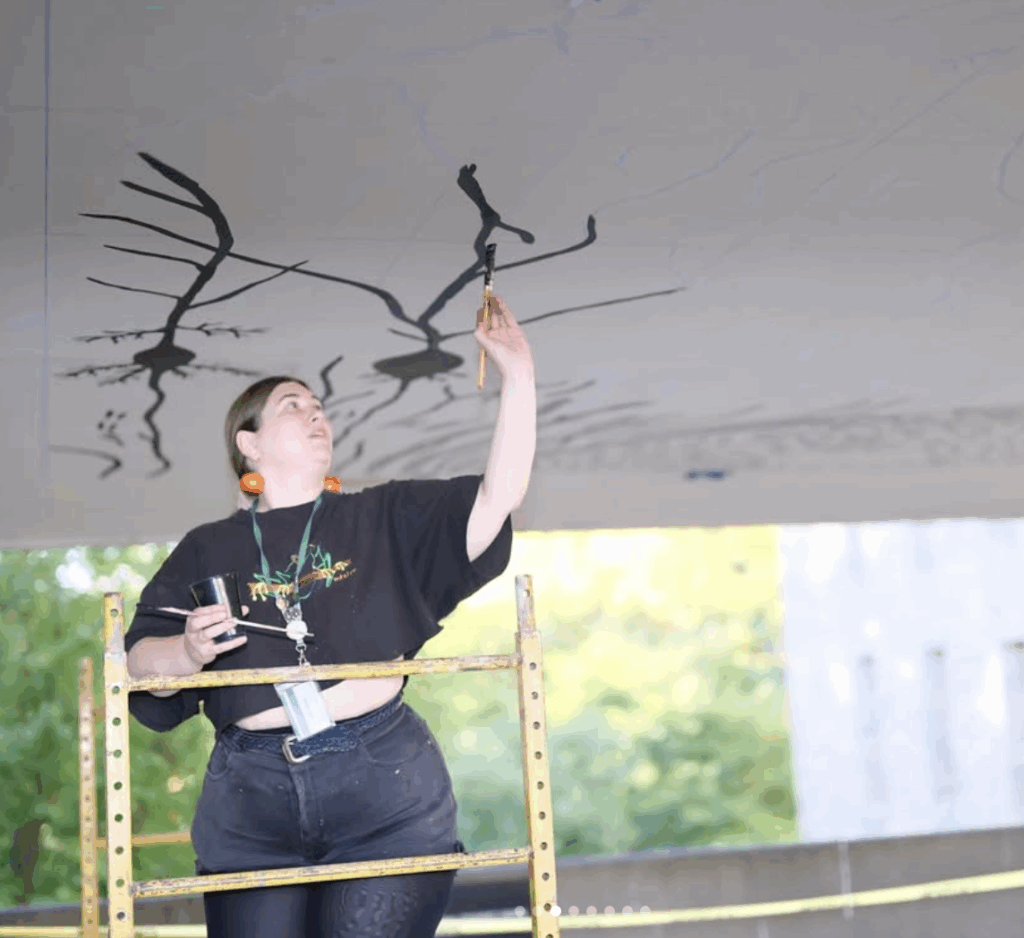
Photo by Dani Jang
THANK YOU
HUGE thanks to our enthusiastic Interdisciplinary Neuroscience Association undergraduates, the amazing artist Kanani Miyamoto, and Bryan Bruckman, Sarah Heinicke, Angie Telford and everyone at PSU’s Planning and Sustainability Office who helped make this place more meaningful, informative, educational and fun!