Neuroprotection for Children in War
Post by Jennifer Logan, a Honors undergraduate studying the intersection of psychological resilience and ethnobotany. She is double majoring in Psychology and Indigenous Nations Studies, with a minor in Interdisciplinary Neuroscience and Indigenous Traditional Ecological and Cultural Knowledge at Portland State University in Portland, Oregon.

A Question and Perspective That Changed Everything
I have a confession to make…
(And reader, be warned: the stakes are high! In owning up to this, I might lose my “liberal-news-consumption-addict” card. And to be honest, it’s one of the most frequently used cards in my wallet 😅)
Before I participated in a virtual outreach visit with displaced students from the British International School in Gaza this spring, I wasn’t fully aware of the scale of the humanitarian crisis happening in Gaza. I had developed somewhat of a “heart-callus” around the media coverage of the escalating humanitarian crisis in the Middle East, and I avoided it at all costs.

IMAGE SOURCE: Israeli strike kills dozens sheltering in Gaza school, officials say
LEARN MORE: End unfolding genocide or watch it end life in Gaza: States face defining choice
LEARN MORE: Realising health justice in Palestine: beyond humanitarian voices
LEARN MORE: Gaza: Latest Israeli Plan Inches Closer to Extermination
I knew enough within my social circles to understand that something horrific was happening across the world, enough to activate protests all over the country. Intellectually, I understood that thousands of people were dying, displaced, and suffering. But my heart refused to feel it. I was too afraid to absorb the information — too afraid of the long shadow of its intensity to really let it in.
Maybe I understood, somewhere deep down, that humans rarely enjoy the overwhelming feelings of helplessness that come from witnessing international crises. After all, who among us embraces feeling powerless to stop the suffering of children thousands of miles away?

IMAGE SOURCE: Reuters, Hatem Khaled
Humans don’t like feeling a lack of control. The brain thrives on identifying and analyzing patterns in our environment to predict scenarios and shape responses. It turns out the human brain is a little bit of a control freak — and trying to reclaim agency in an unpredictable world feels far better than confronting powerlessness.
So I avoided it. I avoided feeling helpless.
Compounding that emotional distance was the scale and complexity of the conflict. The history felt too overwhelming, and way too layered for my brain to hold. I couldn’t clearly identify “good guys” and “bad guys,” and every time I tried to be brave and dive into it – all I saw was this vast, echoing, generational grief. It was cognitively dissonant, emotionally disorienting, and I resigned myself to knowing “just enough” to feel empathy, without having to feel consumed…
Little did I know, this would soon change…
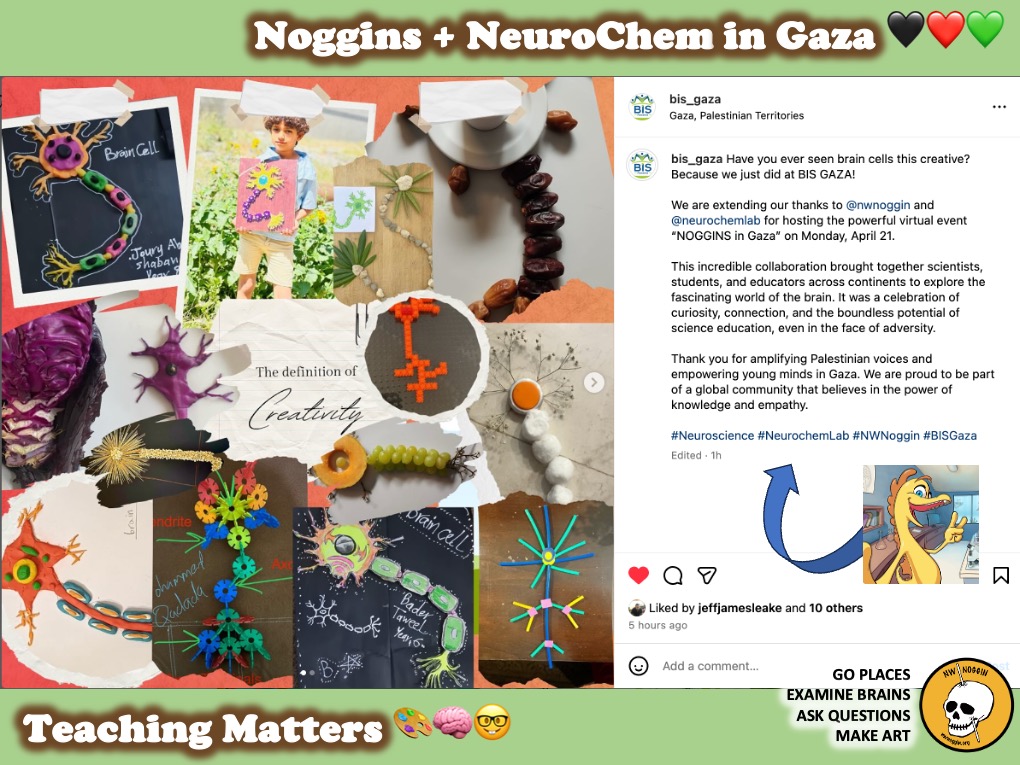
Fast forward to spring term 2025: My professors scheduled a virtual outreach opportunity in partnership with Abdulrahman Abou Dahesh, a Fulbright scholar in neuroscience at the University of Texas at Dallas, with what remained of the displaced student body attending the British International School in Gaza (BIS Gaza). Abdulrahman created his own arts-integrated outreach project, known as Neurochem Lab.
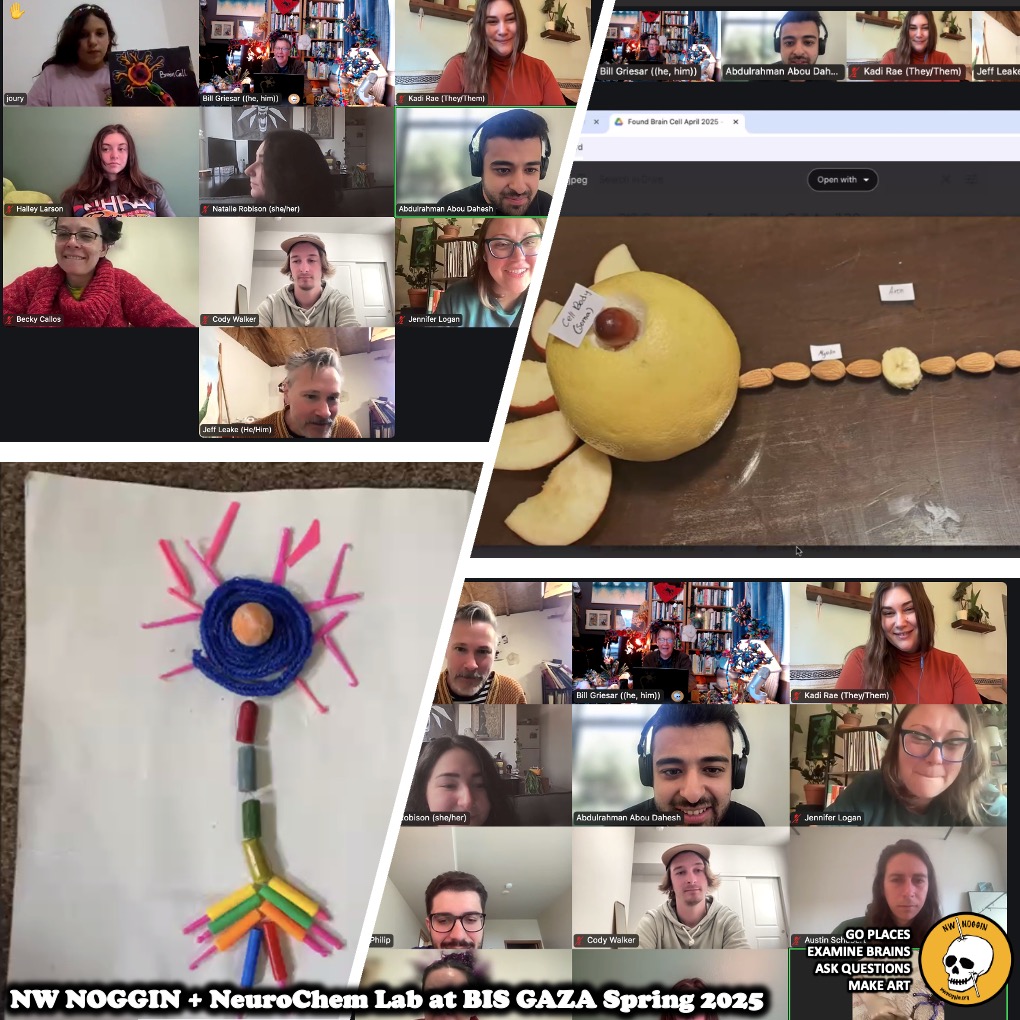
LEARN MORE: Neurochem Lab
LEARN MORE: Noggins in Gaza
I needed to complete the outreach for course credit – but, I also wanted to show up authentically. I knew it was finally time to engage with this directly, to listen and to learn while remaining present, and to witness the human side of what I had previously kept at a distance.
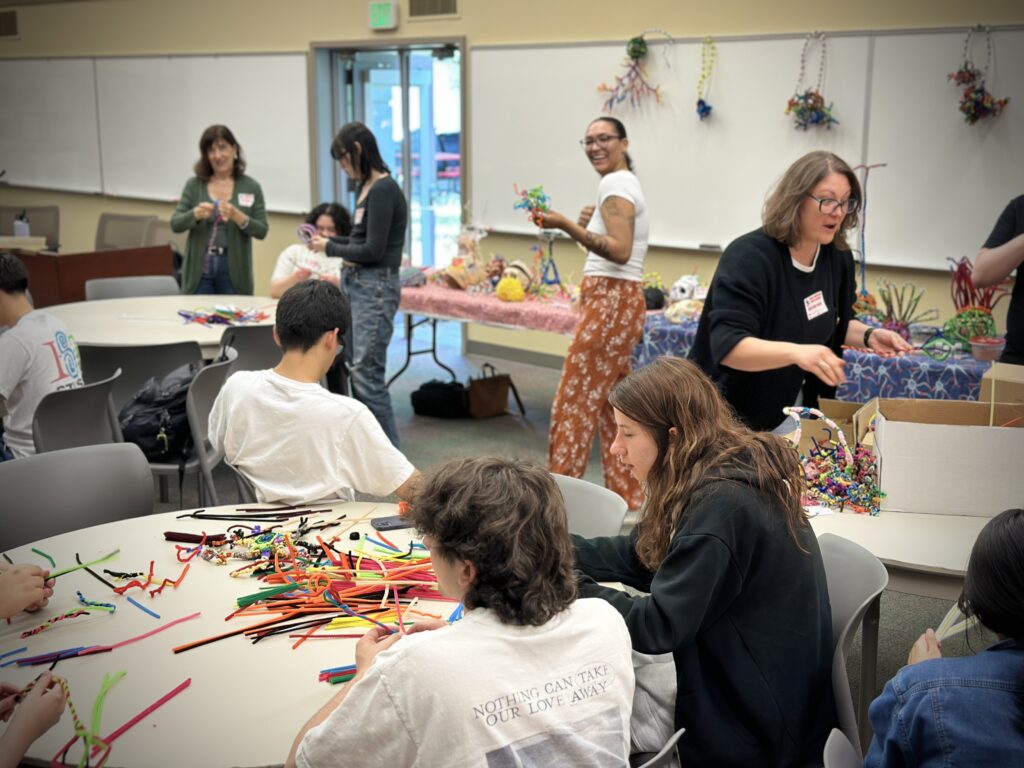
Prior to this term, I’d spent the last couple years volunteering intermittently with NW Noggin, a community-based neuroscience outreach group that brings brains (and allll their mysteries!) to classrooms across the Pacific Northwest.

These visits are playful, curious, and often unexpectedly profound. I’ve been asked by a third grader if salmon laugh. I’ve been asked how nature affects your nervous system. I’ve been pulled aside by a shy middle schooler who wanted to know how to communicate and authentically connect with their grandparent living with dementia.
LEARN MORE: Do Salmon Laugh?
After some reflection on these experiences with NW Noggin, what stands out most to me isn’t just the impact on the students we visit — it’s what this outreach unexpectedly provides the volunteers, as well.
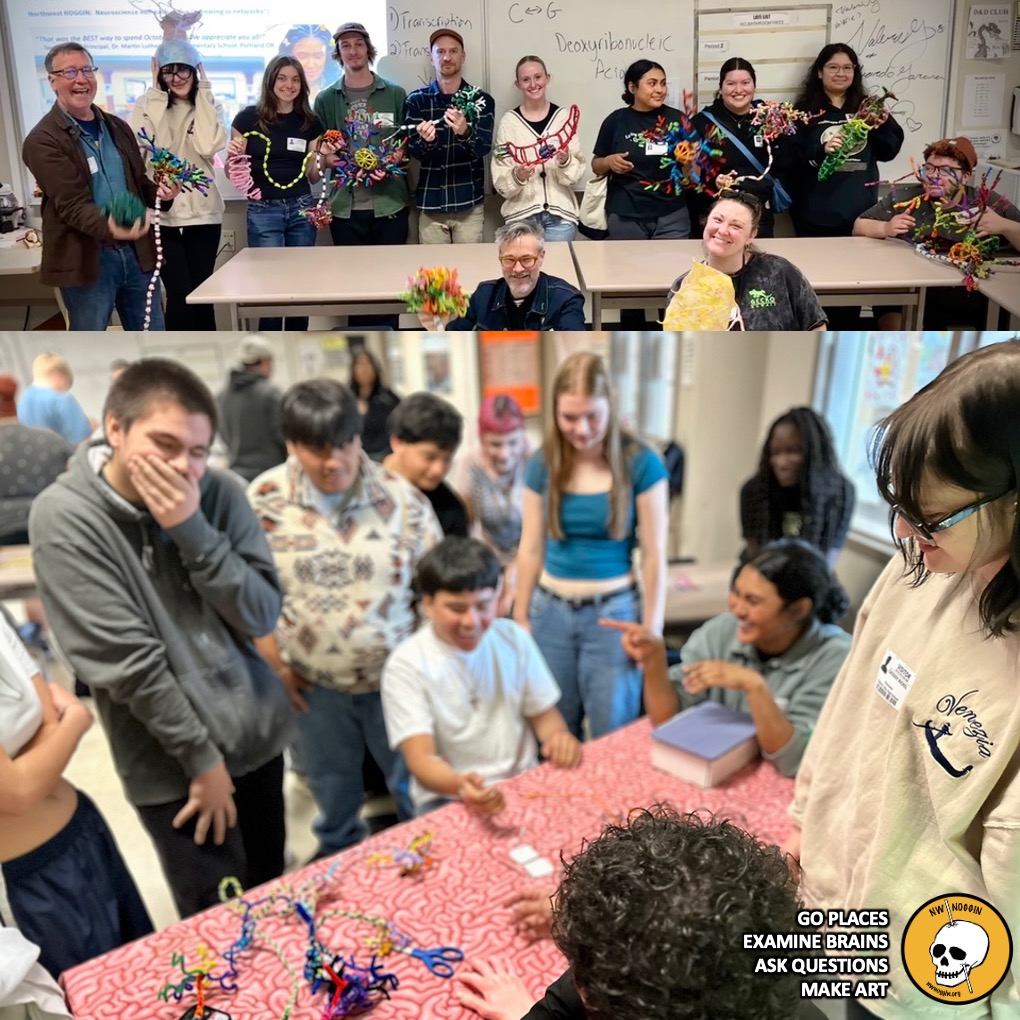
Many of us are psychology and neuroscience students navigating a world that often feels overwhelming. Higher education in the US feels unstable as of late. Science is increasingly devalued, and under assault. And witnessing large-scale suffering (like the violence in Gaza) adds another layer of emotional paralysis. It all feels too overwhelming to try and approach…
LEARN MORE: NIH insiders: Trump is ‘dismantling and destroying everything’
LEARN MORE: Scientists sound alarm on Trump administration’s dismantling of research funding
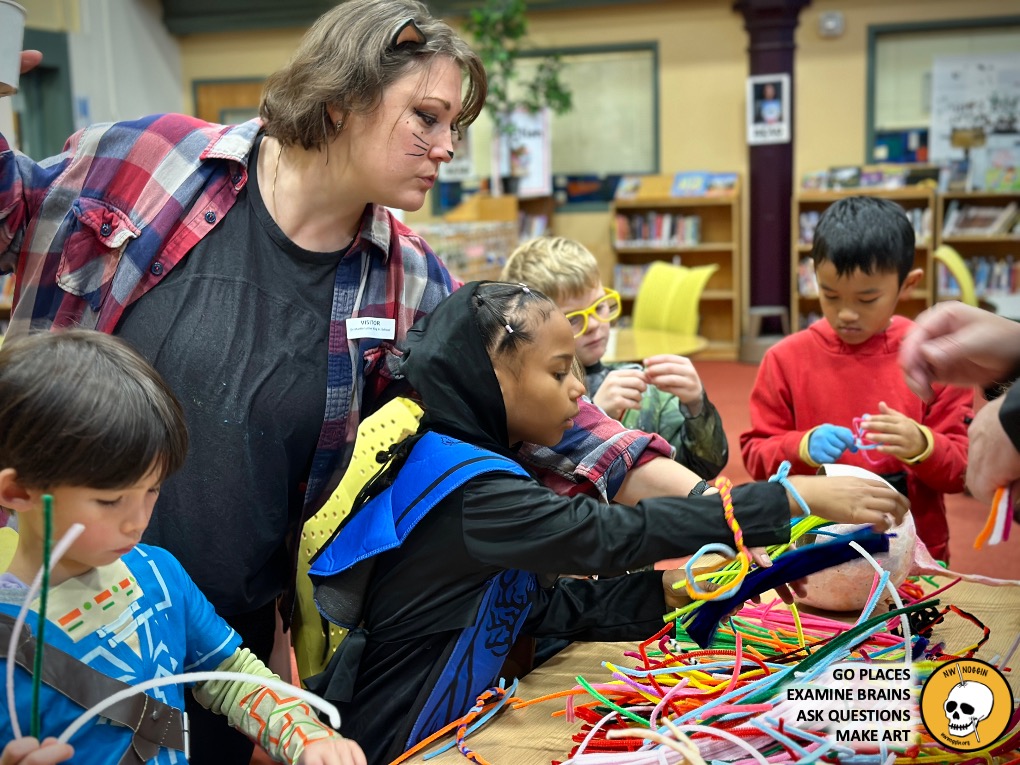
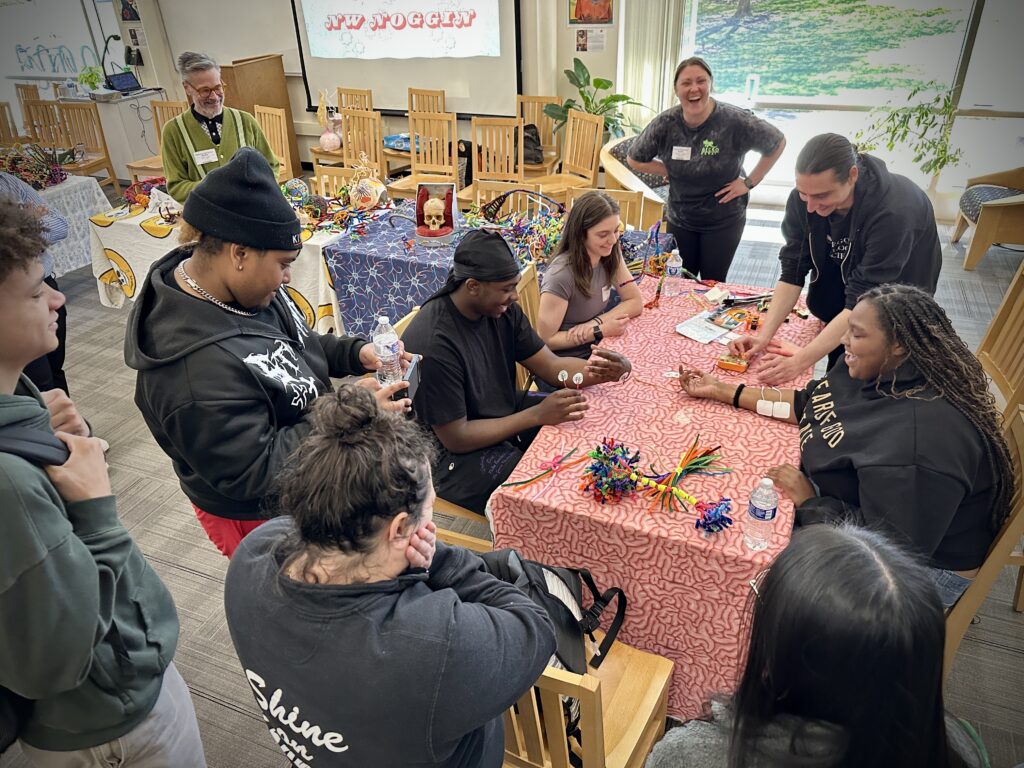
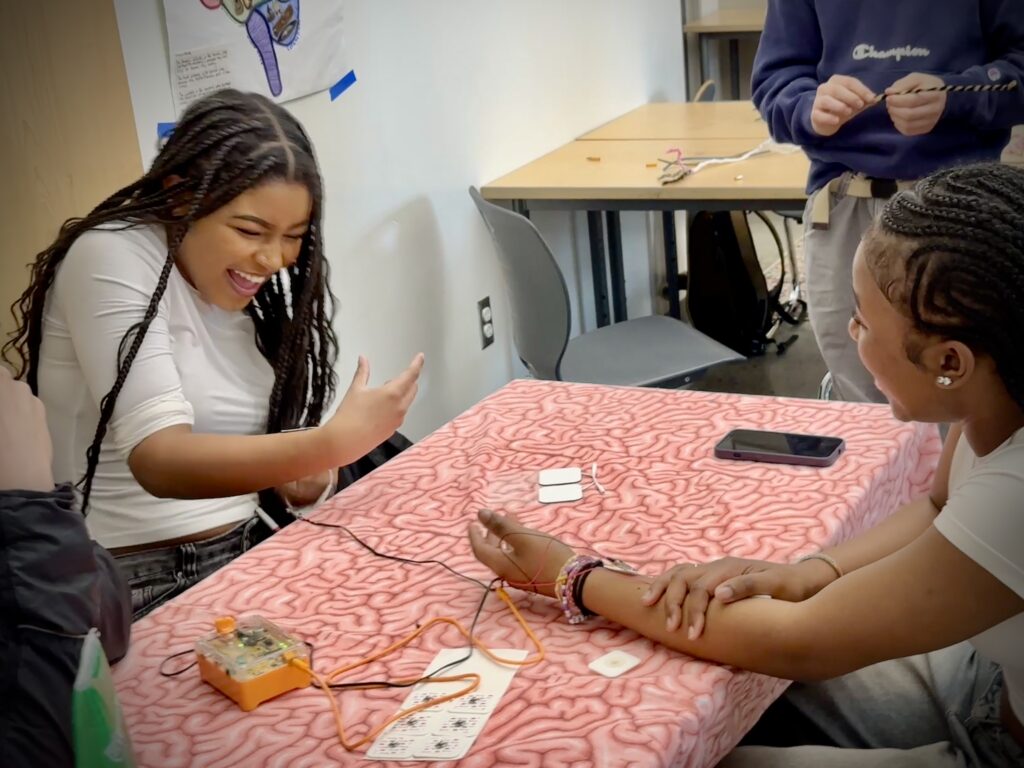
But in these classrooms here at NW Noggin, we glove up sticky second graders and watch them light up with curiosity, awe, annnnnnd sometimes a little disgust (brains can be stinky!). We watch them collapse in giggles when they get to zap (or, “control”) a friend connected to the human to human interface and watch as their arm dances around the table of its own free will.
LEARN MORE: Noggin Bloggin
LEARN MORE: Brain Hacking is Electric!
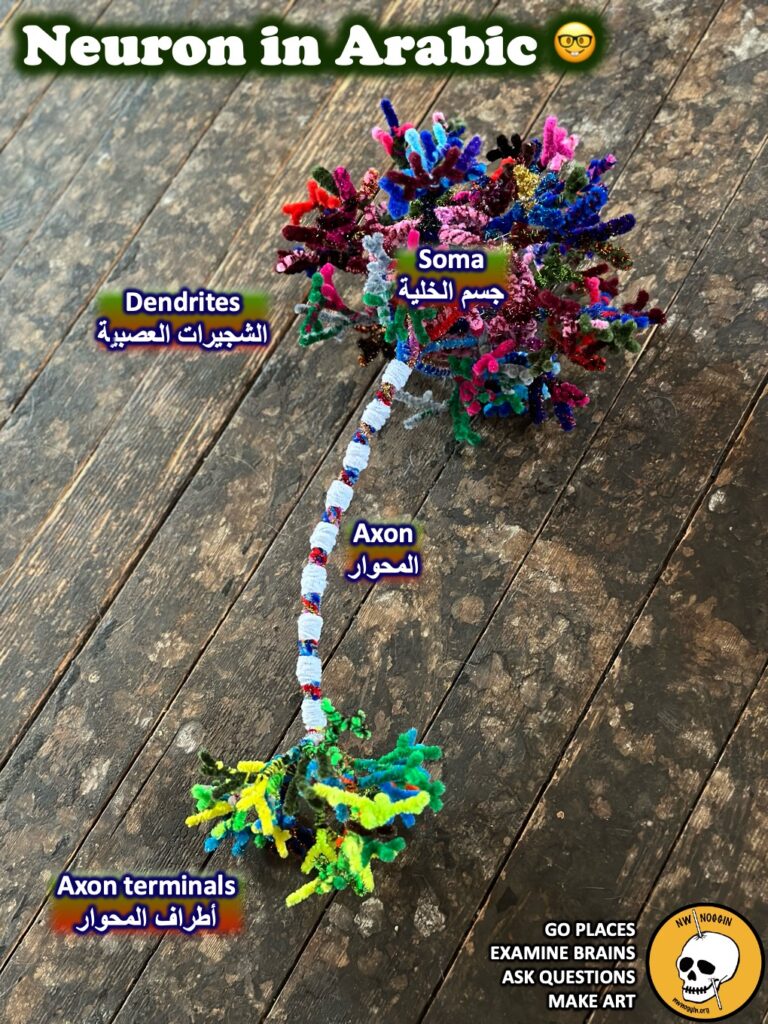
We laugh, build pipe cleaner neurons, and meet their wonder with honesty and enthusiasm.
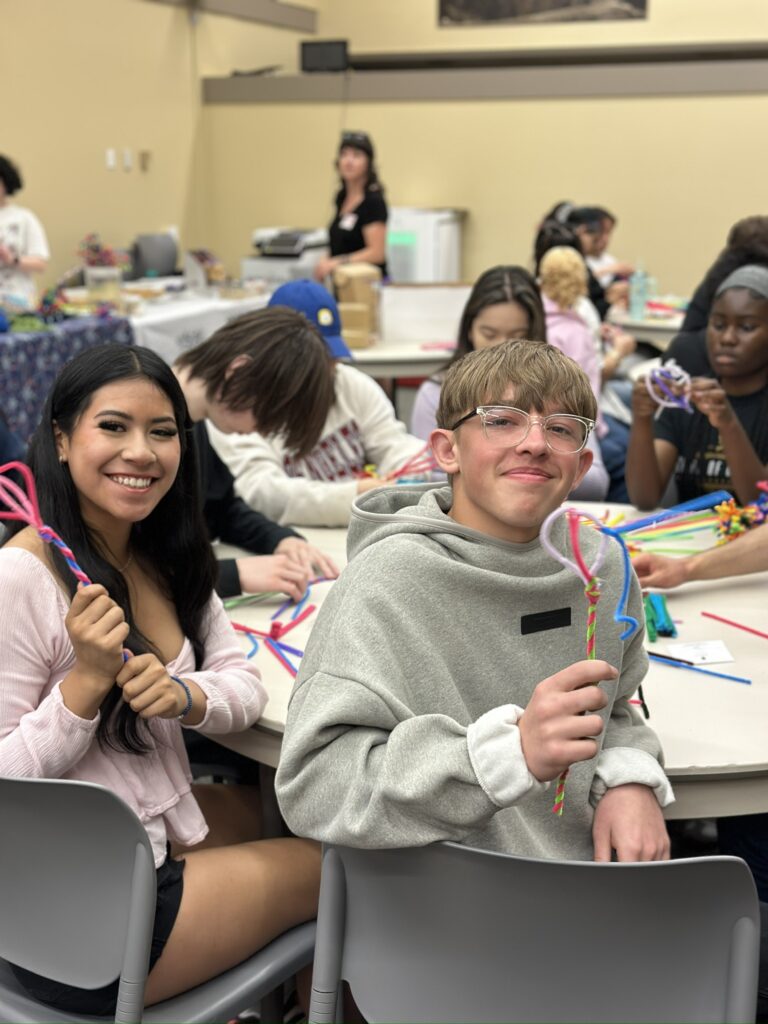
MAKE YOUR OWN: Build a pipe cleaner brain cell
It grounds us.
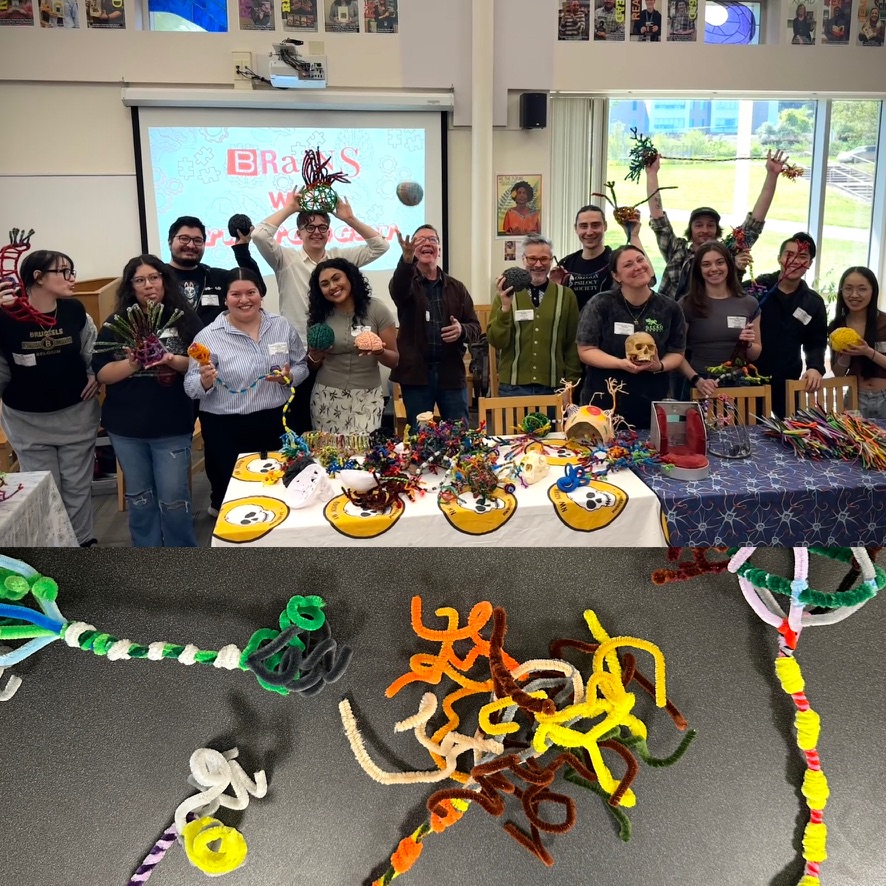
It reminds us that we can do something, and that we are doing something. That in showing up, we reclaim a bit of agency — our own symbolic safe place in these unsafe and uncertain times.
Noggins in Gaza
During our most recent outreach call with the Gaza students, I had the honor of meeting Abdulrahman. Abdulrahman is one of the inspirational brains behind the NW Noggin, BIS, and Neurochem Lab collaboration responsible for the chance to visit students in and around the Gaza Strip. He has a clear heart for children and a passion for communicating complex scientific concepts in a way that is approachable and fun for kids.
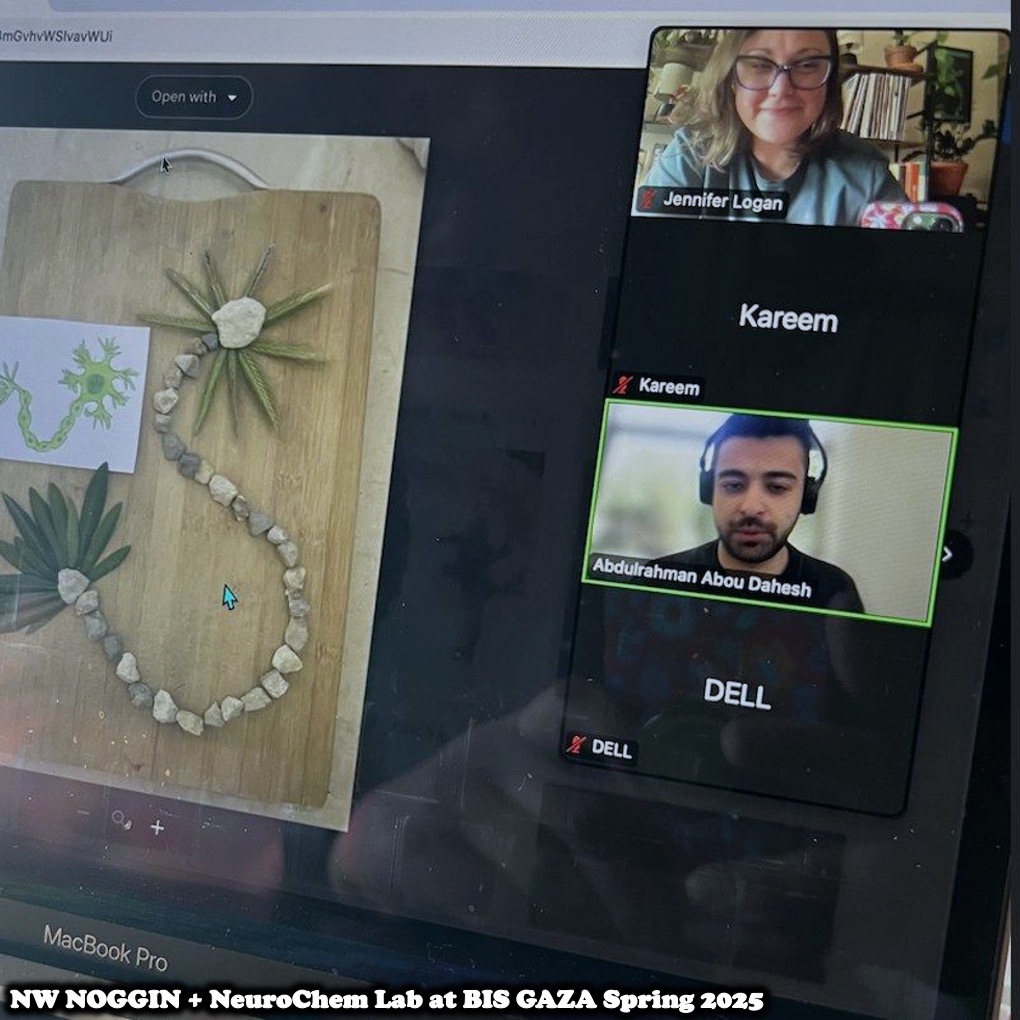
He’s the founder of NeuroChem Lab, a playful science outreach initiative that blends storytelling with accessible neuroscience, biology, and psychological education for children everywhere.
At one point in that Gaza outreach call, Abdulrahman asked a question on behalf of his students that continues to echo in my mind: “When we are experiencing intense stress and violence in our lives, is there anything we can do – at an individual level – to help protect our brains?”
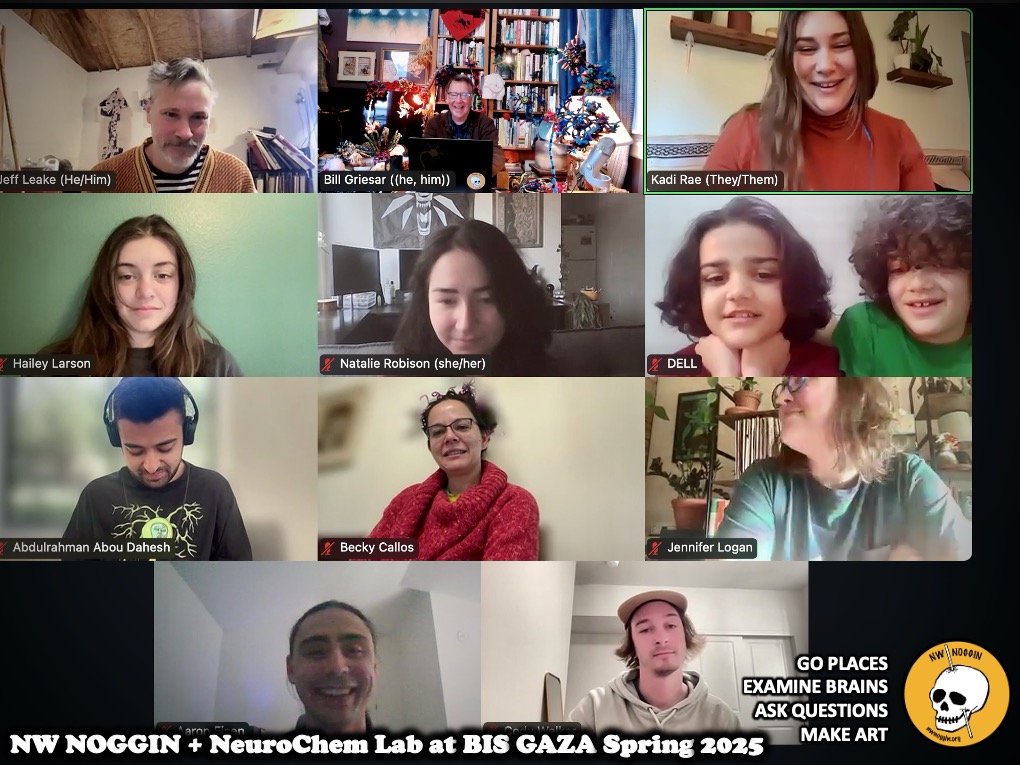
That moment changed everything for me.
It spoke to the painful contradiction of recognizing the harm being done, yet having little to no control over the chaotic reality of surviving a genocide in Gaza. When mere survival becomes the only measure of success each day, who has the time to think about neuroprotection?
And yet, I still wondered: is there some way–any way at all–that we could attempt to answer that question in a grounded way? Something small, but effective, that we could offer to meet these students in the midst of their grief and in their trauma?
This question…it has lingered.
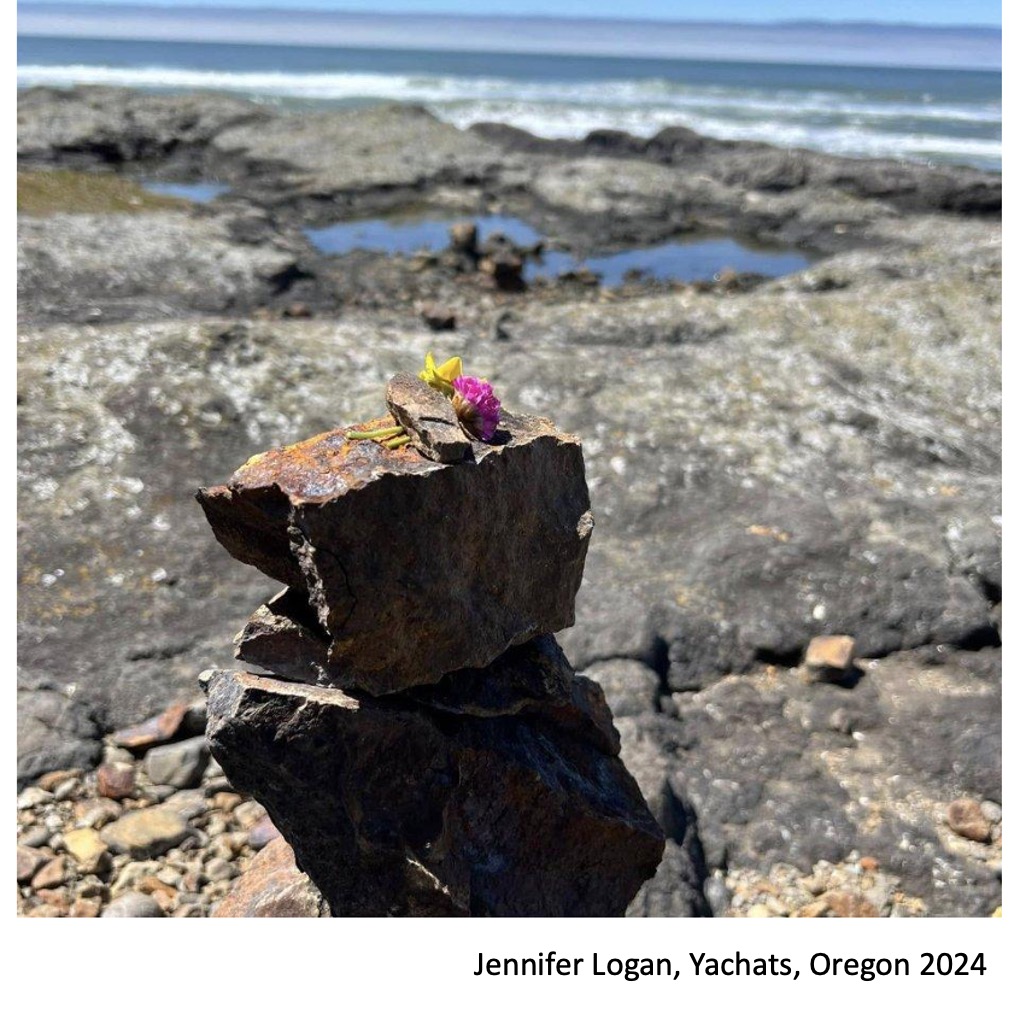
As a student of psychology and Indigenous studies, I’ve spent years learning how trauma embeds itself in the nervous system — and how healing (especially among displaced or colonized communities) demands a culturally rooted and science-supported approach.
But this question wasn’t theoretical. It wasn’t clinical. It was urgent, intimate, and real.
Western psychology has only recently begun to acknowledge what Native communities have long understood: generational trauma is real. It’s a complex, enduring force that can destabilize families and entire communities. When trauma remains unresolved — trapped in the body and mind — it often manifests in maladaptive coping mechanisms that not only compound the original pain but pass it on from one generation to the next.
LEARN MORE: Intergenerational transmission of trauma effects: putative role of epigenetic mechanisms
LEARN MORE: Transgenerational Epigenetic Inheritance of Traumatic Experience in Mammals
LEARN MORE: The legacy of trauma
Yet, in these moments of crisis, where PTSD and trauma are seen in Gaza and the West Bank daily, I’m struck by how far much of applied neuroscience and psychology still are from lived experience—especially for families surviving war and displacement.
When trauma-informed care guidelines recommend “taking a warm bath,” “listening to calming music,” or “talking to a therapist,” they assume access, stability, and safety. But what does that advice look like when the sky is shaking, the power is out, and your only goal is to stay alive?
If we look at the history of settler colonialism and the generational toll it took on Native American communities, we see the long shadow trauma casts across time. That legacy of harm, still visible today, should sharpen our focus on what families in Gaza are enduring right now. The urgency of exploring and deploying practical neuroprotective strategies for Palestinian families — and for all communities facing violent conflict — has never been greater. I have hidden from this reality for long enough…and now that I’ve made personal connections with these kids…the days of existing in a dissociative, powerless, existential crisis are over – and it’s time to get to work.
LEARN MORE: Unsettling Settler Colonialism in Research
LEARN MORE: Because its power remains naturalized: the settler colonial determinants of health
LEARN MORE: Settler colonialism and the elimination of the native
While all brains suffer in war, the developing brain of a child is uniquely vulnerable to the long-term impacts of fear, trauma, and instability. Children in Gaza are living through unspeakable cycles of danger and disruption. They understand that sleep is vital for a healthy brain — but how do you rest when the sky trembles at night? They know stress can harm the body — but how do you stay calm while the world around you collapses?
LEARN MORE: Neurobiological Development in the Context of Childhood Trauma
LEARN MORE: The association between latent trauma and brain structure in children
Storytelling for Survival
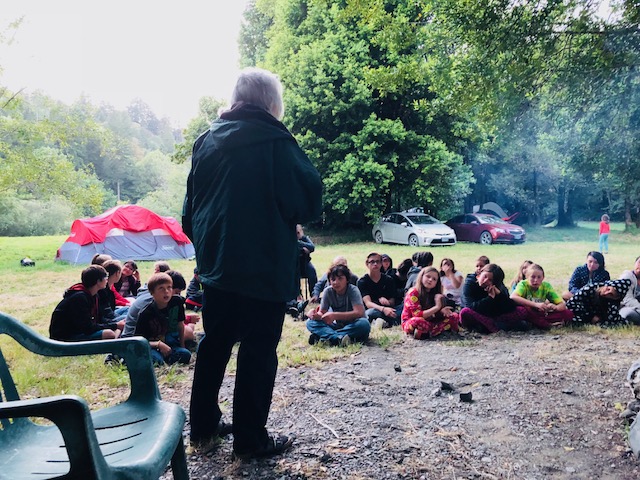
For many Indigenous communities, resilience and survival are deeply rooted in traditional forms of knowledge sharing — storytelling being one of the most enduring and powerful.
These stories are not relics of the past; they are living practices that continue to teach lessons in morality, ecology, traditional medicine, and cosmology. Far from outdated, this method remains profoundly effective — adaptable, relational, and deeply human. Could this timeless and effective way of sharing knowledge help bring comfort and resilience to displaced families in Gaza?
LEARN MORE: Siletz Stories, Singing, Dancing & Brains!
LEARN MORE: Sewing Memories, & Brains
This same approach—communicating through narrative and metaphor—holds powerful potential for modern neuroscience. What if, instead of dry clinical recommendations that involve neuroprotective tools displaced families may or may not have, we offered psychological and neurobiological insights in ways children can understand, hold onto, and carry with them? What if resilience itself could be taught through narrative story? That’s where the idea for this project emerged.
This blog post marks Phase 1 of a larger, three-part project that aims to do exactly that. It seeks to answer a difficult question not just with science, but with empathy, accessibility, and cultural resonance.
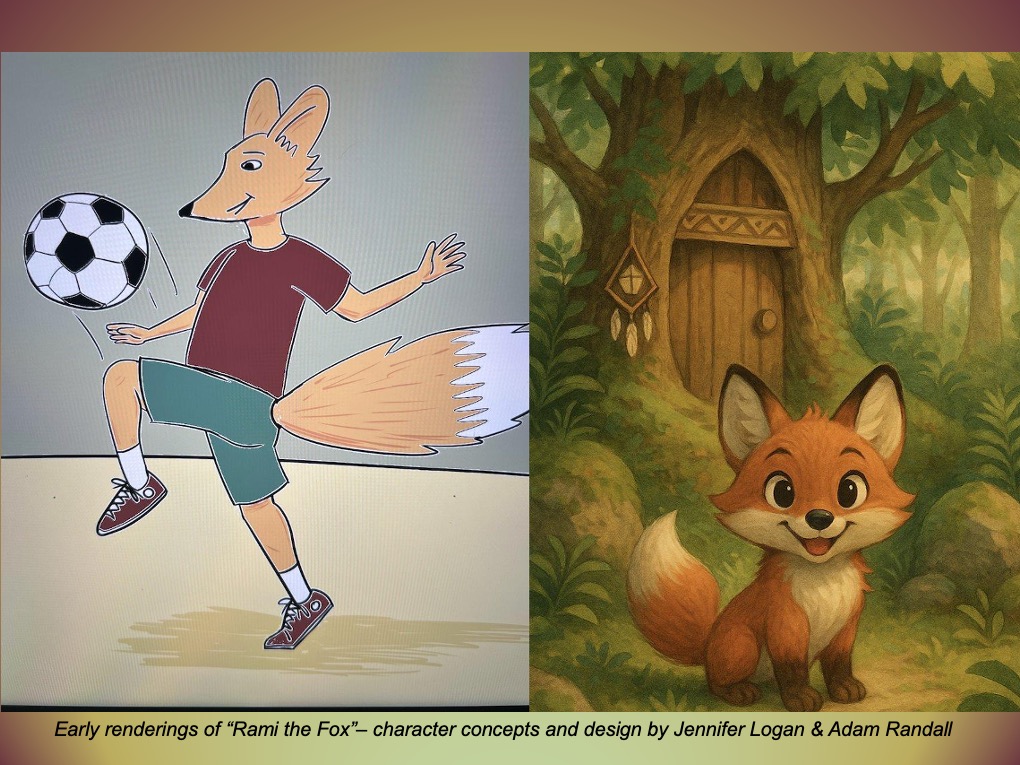
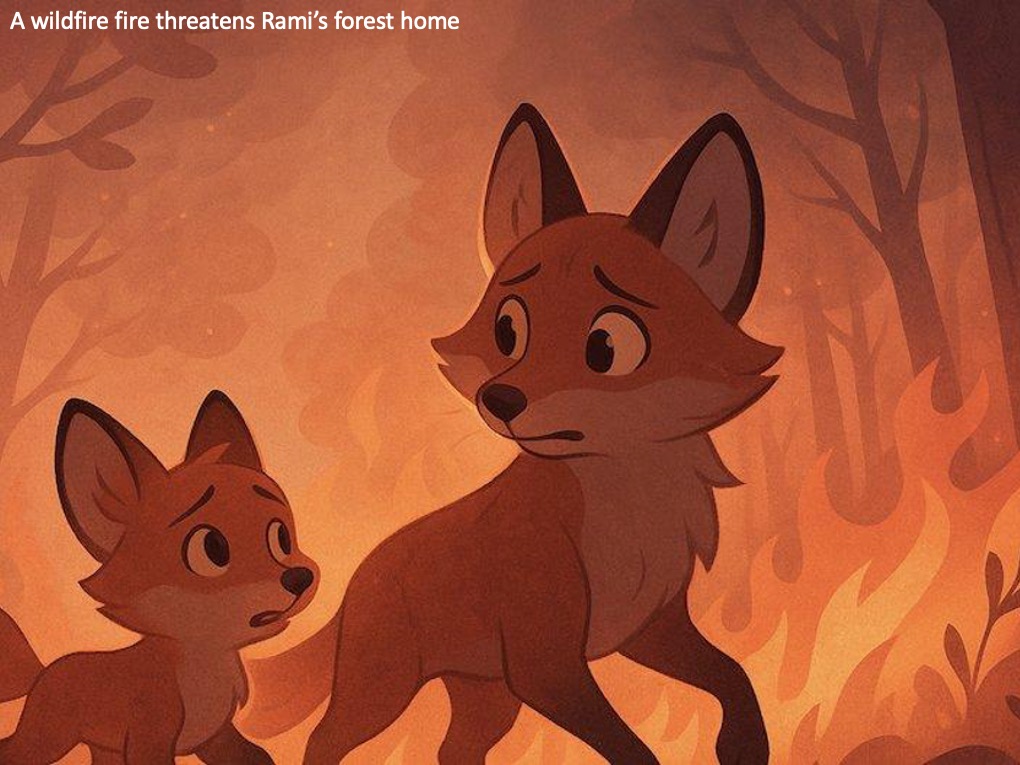
At the heart of this work is “Rami the Fox”— a small animal in a vast forest, navigating the shocking initial event and subsequent aftermath of a sudden wildfire – which leaves his world unrecognizable in ash, smoke, and loss.
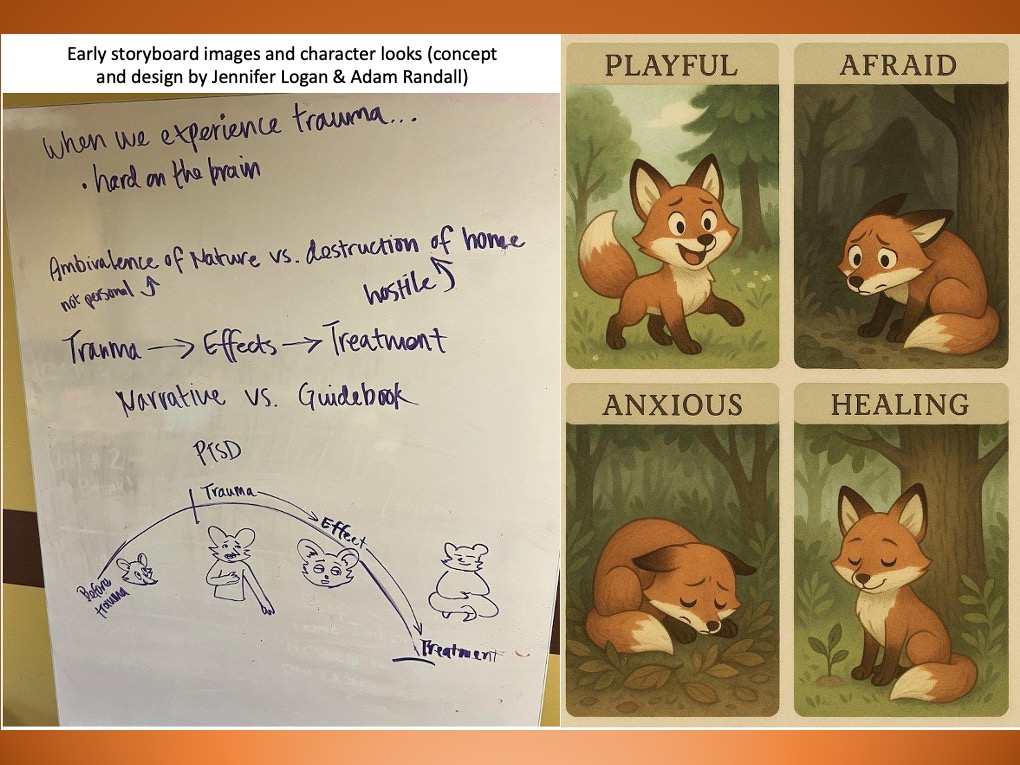
Rami’s world mirrors the daily reality of children in Gaza and other conflict zones. His journey is rooted in peer-reviewed neuroscience and trauma-informed principles — but it’s told gently, through metaphor, emotion, and connection.
This isn’t just a children’s story. It’s a proposed neuroprotective toolkit — delivered through narrative, grounded in science, and wrapped in tenderness. The ultimate goal is to develop it as an open-source resource, shaped by global collaborators and accessible to children and caregivers everywhere.
Who is Rami the Fox?
Rami is a fox who lives in a forest where fires sometimes come without warning.
The sky glows orange, trees fall, and smoke chokes the air. Rami and his mother survive—but the world he knew changes. Even when the fire is gone, Rami can’t sleep. His body won’t stop shaking. He feels afraid even when everything is still and quiet. Over time, Rami learns small ways to soothe his brain, connect with others, and reclaim moments of calm amidst the calamity. Metaphorically: Rami’s mother helps him process his trauma with applied modern neuropsychological techniques. Clinically: Rami learns how to regulate himself when the PTSD triggers hit–a skill that will serve him (and his brain) well throughout his lifetime. His story is meant to help displaced families and children living in conflict discover and reclaim a similar sense of agency in the face of chaos and uncertainty.
Phase 1: From Neuroscience to Narrative
Below are five imagined questions and scenarios based on real experiences reported by children in war zones. Each is paired with:
- An example of a simple story moment from Rami’s perspective (written at a child’s level) and not directly tied to trauma at human hands, but rather, told from the perspective of a forest animal experiencing an imminent, unknown, and scary environmental threat. The perspective of this metaphor is intentional–to mimic the unpredictable, sudden, violent effects of the war between Israel and Gaza, and to avoid directly re-traumatizing children who might interact with this story and to make the neuroprotective lessons easier to approach.
- An accessible neuroscience insight guide for adults—particularly teachers, caregivers, and aid workers—crafted to explain key brain and trauma concepts in clear, inclusive language for broad public understanding and impact.
Question One
“What can I do if I can’t sleep because of scary sounds?”

Rami’s Story & Neuro Concern: Sleep Disruption
The fire cracked like thunder and came in the night while Rami was safe in his den, nestled in bed amongst his favorite toys. Now even twigs snapping in the wind or the dark make Rami’s ears twitch. He can’t sleep at night lately. So he rests in the day, curled in moss under the trees.
“Even if nighttime feels scary, your brain can still rest in the daylight. Quiet moments matter. Even if you don’t feel sleepy, if you didn’t sleep well last night, even closing your eyes and resting for a little bit will help your body and brain.”
Neuroscience Insight
Chronic sleep deprivation severely affects children’s memory, emotional regulation, and cognitive development. In war zones, nighttime noise and trauma interrupt healthy sleep cycles. But neuroscience shows that the brain can still benefit from shorter, fragmented, or daytime sleep. Even light naps are better than no sleep, and they support:
- Memory consolidation (how we retain learning)
- Mood regulation (via emotional centers in the limbic system)
- Immune health (keeping growing bodies strong against infections or viruses, and very helpful for families navigating the shortage of healthcare access in conflict zones)
This makes short rest periods a vital neuroprotective intervention—especially when full nighttime sleep cycles are impossible for various reasons associated with the danger, unpredictability and the disruption living in conflict zones can have on sleep.

Underslept Rami sketches by Jennifer Logan and Adam Randall
LEARN MORE: NIH – Sleep Deprivation and Neurobehavioral Functioning in Children
LEARN MORE: Early Life Sleep Deprivation and Brain Development: Insights From Human and Animal Studies
LEARN MORE: The Effects of Napping on Cognitive Function in Preschoolers
LEARN MORE: Neurobehavioral Impact of Successive Cycles of Sleep Restriction With and Without Naps in Adolescents
Question Two
“Why do I still feel scared even when the fire is gone?”

Images from storyboard for upcoming illustration of scared fox Jennifer Logan and Adam Randall
Rami’s Story & Neuro Concern: Navigating PTSD Triggers
The fire is out, but the forest still smells like smoke. Every rustle makes Rami’s fur stand up. His heart beats fast. But when he snuggles close to Mama and breathes slowly, he feels his heart calm down.
“Your brain’s job is to protect you, so it sometimes remembers scary things that have happened to try and learn a better way to keep you safe next time. As a result, your body sometimes stays scared even when the danger is gone. Breathing and being close to someone that makes you feel safe helps your brain feel safe again.”
Neuroscience Insight
This is called “amygdala sensitization.”
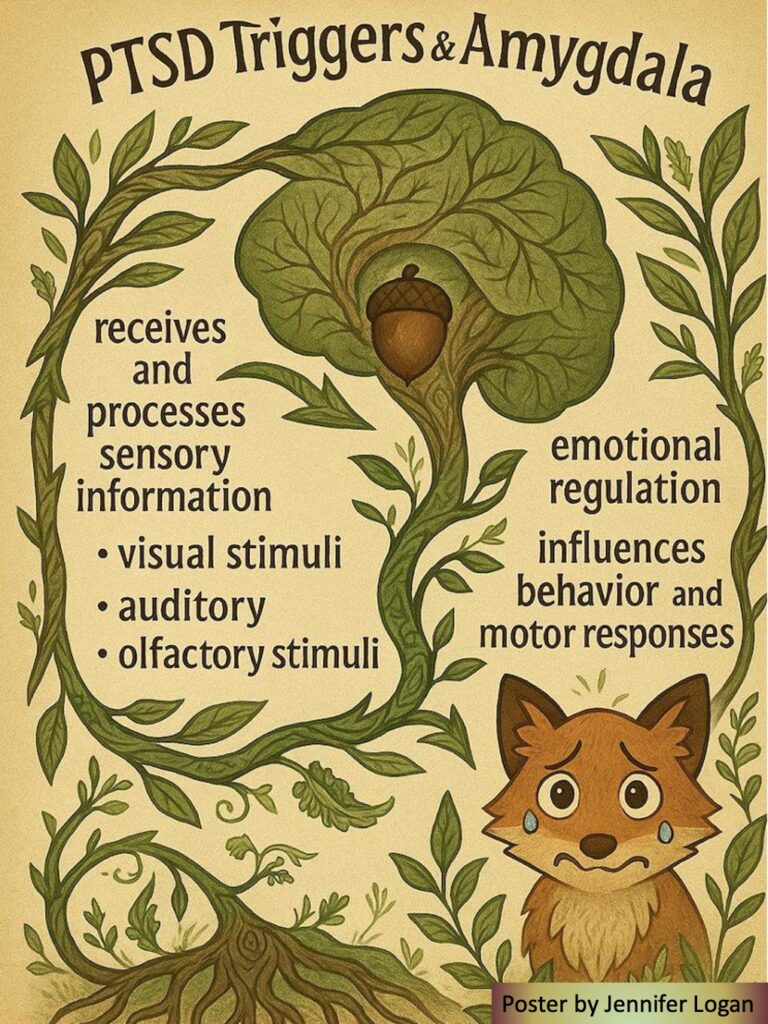
After trauma, the brain’s fear center (amygdala) becomes hyper-responsive, staying alert long after the threat is over. Deep breathing activates the vagus nerve, signaling the body to shift from “fight-or-flight” to the parasympathetic “rest-and-digest” system. Tactics vary, but in general if one exhales twice as long as an inhale, their heart rate will slow and regulate. Physical closeness also:
- Increases oxytocin, a calming, social bonding hormone
- Reduces cortisol levels
- Helps co-regulate children’s nervous systems
These tools are free, simple, and biologically effective in high-stress settings.
LEARN MORE: Neurobiological Development in the Context of Childhood Trauma
LEARN MORE: Early Life Stress and Brain Development: Neurobiological and Behavioral Effects of Chronic Stress
LEARN MORE: Protecting children’s mental health in emergency settings
Question Three
“What if I keep thinking about the fire?”
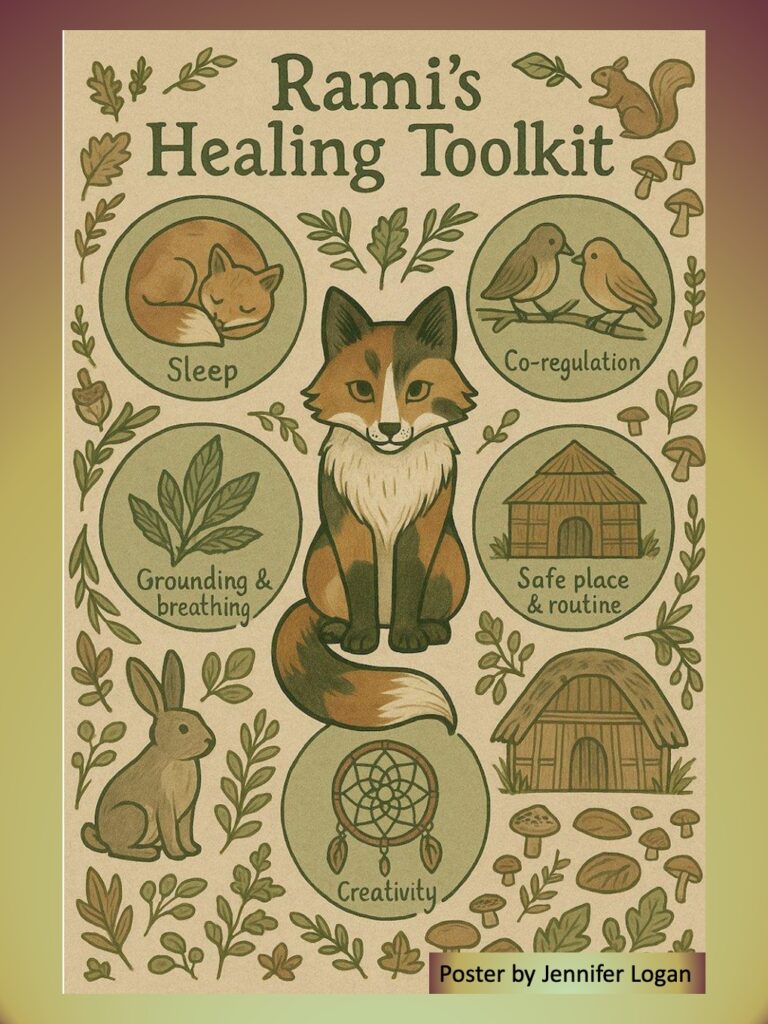
Rami’s Story & Neuro Concern: Interrupting Racing Thoughts with Creativity
Sometimes Rami sees the fire in his mind even when he’s awake…He misses his room in his den, and his toys. He starts to imagine the fire burning his favorite toys, and his tummy hurts and he starts to cry… but Mama pulls him close, hums his special lullabye song, and starts to draw pictures in the dirt with her paw. He draws spirals in the ash with his paw. He makes up songs to the wind. It doesn’t make the fire go away, or bring his toys back– but it helps.
“Telling stories, drawing, and singing help your brain carry the memory in a safer way.”
Neuroscience Insight
Intrusive memories are common after trauma.
Children often lack the language to process what happened. But creative expression activates the prefrontal cortex, helping to integrate and regulate emotional memories.
Drawing, singing, and storytelling also activate:
- The sensory-motor system, which helps release trauma stored in the body
- The default mode network, involved in narrative construction and meaning-making
- Brain areas linked to resilience, including the medial prefrontal cortex
This is why play and art are core components of trauma therapy for children — even without formal clinical settings.

IMAGE SOURCE: UNICEF Myanmar Earthquake Flash Update No. 13
LEARN MORE: Effectiveness of trauma-focused art therapy (TFAT) for psychological trauma
LEARN MORE: Accounting for intrusive thoughts in PTSD
LEARN MORE: Body‐ and Movement‐Oriented Interventions for Posttraumatic Stress Disorder
LEARN MORE: Trauma and the default mode network: review and exploratory study
LEARN MORE: Reduced default mode network connectivity following combat trauma
LEARN MORE: Findings of PTSD-specific deficits in default mode network strength following a mild experimental stressor
LEARN MORE: Role of the medial prefrontal cortex in coping and resilience
Question Four
“How do I feel safe when everything still smells like smoke?”

Rami finding safety in routine and agency in unsafe times by Jennifer Logan and Adam Randall
Rami’s Story & Neuro Concern: Addressing Lack of Agency
The forest is quiet again, but it feels strange and scary. Rami still smells the smoke, and misses his den. Mama finds Rami a hollow under a new tree and makes a small nest for him. She tells him they need some special rocks for the new nest, and asks him to find his favorites. He finds some rocks he likes, brushes some leaves in the corner with his tail, breathes three times, and hums his safety song–his favorite lullabye Mama sings.
“Even if you can’t find safety, you can make a little safe place inside your routine, and make some choices about your space–even little ones, special just for you.”
Neuroscience Insight
Children need a sense of control to regulate trauma. In chaotic environments, creating predictable routines or symbolic safe spaces can reduce the stress response. When children engage in ritualized behavior or can make choices around them (like arranging leaves, breathing, or humming), it:
- Signals predictability to the brain
- Activates the dorsal prefrontal cortex, which helps override automatic fear responses
- Re-engages the default mode network, helping build a felt sense of self and safety
Even in temporary shelters or unsafe environments, symbolic space and small rituals restore agency—and that supports neuroprotection.
LEARN MORE: Trauma-Informed Prevention and Treatment Objectives
LEARN MORE: Trauma, PTSD and the Developing Brain
LEARN MORE: Play is the Natural Expression of Learning, Growing, and Healing
Projected Phases of the Rami the Fox Project
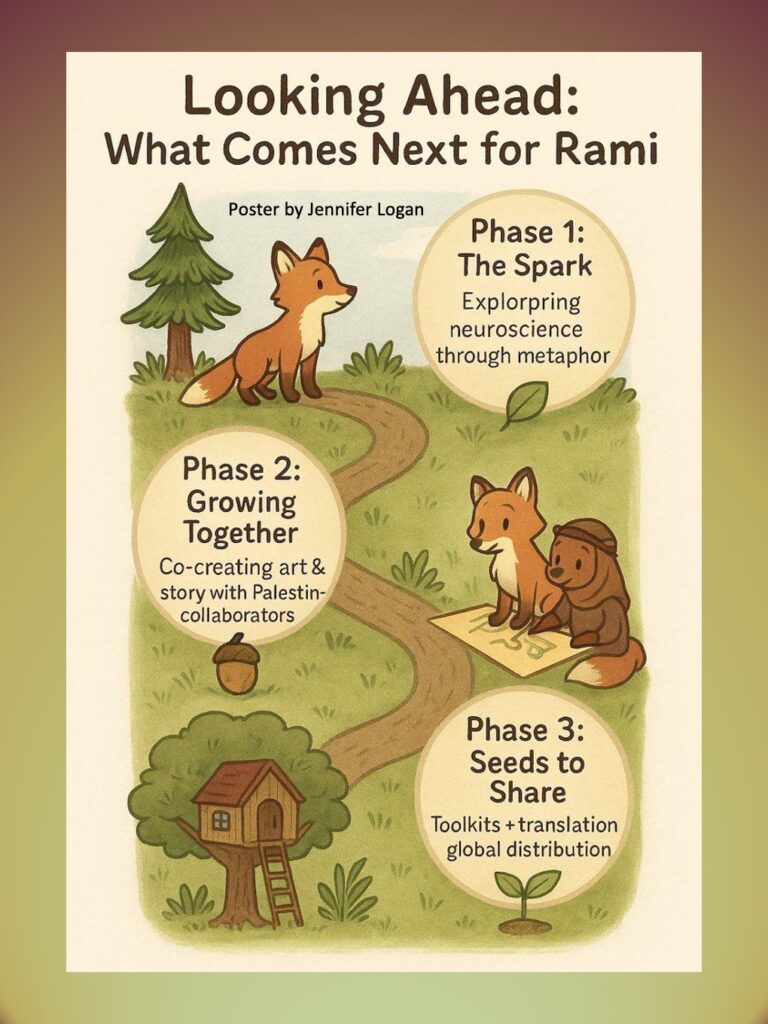
Phase 1: The Spark– Research & Framing (This Post!)
Because this project is complex and dynamic, it needs time to consult with other professionals in the field to make sure it is approached with cultural sensitivity and can provide accurate and actionable steps. Phase 1 frames the challenges of neuro-recommendations in conflict zones and proposes a culturally sensitive, narrative-first approach rooted in metaphor to be easier to approach for displaced kids. As we move into the next phases of this project, our focus shifts from inspiration to implementation.
Phase 2: Growing Together– Story Development
This work will center around co-creating the language and aesthetic world of Rami the Fox. This means collaborating with any interested Palestinian artists, educators, and mental health professionals to ensure cultural responsibility, emotional resonance, and linguistic accessibility. We’ll also develop multilingual versions of the story (beginning with Arabic and English) and adapt it into a zine-style format so that it’s printable and shareable even in low-resource settings. Our team will pilot the story and materials with caregivers, NGOs, and grassroots organizations already doing vital work on the ground. Their feedback will be essential in refining Rami’s message and practical utility.
Phase 3: Seeds to Share – Open Source Toolkit
Here we will translate the story into an action-ready neuroprotective resource.
The toolkit will include both digital and print material options, including a caregiver and educator guidebook that offers embedded neuroscience explanations for each of Rami’s regulation tools. We also hope to encourage regional adaptations, and would pursue hosting an editable digital version for aid professionals, caregivers or families that wish to switch out the story and character of Rami with a regional or cultural character that fits the need better. Variations could include: different animals for different regions, different ecological environments, and culturally specific versions of the same core message. The goal is to keep Rami open-source and adaptable—because no single story can serve all children, but every child deserves a story that serves them. Whether this toolkit ends up in a classroom in Portland, a clinic in Ramallah, or a living room in Cairo, we hope it carries the same intention: to help children and caregivers feel seen, supported, and a little less alone.
Why Rami? And Why Now?
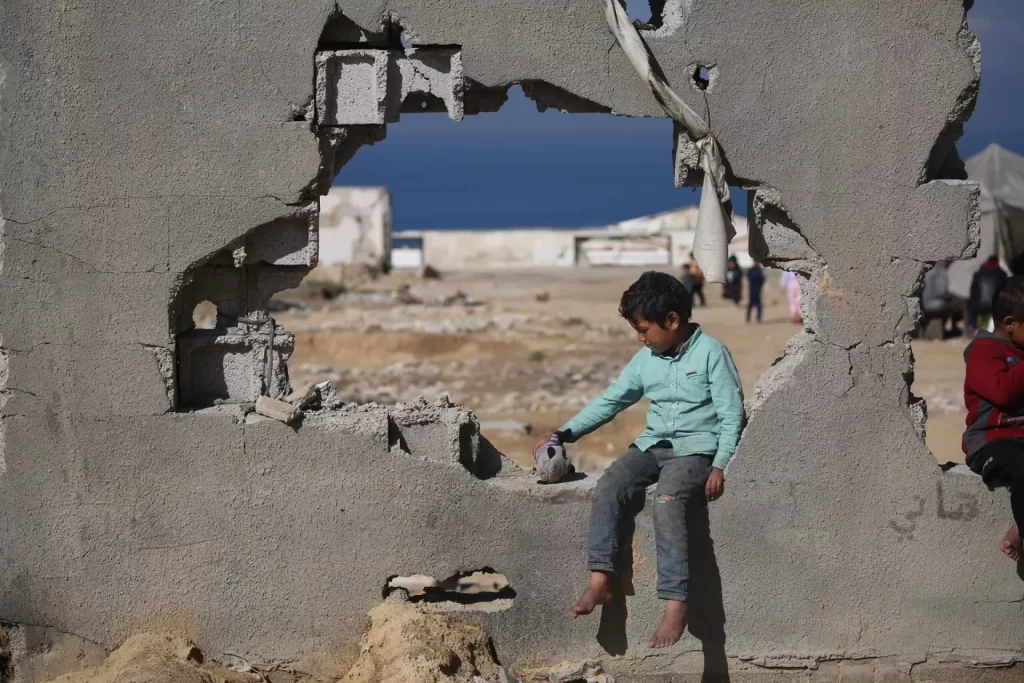
IMAGE SOURCE: Children in Gaza need life-saving support
Rami the Fox is a character designed to be approachable, relatable, and trauma-informed. Rather than relying on others for support, Rami is an active participant in his own healing. He learns tools that can be used anywhere in the world and under any tree he calls “Den.” The goal is for Palestinian children to see their own strength reflected in Rami’s journey. The name Rami is of Arabic origin, traditionally masculine, and rooted in the verb rām, meaning “to wish,” “to dream,” or “to take aim.” It imbues its bearer with purpose and direction – saturating the story with resilience and hope for the future.
Getting Involved
Families supporting children in conflict zones don’t need platitudes. They need practical tools, hope, and something to hold onto. Through a tender but apt metaphor and narrative, this project seeks to communicate approachable, applied neuroprotective measures for brains experiencing the harsh realities of war.
Regulation Nation
The Center for Mind-Body Medicine offers free online trauma-informed stress relief and regulation tools, including self-paced exercises for children and families in high-stress environments. CMBM also has a demonstrated commitment to interrupting generational trauma cycles by Building Resilient Communities in Gaza.
The CMBM “Self-Care Basics” portal includes several low-barrier, evidence-based practices ideal for Transforming Trauma, such as:
- Concentrative Meditation – Soft Belly Breathing
- Mindfulness Techniques – Body Scanning
- Expressive Somatic Meditation – Shaking and Dancing
- Self Expression – Drawing
- Guided Imagery, such as:
- Lemon Imagery
- Safe Place Imagery
- Wise Guide Imagery
LEARN MORE: Mind–body skills groups for posttraumatic stress disorder in Palestinian adults in Gaza
Tired of Living in “Freeze” Mode about Gaza?
Join me in moving beyond the psychological discomfort that can keep so many of us stuck in dissociation and avoidance. Don’t have a foxy neuroprotective children’s metaphor at the ready? No problem! Here are some resources you can engage with right now to help support Palestinian families.
Wear Your Heart on Your Sleeve
Support Palestinian artisans and shop for a cause through The Middle East Children’s Alliance online store. MECA provides emergency aid, water filters, medical supplies, and educational materials to families in Gaza and surrounding regions.
Check out MECA’s online store for any olive oil, ceramics, embroidery and other products made by Palestinian craftspeople. (All products are produced in Palestine and 100% of profits support aid and community programs for children).
These resources are far from policy solutions addressing the war in Gaza—but they are scaffolding. They can help children and families process trauma, protect and soothe the brain, and remind us that healing is collective. Whether you’re reading this as a fellow student in the U.S., a caregiver in Gaza, or a volunteer halfway around the world, these small, neuroscience-informed acts of support and connection matter. Mastering these regulation tools build resilience in uncertain times. They are meant to be shared freely amongst vulnerable communities. Building out this psychological tool kit is what basic neuroprotection could look like for children and their families in times of war, and times of crisis.
On Discovering Agency, and Moving from Powerless to Present
As I prepare to wrap this first phase of the Rami the Fox project, I can’t help but reflect on the irony of it all…Just three months ago, I was someone who actively avoided news about the war in Gaza. Now, I’m someone who’s meeting with students currently living in (or evacuated from) the region, and finding myself so engaged in those outreach conversations that I don’t even want the call to end!
Thinking back on that call–none of us really wanted it to end. We had already run over by thirty minutes, but we all lingered. We wanted to answer just one more question. Show one more pet on camera. See one more found object neuron made from fruit or rocks. Make a funny face to get a laugh from the kids. Scream like Kareem and cheer each other on…Because even across oceans, time zones, loss and heartbreak, we had built something, a connection–however briefly, that felt safe.
That felt human. It was an honor and a privilege to participate in the NWNoggin outreach that day, and to provide a safe place during an unsafe time for these kids to just be kids…even for a little bit.